
3.1 Introduction
Study time: Approx. 2 hours

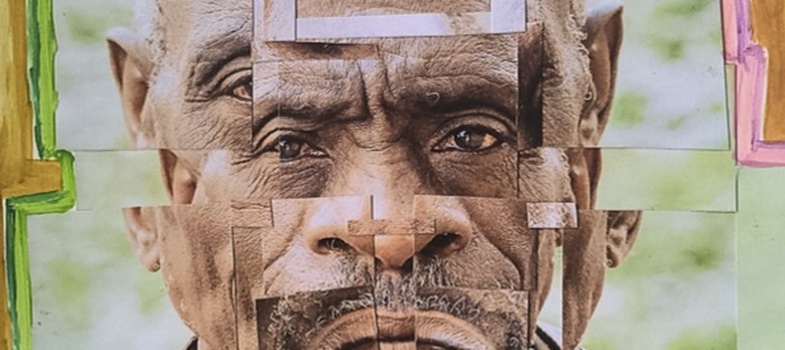
Image: Taken by a young refugee involved in the DEPA Uganda project, it is a statement on his precarity as a ‘Stateless’ person - ‘I am never at peace, always ready to move’. You will find the image in the Trust toom and, although the story behind it is focused on funding, it speaks to a broader aspect of research practice. The practical decisions that help projects get off the ground can shape how research unfolds and who is able to participate in it. Research excellence depends not only on what is planned, but also on how assumptions about time, resources and participation affect the people expected to deliver it.
Welcome to the third unit in the course that focuses on the idea of research excellence. In the previous unit, you explored how EDIA can influence the early stages of research development, from shaping research ideas to developing proposals. Here, the emphasis shifts to what happens next: carrying out the research itself.
Once a project has been approved or funded, researchers move from planning research to doing it. At this stage, the everyday decisions you make can influence whose experiences are represented, whose voices are heard, how relationships are built with participants and communities, and ultimately the knowledge that is produced.
This stage of the CERI Framework introduces the E on research Excellence and how inclusive and responsive approaches can shape the way research is conducted.
Research excellence is often associated with methodological rigour, technical expertise and high-quality outputs. While these remain important, social science research also relies on the choices researchers make throughout the research process. Questions about inclusion, participation, accessibility and representation are not separate from research excellence; they are often part of how excellence is achieved in practice.
To explore this idea, the unit follows three common stages of the research process:
Designing Research Activities
You will consider how EDIA can influence the practical design of research once a project is underway. This includes decisions about research methods, participant involvement, accessibility, engagement approaches, and how barriers to participation are identified and addressed.
Data Collection
You will explore how EDIA can support more inclusive and accessible approaches to participant engagement and data collection. This includes considering trust, accessibility, cultural sensitivity, power dynamics, and the factors that influence who takes part and whose experiences are captured.
Data Analysis
You will reflect on how researchers' assumptions, experiences and interpretive choices shape the analysis of data. An EDIA-informed approach encourages critical reflection on how findings are interpreted, represented and communicated.
It is important to note that, although these stages are presented separately, social science research is rarely a linear process. Decisions made at one stage often influence the next, and researchers may revisit earlier choices as new insights emerge or circumstances change. This ongoing process of reflection and adaptation is an important part of conducting responsive and high-quality research.
How this unit contributes to the course learning objectives
In this unit, you will explore how EDIA can influence the delivery of research, from the design of research activities through to data collection and analysis (Learning Outcome 2). Through the Excellence dimension of the CERI Framework, you will examine how inclusion, accessibility, bias and power dynamics can shape research processes and outcomes (Learning Outcomes 3 and 4). Drawing on examples and case studies, you will identify EDIA challenges and opportunities in different research contexts (Learning Outcome 5), while considering practical ways of embedding EDIA in research practice through reflection, responsiveness and adaptation (Learning Outcome 6).
As you work through this unit, you will be encouraged to think about excellence not only in terms of what research produces, but also how it is carried out. The focus is on the practical decisions researchers make as they design activities, collect data and analyse findings, and how those decisions can influence the quality, credibility and inclusiveness of the research process.
You will first explore what research excellence means and why it matters before examining each of the three stages in turn.