
1.5 What Happens When EDIA is Overlooked?
Guidance and frameworks describe what should happen in equitable and inclusive research but the reality of doing research is often messier and more complicated.
Activity: Missing EDIA, Missing Opportunities
Time: approx. 10 minutes
Read the story ‘Working With The Overlooked’ in the PEERs Gallery. Enter the gallery using the portal below and you will find it in the Decentralisation room.
As you read, consider and make notes on the following questions:
-
What assumption about research partnerships is being challenged?
-
What important perspectives, organisations or communities might be overlooked if researchers rely on existing networks and partnerships?
-
What does this example tell us about the role of EDIA in shaping research opportunities and collaborations?
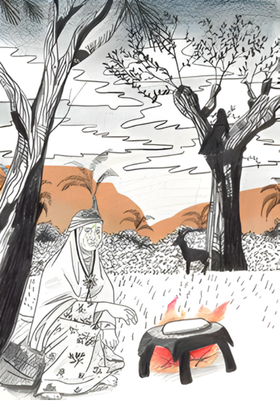
Image: The story comes from an African researcher working on the BEAP project, while the image is an illustration by an Algerian illustrator Afnan Dridi. It was drawn for the DEPA Algeria project and tells the Tale of the Orphan Cow.
Reveal
Click here to see what we thought
This story highlights an important challenge within research. EDIA is not only about who participates in research, but also about who has opportunities to contribute to, lead and benefit from research partnerships. Looking at diversity only at a national or organisational level can sometimes conceal important inequalities within research systems.
The example also demonstrates that equitable partnerships rarely happen by chance. They often require researchers to look beyond existing networks, question assumptions and invest time in building new relationships with organisations and communities whose voices may otherwise be overlooked.
The next section introduces the CERI Framework, a tool for making that connection. It provides a way of seeing EDIA within research practice, helping you understand, analyse and reflect on the choices that shape how research is designed, conducted and experienced.