
3.5.1 In Practice: Beyond Formal Approval
The barriers that shape participation are not always practical or logistical. In some research contexts, participation may also be influenced by historical experiences, political environments, local governance structures, or concerns about how research will be used.
As you saw in the previous section, data collection is influenced by more than recruitment strategies or accessibility considerations alone. Trust, local relationships and wider social contexts can all affect whether people feel able or willing to participate.
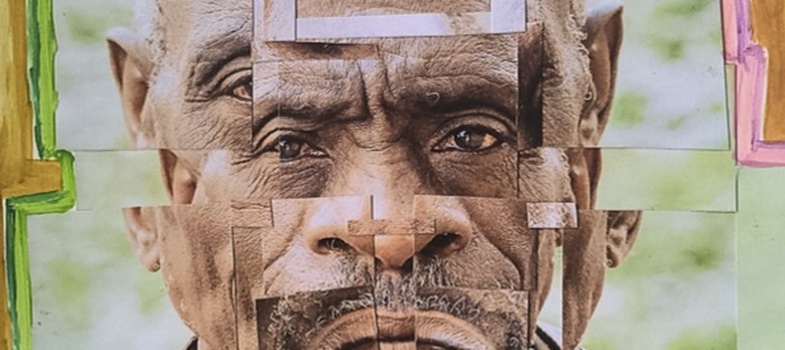
The following story entitled 'The Local has Two Fronts' talks about access to participants depending on building trust with both local communities and local authorities. You will find the image and story in the Localisation room in the gallery, immediately to the right of the start point.

Image: Showing an elder from the Chaoui community in Aïn Beïda while discussing traditional practices for promoting peace within the Aïn Beïda Chaoui community with the Algerian DEPA project researcher.
Reveal
Click here to see what we thought
The ‘Local’ Has Two Fronts highlights that access to research participants is not determined solely by ethics approval, recruitment plans or institutional permissions. Historical experiences, political contexts and local relationships can all shape whether people feel comfortable engaging with research.
For researchers, this is an important reminder that participation cannot be assumed simply because a project has received formal approval. An EDIA-informed approach encourages you to understand the context in which research takes place and to adapt your approach when local circumstances, relationships or concerns influence participation.
Activity: Who Was Left Out
Time: approx. 5 mins
Imagine you are conducting a study on student wellbeing using an online survey promoted through university social media channels and student newsletters.
Reflect on the following questions:
-
Who is most likely to participate in this study?
-
Whose experiences might be missing?
-
What barriers could prevent some students from taking part?
-
What changes could help ensure a wider range of voices are represented?
Reveal
Click here to see what we thought
The students who are easiest to reach are not necessarily representative of the wider student population. Some groups may have limited time, reduced access to technology, lower engagement with university communications, accessibility requirements, or concerns about sharing personal experiences.
Like the Algerian example, this activity highlights that participation cannot be taken for granted. As a researcher, you need to look beyond who is present in the data and consider who may be absent, why they are absent, and what that absence might mean for the findings.
Data collection shapes who is represented in the evidence. Data analysis shapes how that evidence is understood. The next section explores how researchers' assumptions, perspectives and interpretations can influence the stories that research ultimately tells.