
6.4 Using your own words
In the previous activity, Tommy (a business student) used his own words to produce the bullet points. It is very important to use your own words when making notes from a case study text in preparation for a written assessment, as this will help you to avoid copying pieces of the original text. Using chunks of original text when you write a business assessment does not show your tutor that you have understood the text. In fact, if it is done without using quotation marks, a citation and a reference, it can lead to accusations of plagiarism. There will be some words and phrases, however, which will remain the same, especially if these are key concepts (e.g. ‘global market’ or ‘research and development’).

As you noticed in Activity 8, Tommy made concise notes to represent the information from the original case study. By making his language more concise and using his own words in the form of key concepts, he is now well prepared to write his analysis of the case study without the risk of copying from the original. His notes were also selective as the information had to be related to only one of the following SWOT concepts: opportunities or threats.
Another point to note is that Tommy uses formal language in his bullet points. The tone of the article itself is quite informal in places because a number of business experts are being interviewed and therefore spoken language is used. In order to produce a more formal report on Greggs, Tommy has extracted his bullet points and, as you will see later in this course, used these to write up his report.
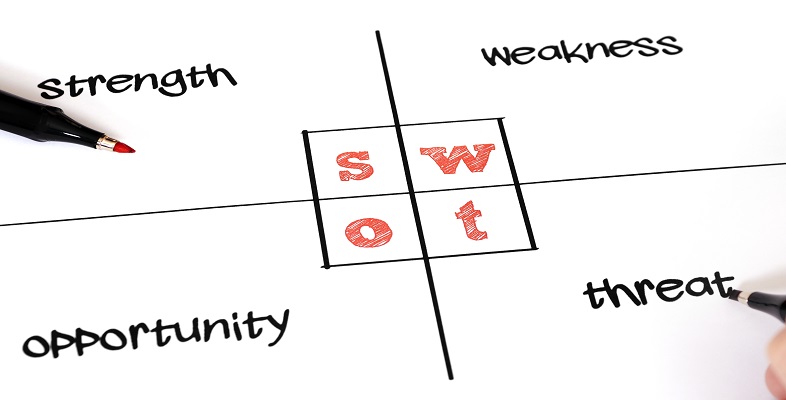
Having now explored all the SWOT points from the text, and having summarised these points using noun phrases for strengths and weaknesses, your final SWOT table may look something like Table 6, which comes from Tommy’s SWOT analysis.
| Strengths | Weaknesses |
|---|---|
|
|
| Opportunities | Threats |
|
|
Plagiarism
Plagiarism means passing off someone else’s work as your own by not acknowledging the original source. If you would like to find out more about what plagiarism is and how to avoid it, try some of the 5-minute activities on the OU Library’s ‘Being Digital’ website [Tip: hold Ctrl and click a link to open it in a new tab. (Hide tip)] .