
 article icon
Science, Maths & Technology
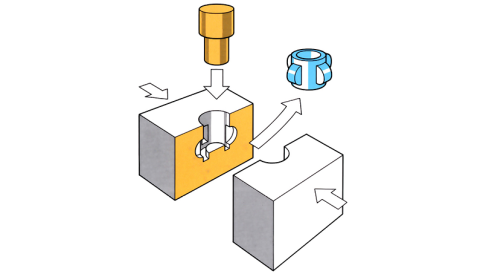
Axiforge process
Axiforge process can be carried out on dies, positioned on vertical or horizontal axes, within a press. Sideways ram movements apply pressure to the outside of a split die, so that the two parts close around a heated billet, forming it into the required external shape. This is followed by pressure from one or two piercing punch(es), which pierce...
 article icon
Science, Maths & Technology
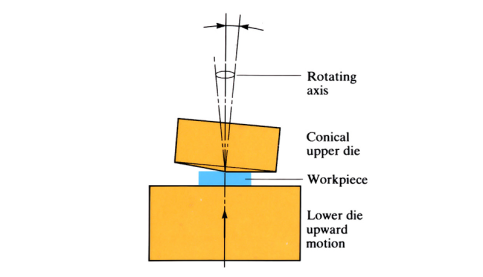
Orbital forging
Workpiece material is forged between two dies. The bottom die moves upwards whilst the top die, tilted to a preset angle, rotates (orbits) around the central axis, progressively forming the malleable material into the required shape.
 article icon
Science, Maths & Technology
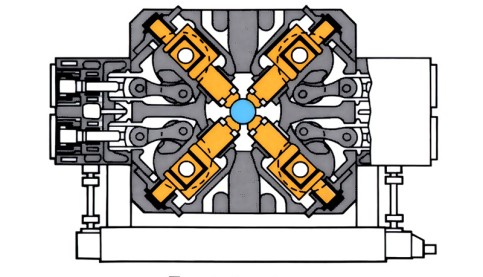
Rotary Forging, General Forging Machine (GFM) and Swaging
A circular housing contains a rotating shaft (rotor) holding free moving anvils. At the end of each anvil is a die. The dies surround a centrally placed workpiece. Revolving around the rotor is a cage holding loosely rotating rollers. As the cage rotates, the rollers impact on the anvils, which effectively hammer the stationary workpiece into ...
 article icon
Science, Maths & Technology
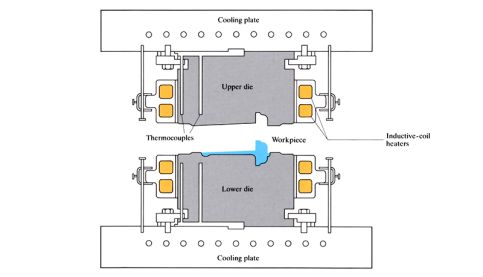
Isothermal precision forging
The workpiece is formed to shape at a slow rate and at a temperature almost equal to that of the heated die. The long forging time, alongside forces exerted by the die, help to form an almost ‘ready to use’ component needing minimal supplementary machining.
 article icon
Science, Maths & Technology
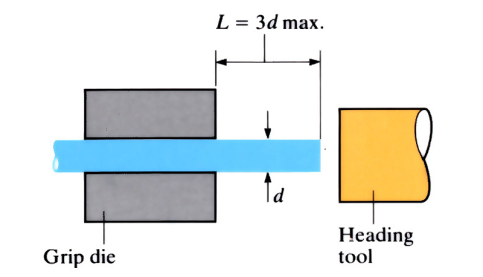
Upset forging
A heading tool or ram is positioned perpendicular to the cross sectioned end face of a rod or bar gripped in a die. On application of pressure, the length of the rod is reduced and the diameter is increased (upset). This manufacturing process is used extensively in the production of fasteners, to form bolt heads, screw heads etc.
 article icon
Science, Maths & Technology
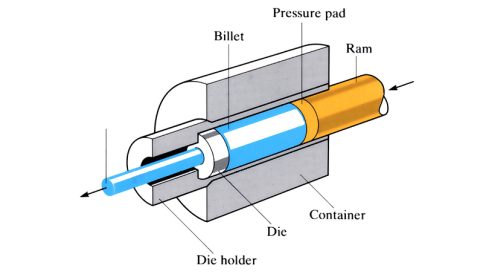
Hot extrusion
A ram forces a heated billet to flow through a shaped hole in a die. Can be forward, backward or hydrostatically extruded.
 article icon
Science, Maths & Technology
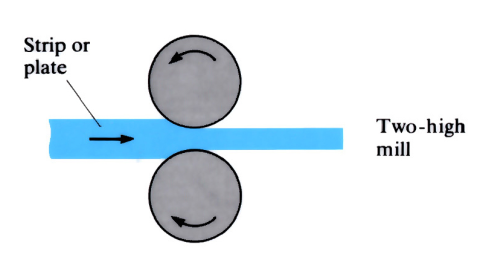
Hot rolling
Plates, flat sheets or billets of metal, heated to above their material recrystallisation temperature, are passed between two rollers. The result is a thinner cross section of material with a finer grain structure.
 article icon
Science, Maths & Technology
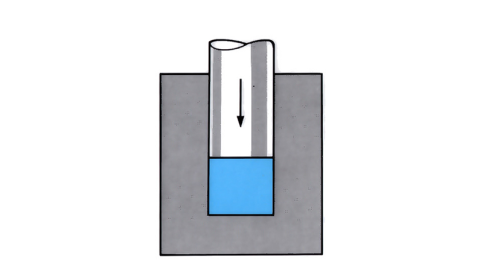
Hot forging (closed die)
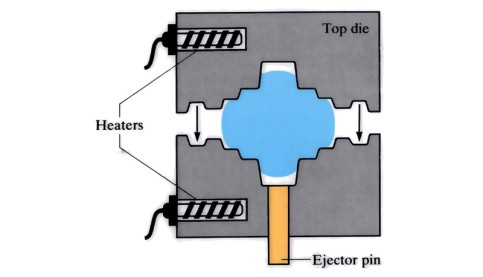
Two halves of a heated die move towards each other, incorporating the metal material to be forged and filling the die cavities. The two die halves are clamped together, and the metal is left to solidify. After extraction from the dies, flash is removed from the forging. To eliminate flash formation, a single part heated die can be used instead, ...
 article icon
Science, Maths & Technology
Hot forging (open die)
Open die forging is a hot forming process in which the metal is shaped by hammering or pressing between two flat or simple contoured dies.
 article icon
Science, Maths & Technology
Blow moulding
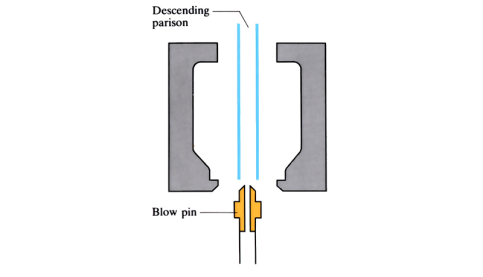
A process for forming plastic, thin walled, hollow containers such as bottles. Raw thermoplastic in the form of pellets, or granules, is melted and extruded to make parison tubes. The parisons are clamped centrally between two halves of a closed mould. Pressurised air is used to inflate the parisons, until they conform to the shape of the mould ...
 article icon
Science, Maths & Technology
Superplastic forming
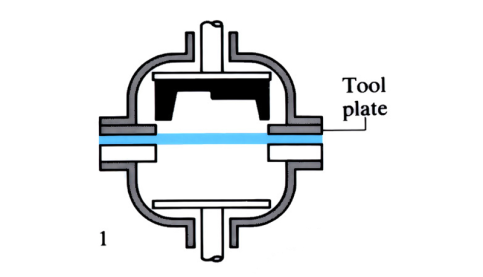
A sheet of metal is clamped into position above or below a die or die cavity. Under the correct combination of temperature, strain rate and microstructure many metals become superplastic, enabling them to be deformed into complex die shapes in a single operation using low pressure air and low cost tooling.
 article icon
Science, Maths & Technology
Osprey process
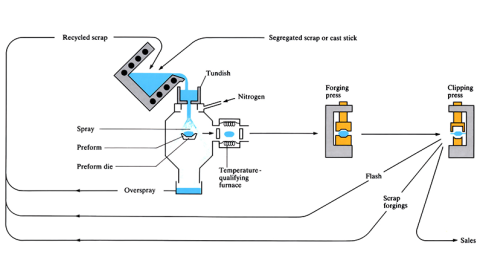
Molten metal poured into a tundish is atomised by a mixture of argon and nitrogen gas. The particulate droplets are sprayed onto a preform die. The established preform then undergoes hot working processes to result in its final shape.