2.7 Environmental factors (abiotic)
This section considers the abiotic factors, which are non-living elements such as water quality, temperature and oxygen levels. Abiotic factors primarily shape the physical conditions of the habitat involved (e.g., water quality and enrichment).
Water quality [temperature, oxygen, salinity, turbidity, ammonia etc.]:
The physico-chemical properties of water play a pivotal role in the biological functioning of aquatic animals, and are generally accepted as one of the most significant environmental factors for welfare. Safeguarding the health and welfare of farmed aquatic animals through water quality, however, requires appropriate levels of O2, metabolic wastes (ammonia/nitrite, CO2), salinity, toxins, temperature, and pH.
Imbalances of these variables can cause direct harm to the animals through disruption of physiological functions such as ionic regulation, gill and kidney function, or by destroying a fish’s mucous coating. Poor water quality can also compromise immunocompetence, growth, and survival. The added complexity of water quality parameters is that many of these variables interact with each other, with a species’ optimal range depending on numerous factors. For example, CO2 levels and its effects are dependent on pH, temperature, water hardness, water flow and stocking densities. The amount of dissolved oxygen available in water depends largely on temperature, salinity, methods of aeration, and partial pressure of oxygen in the air that is in contact with the water.
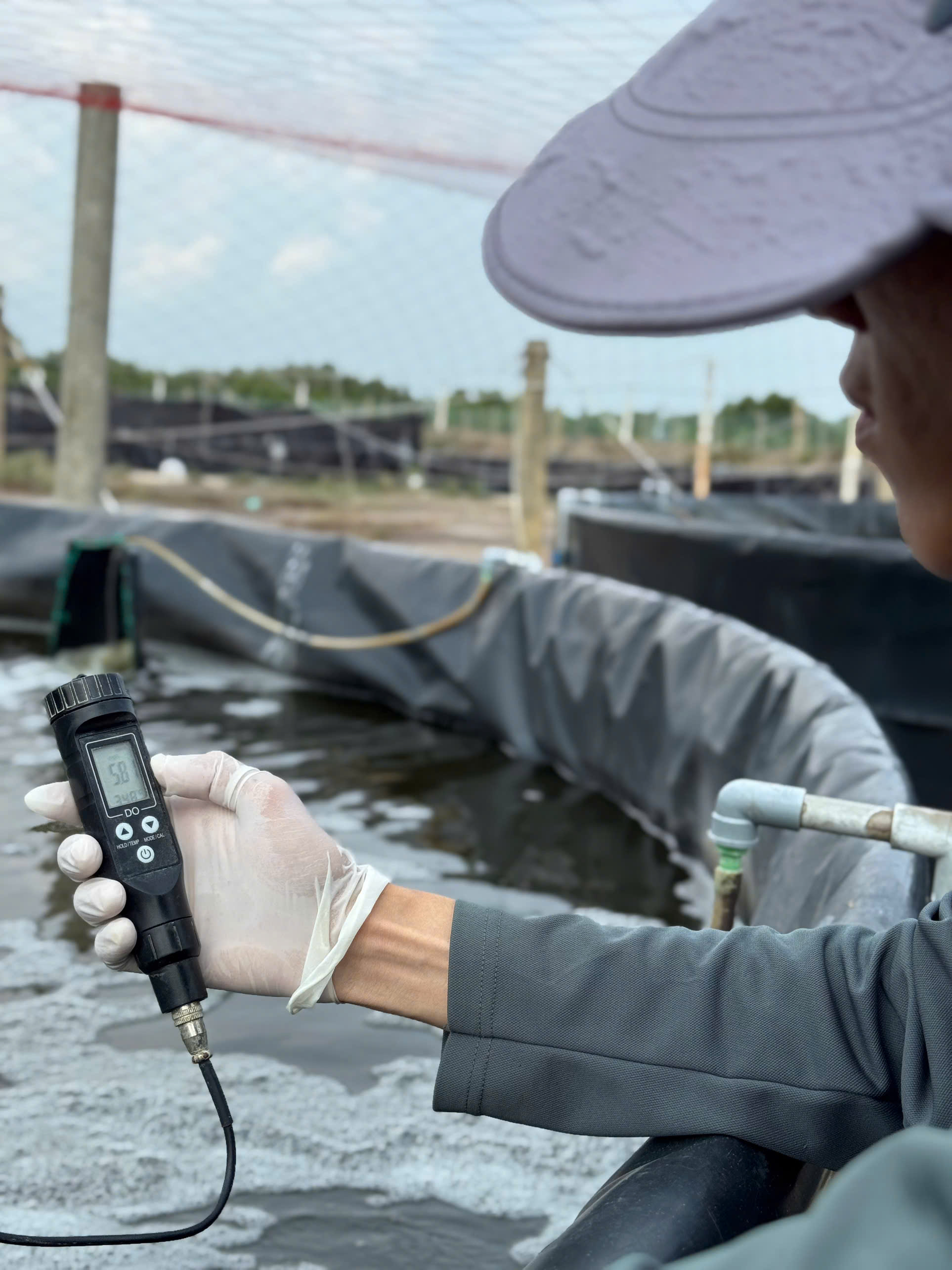
Figure 2.3 Using a dissolved oxygen meter to monitor oxygen concentration in a shrimp farm tank Dissolved oxygen concentration is one of the most important water quality variables for the health and welfare of aquatic animals. It requires frequent or even constant monitoring, with management measures in place to provide aeration, oxygenation or water exchange when concentrations fall below reasonable limits.
As the overwhelming majority of aquatic animals are poikilotherms, their body temperatures are regulated by ambient water temperature which can only be controlled by swimming to other colder or warmer areas. Temperature, together with oxygen, determines the metabolic rate of animals and acts as a controlling factor for physiological performance, including their capacity to deal with stressors. With insufficient oxygen levels, hypoxia can cause a stress response; even worse, most animals will die within minutes of not respiring. Respiration can also be compromised during handling or from non-functional gills as a result of injury, disease, or parasites. Temperature and oxygen are therefore some of the most important parameters of water quality.
| Did you know that fish will seek out warmer water when they are suffering a bacterial infection in order to stimulate a physiological "fever" response? Individual fish may also choose slightly different water temperatures depending on their "personality" See Cerqueira et. al., 2016. |
Enrichment (structural, sensorial, social, occupational, dietary)
Environmental enrichment (EE) has been a proven avenue for improving the quality of life of aquatic farmed animals by helping them to meet their physiological and behavioural needs.
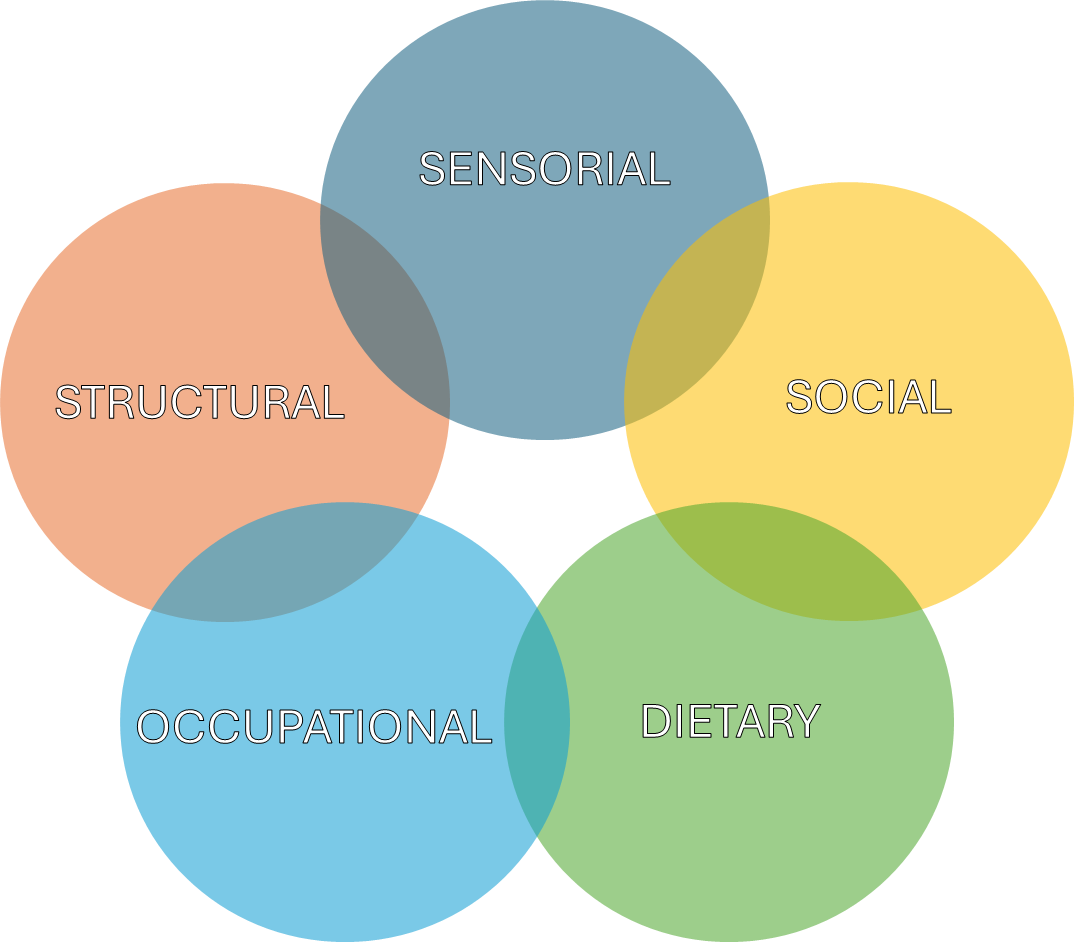 Figure 2.4: Author's illustration of potential environmental enrichment strategies as outlined by Arechavala-Lopez et al., 2021 The image consists of five differently coloured and semi-transparent circles arranged in a pentagon shape so that they overlap each other slightly. Each circle has a single word as follows: Sensoral, social, dietary, occupational, and structural.
Structural enrichment (SE) often provides this through the addition of novel structures and/or objects into the rearing environment, resulting in additional physical complexity as a stimulus as well as additional shelter. Whether using plastic strips / shreddings / tubes to provide hiding places, inhibit cannibalism and conspecific aggression, or increasing physical complexity of a rearing environment to promote cognitive abilities and brain plasticity, the benefits of SE have been well documented across various species.
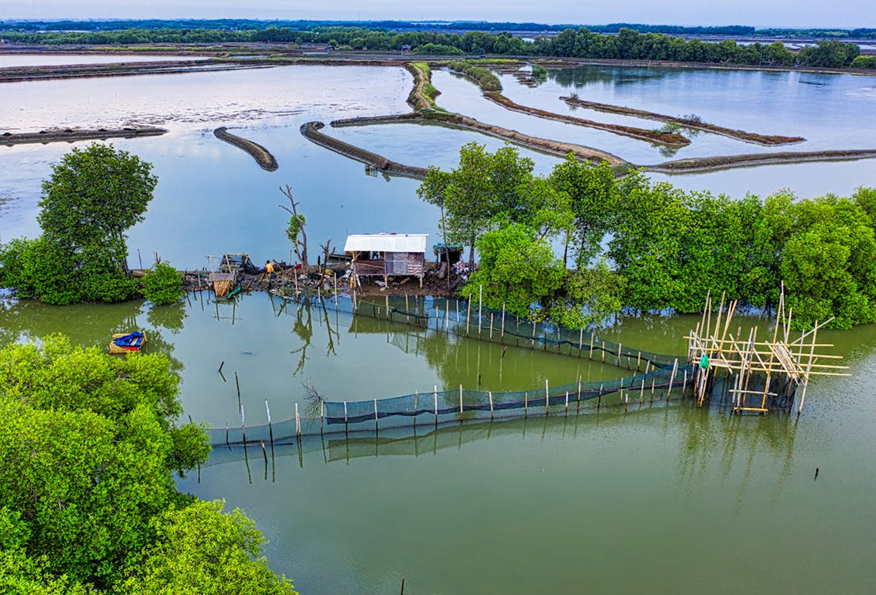 Figure 2.5: Shade, aeration, naturally dynamic environment (e.g., leaves/insects dropping into the water) all providing stimuli by default in this farm. Mangroves in particular a great example of natural, structural enrichment providing these benefits An aerial photograph of extensive brackishwater ponds in Southeast asia with mangrove trees and net enclosure structures for rearing fish or shrimp. Source: https://www.pexels.com/photo/rice-fields-with-shabby-house-6226993/.
Sensorial enrichment is an approach developed under the knowledge that wild animals are exposed to a myriad of sensory stimulation that engages the various senses of aquatic animals; this is often in stark contrast to aquaculture / captive environments that are typically deficient in terms of sensory triggers unless reared in said natural environments. In order to provide appropriate sensorial stimulations, It is essential that such enrichment strategies have a solid understanding of the biological needs and the sensory worlds of the targeted species. This is particularly important for aquatic animals, considering the significant differences in their sensory systems as a result of their differing ecological / evolutionary pressures. Examples of sensorial enrichment include visual, tactile, chemical (olfactory & taste), hydrochemical and electrical stimuli.
Researchers have explored the effects of light characteristics (periodicity, intensity, spectrum) in a wide variety of species as an example of visual enrichment. Many aquatic animals are covered by tactile receptors and many also have various tactile organs (barbels, free rays of fins, dermal teeth etc.); as such, many structural enrichment strategies overlap with this example of sensorial enrichment (tactile stimulation). Other forms of tactile stimulation can also be achieved through hydromechanical means. Chemical senses also play an integral role in many aquatic species, and the importance of olfaction and taste varies from species to species. The manipulation of odours or chemical stimulations (either in olfactory stimuli or pheromonal) has been proposed as an approach for chemical stimulation; an example would be the release of certain pheromones during dominance contests that modulate behaviour by reducing aggression. However, this example is still hypothetical, owing to the complexities of behavioural responses that would be involved.
Occupational enrichment aims to introduce a variety of challenges into the rearing environment with the aim of reducing monotony in the daily routines of the aquatic animals and, consequently, boredom. Varied water flows within an enclosure could be such an example for which enables fish to later cope in better ways with other novel objects or environments. Increased survival rates, robustness, fitness, and improved stress responses are some of the potential welfare benefits that could arise from occupational enrichment.
Social enrichment is not simply the presence of other conspecifics or individuals and their social interactions within their enclosure, but the provision of space to permit interactions and even avoid other species or conspecifics. The direction taken (i.e., increased or decreased isolation) will once again depend on the species targeted for the enrichment strategy; is the animal likely to be solitary, or more likely to shoal in small vs. large groups at different life stages? Do the animals co-habit with other species in the wild, and are they territorial? How appropriate is the stocking density knowing these variables? These are the many factors that can influence decisions in social enrichment strategies, and likewise can be modulated themselves to provide appropriate conditions for the farmed animals.
Dietary enrichment specifically refers to the food type or feeding strategy (i.e., how it is distributed, the periodicity, quantity, etc..) which largely affects foraging behaviours and feed intake. Feeding regimes, schedules, and methods of delivery can directly affect aquatic animal welfare, but once again they are tied in closely to the species and life-stage specific needs of each animal. Self-feeding systems, in general, allow fish to choose their optimal feeding times and are arguably a form of occupational enrichment as well. However, hand feedings allows for better observations of fish feeding responses helping to reduce waste and, potentially, poor water quality. Ultimately, the goal of dietary enrichment is to ensure the most appropriate level of food availability is achieved along with a sufficient variety of appropriate feeds (of which can be of different sizes, shapes, flavours, enhancers, textures, palatability, and colours).