Monitoring and Evaluation (Part 1)
By the end of this module you will be able to monitor, evaluate, and report on your activities in ways that protect participants, improve quality, and demonstrate impact.
Why Monitoring and Evaluation Matters
When your session ends, your work is not over. Monitoring and Evaluation (M&E) carry the learning forward. They help you:
-
Protect participants by identifying risks, unmet needs, and unintended consequences
-
Improve practice by clarifying what worked, what did not, and why
-
Demonstrate impact to funders, partners, and communities, building trust and support
-
Contribute to wider knowledge so others can learn from your work
Think of monitoring as tracking the journey in real time (what happened, when, and how), and evaluation as reflecting afterwards on the destination (what changed, for whom, and why). Both are needed to close the loop.
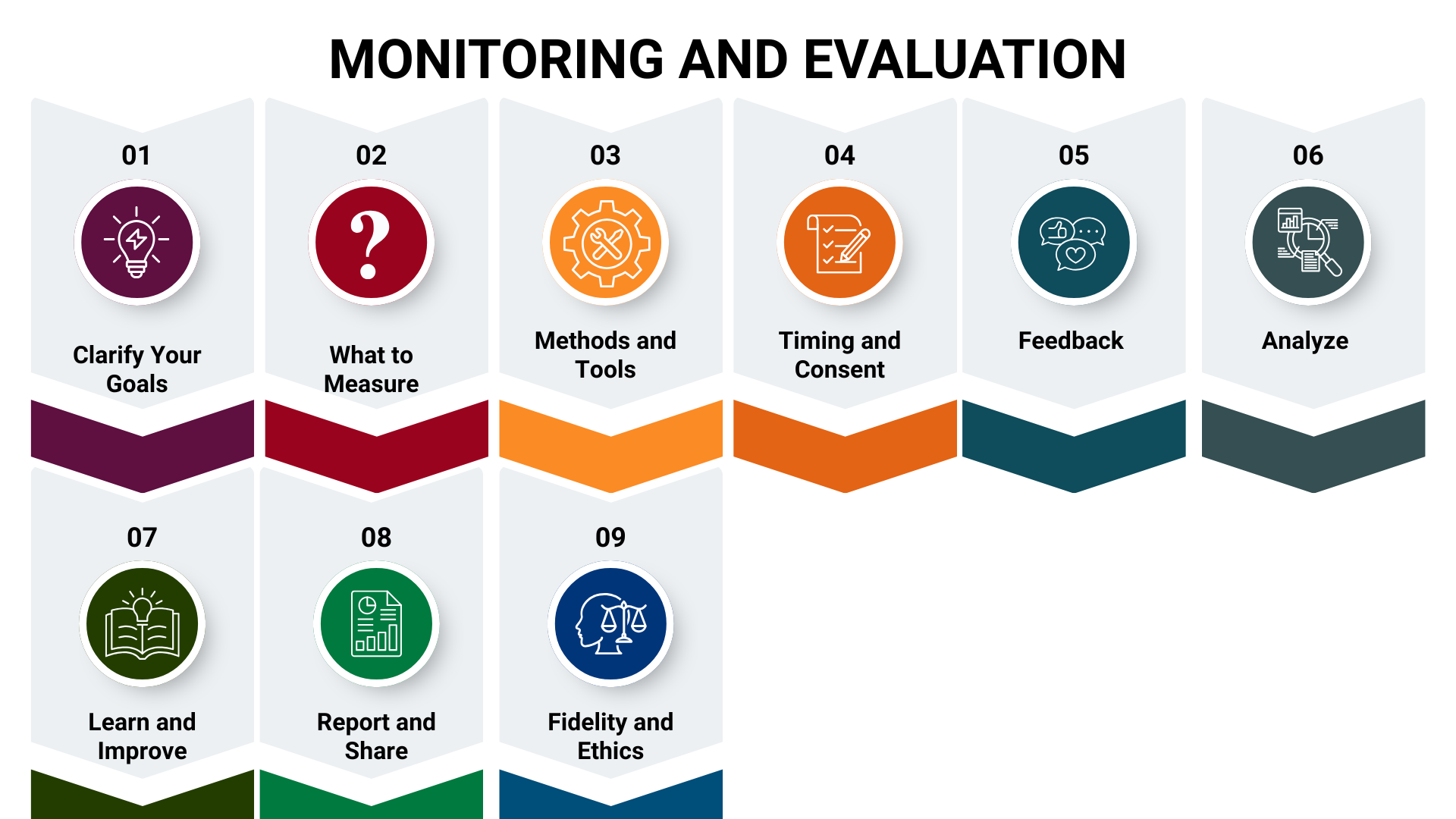
Image caption: Monitoring and Evaluation Steps.
Step 1: Clarify Your Goals
Before you measure, be clear on what you want to learn. Ask yourself:
-
What do I want to understand from this activity?
-
How will I know if participants experienced benefits?
-
How can this help me improve next time?
Keep goals simple: protect participants, improve quality, communicate value.
Step 2: Decide What to Measure
You cannot measure everything. Focus on what matters most in astronomy and well-being.
-
Well-being: mood, stress, connectedness
-
Learning: recall of one astronomy anchor or concept
-
Skills: noticing, clarifying values, choosing a next step
-
Inclusion and safety: access needs met, opt-outs respected, no unmanaged incidents
-
Fidelity: awe, perspective, or ACT-inspired reflection delivered as intended
-
Equity: who attended, who benefited, and who may have been left out
Translate outcomes into clear indicators such as:
-
Sliders (0–10) for mood, stress, connectedness
-
% recalling the astronomy anchor
-
Number of incidents and how they were resolved
-
Attendance by age or language