
Monitoring and Evaluation (Part 4)
Types of Evaluation
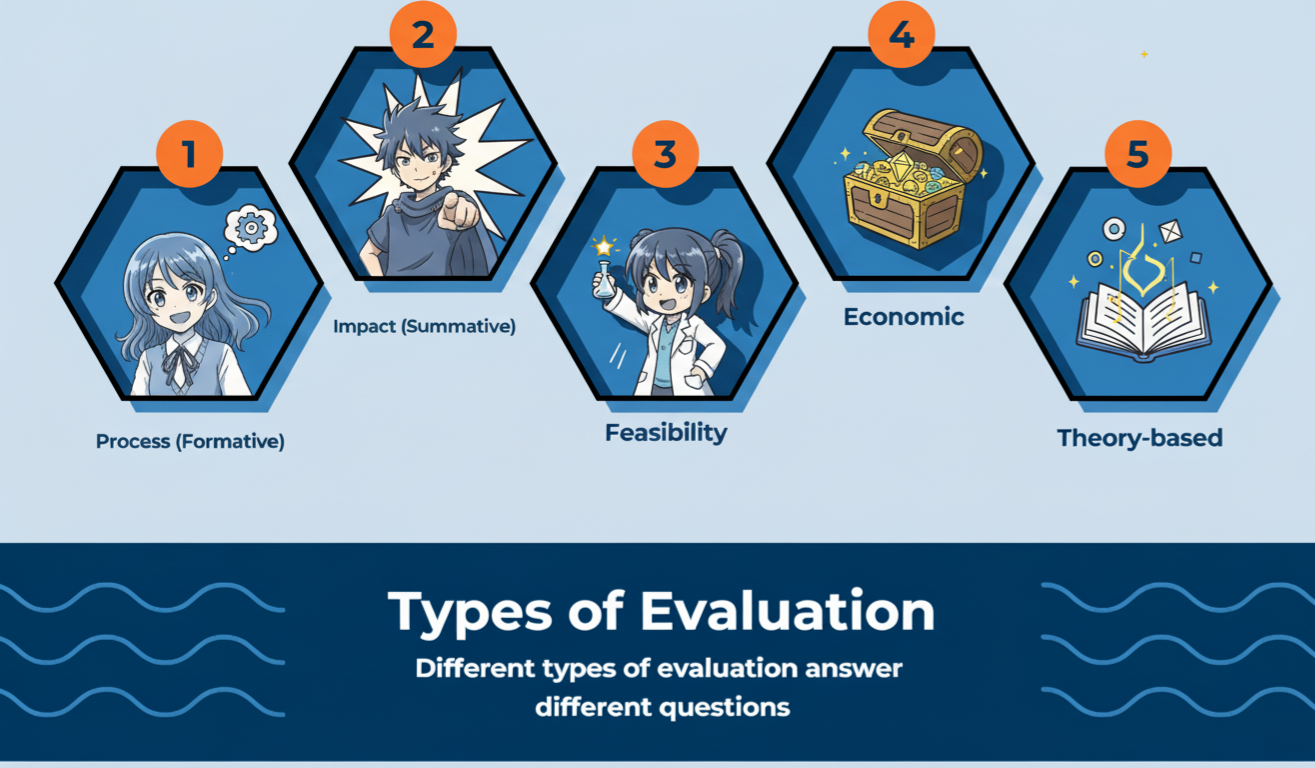
Image caption: Types of Evaluation.
Different types of evaluation answer different questions:
-
Process (Formative): How was the activity implemented? What worked, what did not, and for whom?
-
Impact (Summative): Did outcomes change? To what extent were changes due to the activity?
-
Feasibility: Could this be scaled up or repeated sustainably?
-
Economic: Was it cost-effective compared to alternatives?
-
Theory-based: Did the project follow its intended theory of change, and were mechanisms confirmed in practice?
When Not to Evaluate
Evaluation is powerful but not always appropriate. Avoid heavy evaluation when:
-
The project is very small and measurement would outweigh its value
-
The activity has no observable outcomes (e.g. simply aiming to inspire wonder)
-
The design is too complex to evaluate meaningfully
-
There is no clear hypothesis or goal
-
Outcomes are obvious without formal measurement
In these cases, focus on basic monitoring: attendance, safety, simple reflections, and team debrief.
Recognising Constraints
Good M&E is proportionate. Keep in mind:
-
Cost: larger projects may devote 10–20% of budget; small projects should keep it light
-
Burden: avoid overwhelming facilitators or participants
-
Scope: measure what matters, not just what is easy to count
Final Reflection
Monitoring and Evaluation is about more than data. It is about creating a culture of learning, trust, and safety. Done well, it strengthens your practice, protects participants, and builds evidence for the unique role of astronomy in mental health and well-being.
Keep it proportionate, ethical, and practical. Focus on what matters most, share results openly, and use every cycle to get better.