Astronomy for Mental Health and Well-being
2. Module 1: Astronomy for Mental Health and well-being
Welcome to the Sky
Astronomy is not only a science. It is also a deeply human experience. For thousands of years people everywhere have looked up at the night sky, tracing patterns, telling stories, and finding meaning in the stars. Ancient monuments such as Chichén Itzá in Mexico were aligned with celestial events, showing how the sky guided farming, timekeeping, and rituals. The Moon’s cycle shaped calendars and cultural traditions across the world.
Today we explore the cosmos through telescopes, satellites, and data. Yet the sense of wonder remains the same. You do not need to be a scientist to feel awe at Saturn’s rings or a meteor streaking across the sky. The sky belongs to all of us. It is a shared canvas that connects us to one another and to our past.
Reflection Prompt
Think about a time when you looked up at the sky and felt a sense of wonder or calm. What made that moment memorable?
Astronomy and Astrology: Understanding the Difference
Because both speak about constellations, astronomy and astrology are often confused. Their purposes are very different.
Astronomy is a science. Constellations act as markers that help scientists identify where objects are in the sky. For example, a supernova may be described as appearing in the constellation of Ophiuchus.
Astrology is a belief system. Constellations are used symbolically and connected with zodiac signs that are believed to influence personality or life events.
The zodiac illustrates this difference. Astronomy recognises 13 constellations along the Sun’s path, including Ophiuchus. Astrology recognises only 12 signs. This means that the zodiac signs and dates no longer match the actual positions of the stars today.
In short, astronomy relies on evidence and observation while astrology interprets the sky symbolically.
Why Astronomy Supports Well-being
Astronomy offers more than scientific knowledge. It can also support personal and social well-being. Looking up at the sky can:
-
Evoke awe, which research shows can reduce stress, improve well-being, and encourage kindness.
-
Offer perspective by reminding us of our place in the universe and showing the small yet meaningful role of human life.
-
Create a sense of connectedness, both to nature and to one another.
-
Encourage mindfulness by helping us slow down and be present in the moment.
-
Support meaning making by linking personal experiences to the larger story of the cosmos.
Pause and Consider
Which of these benefits feels most relevant to your own life right now?
Evidence and Examples
Iconic Images
The Earthrise photograph, taken by Apollo 8 astronauts in 1968, showed Earth rising above the Moon. It highlighted our planet as fragile and borderless, sparking reflection on unity and responsibility.
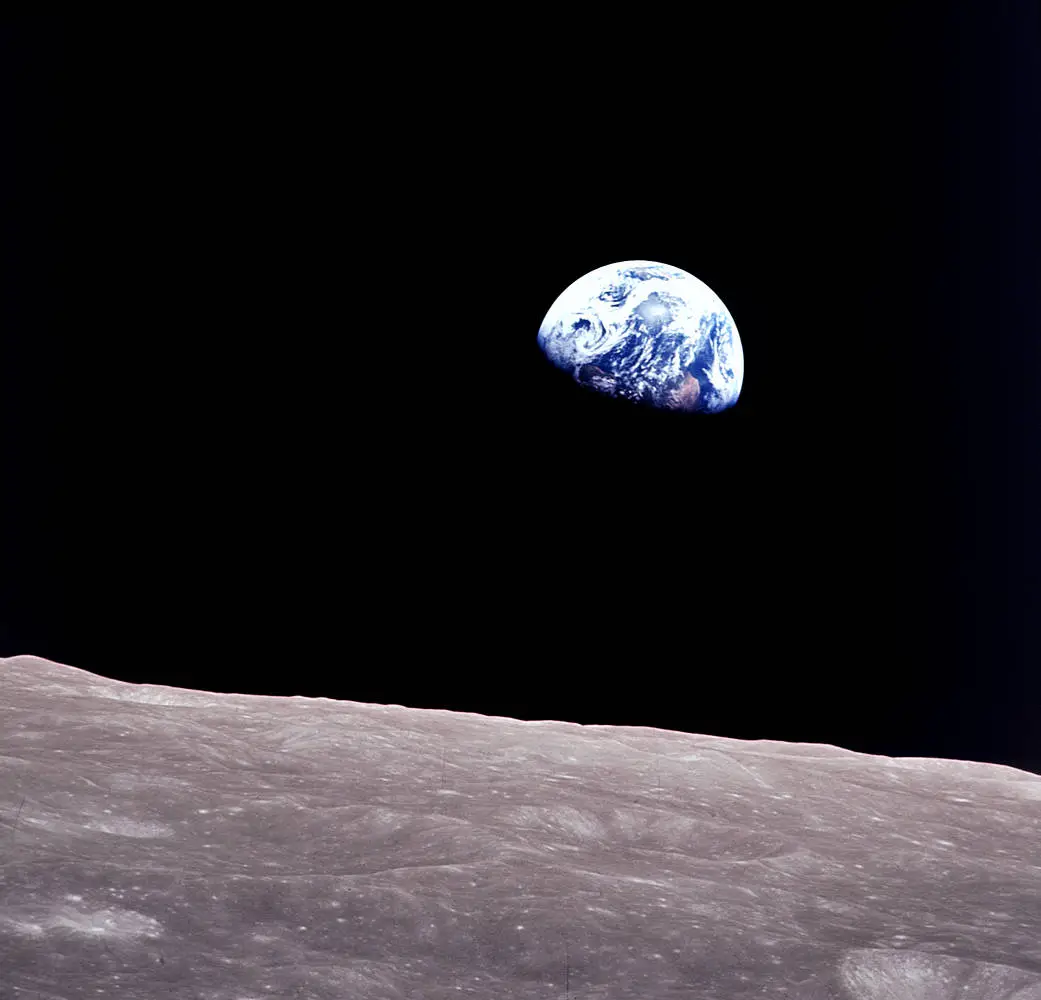
Image caption: Apollo 8 image of "Earthrise".
The Pale Blue Dot image, captured by Voyager 1 in 1990, inspired Carl Sagan’s reflection on the fragility of our world. He described Earth as a tiny speck in a vast cosmic arena, reminding us of our shared struggles and our duty of care.
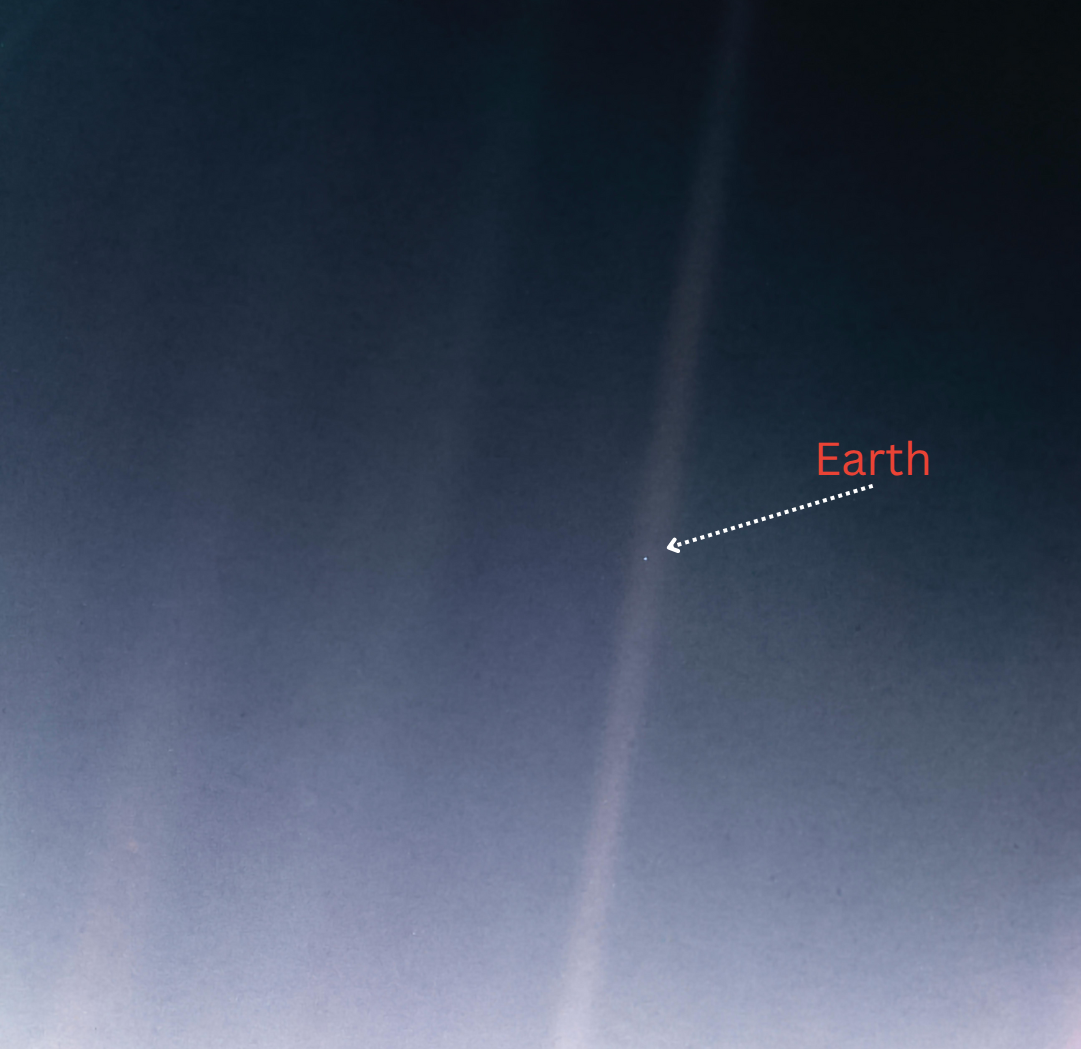
Image caption: Photograph of Earth taken on Feb. 14, 1990, by NASA’s Voyager 1 spacecraft.
Both images show that astronomy does more than explain the universe. It also inspires emotional reflection, humility, and compassion.
Astronomy in Practice
-
Stargazing can support trauma recovery. Trauma often disconnects thoughts, feelings, and bodily awareness. Guided stargazing provides grounding through visual and sensory experience. It creates a safe space where people reconnect with themselves and the present moment.
-
Planetarium mindfulness sessions are another example. Participants are guided in breathing and sensory awareness beneath a dome of simulated stars. This calm environment can reduce anxiety and encourage relaxation.
-
Researchers recently developed the Night Sky Connectedness Index (NSCI). Results show that feeling connected to the night sky is linked with better mental health and happiness. People in light polluted areas often feel less connected and less motivated to protect the night sky.
-
Community initiatives also bring people together. The nonprofit Reach for the Stars in Arizona organises monthly stargazing events that focus on mental health and community connection.
The Role of the OAD
The International Astronomical Union’s Office of Astronomy for Development (OAD) is exploring these ideas globally. The OAD works with partners to create projects where astronomy supports education, social development, and mental health. For example, initiatives such as Astronomy for Mental Health focus on using stargazing, storytelling, and guided reflection as tools to improve well-being. These projects highlight how astronomy can be accessible, inclusive, and relevant to everyday life.
By supporting local organisations and communities, the OAD ensures that astronomy is not only a science of discovery but also a resource for connection, resilience, and care.