Aquaculture: Facts & Figures and How One Health Can Improve Aquaculture Practices
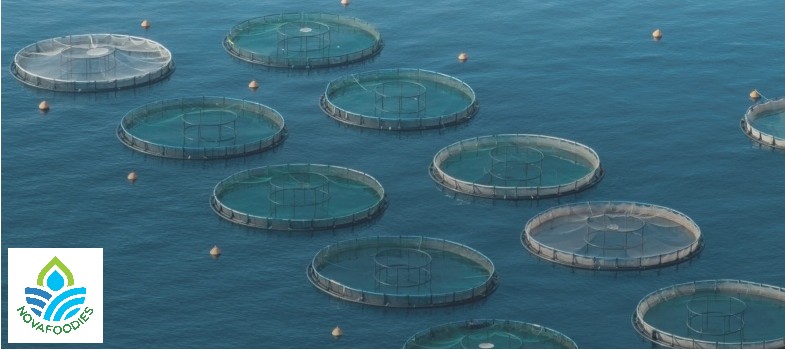
Aquaculture is a growing sector of the blue economy in Europe.
Table: Total catches of world’s main producers (2019)
(volume in tonnes live weight and percentage of total)
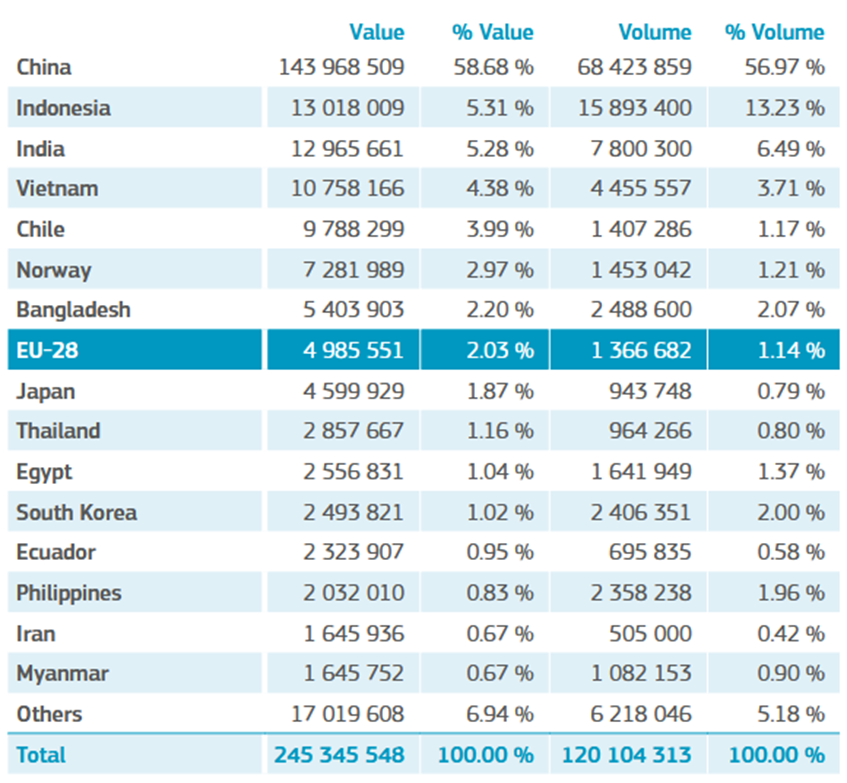 A table showing the total catches of the main producers in 2019. For example, China produced 58.68 % of the global value, which equals 56.97 % of global volume. In comparison, The EU-28 generated about 2 % of value and 1.14 % of volume.
Comparison of aquaculture numbers. The table should give an idea of the dimensions of this sector. (1.366.682/365 = ~3745 tons total production per day)
The EU is the fifth largest fisheries and aquaculture producer worldwide, accounting for about 3 % of global production. 78 % of this production comes from fisheries and 22 % from aquaculture (EU Commission, 2022, p. 19)
The blue economy, or the ocean economy, is a term used to describe the economic activities associated with the oceans and seas.
The blue economy is globally the fastest growing food production sector and shows stable numbers in EU-Member states. Around 22% of the EU’s production stems from aquaculture. The sector provides an important source of protein with a lower carbon footprint and is thus an important contributor to food security, resilience and climate mitigation.
Action of the EU in the Aquaculture sector:
Since 2021 new strategic guidelines to make aquaculture more sustainable and competitive have been outlined. They align with the main objectives of the common fisheries policy (CFP).
Aquaculture is recognised by the European Green Deal as a source of “low carbon” protein for food and feed, and an important contributor to food security, resilience and climate mitigation.
“Aquaculture provides over 50% of the global seafood supply and is one of the most resource-efficient forms of animal protein production, with significantly lower greenhouse gas emissions, land use, and freshwater use compared to terrestrial livestock.” (Source: FAO, 2022; World Bank, 2013)
For more detailed information, browse the following report:
Facts and figures on the common fisheries policy
Basic statistical data: 2022
With this booklet, we invite you to explore the complex and captivating universe of European Union fisheries. You will find key facts from across the entire value chain, ranging from production to consumption. You will learn about fishing fleets, aquaculture and trade. You will discover what the EU does to ensure the environmental, economic and social sustainability of EU fisheries, and the role [...]
Now, how does aquaculture fit into the concept of One Health?
Aquaculture is intrinsically linked to and exerts a significant impact on various facets of the environment and society. It relies heavily on natural ecosystems, which provide the necessary conditions for aquatic farming, while simultaneously influencing these ecosystems through its practices. The interaction between native and farmed animals is another critical aspect, as aquaculture can affect the health and dynamics of local wildlife populations. Furthermore, aquaculture plays a pivotal role in human health by providing a vital source of nutrition, and it also influences socioeconomic systems by creating jobs, supporting coastal communities, and contributing to the global economy. Thus, the practice of aquaculture is a complex interplay of ecological, biological, and socioeconomic factors.
Interactions with the environment are:
- Alterations of the natural habitat
- Source of waste
- Ballast water (potentially containing invasive species), fishing gear, oil-spills
- Eutrophication and pollution
- Alteration of biodiversity:
- Introduction of invasive species, GMOs, overexploitation
- Physical changes
- Conversion of wetlands and other natural habitats for aquaculture
Interactions with animals are:
- Competition and predation
- Farmed species may escape and compete with native fauna
- Disease transmission (zoonosis)
- Aquaculture can increase the prevalence of diseases and parasites
- Genetic impacts
- Breeding and hybridization with wild relatives can reduce the genetic diversity and resilience of native species
- Antibiotic resistance
- Use of antibiotics to control disease can contribute to the development and spread of antibiotic-resistant bacteria, posing a risk to both animal and human health
And finally, interactions with human health could be:
- Food production (economic and social aspects)
- Support local livelihoods
- Provisioning services (healthy food)
- Source of nutrition (omega-3 fatty acids, etc.)
- Food safety and security
- Climate mitigation
- Source of pollutants (antibiotics, hormones, pesticides)
Due to the fact that human actions have a significant impact on the system, these lessons should serve as a wake-up call, highlighting the importance of our use of natural resources and behaviour within our environment. The intention is to show the chain of effects that human action has, which may also influence food safety and security, consequently influencing our food system (and thereby us).