Examples of Extractive Species
The most appropriate combination of species depends on a number of factors, such as the site, the environment, the inputs, the water and currents, as well as the economic factors, the social factors, the experience of the farmer, and the regulatory factors. The combination of these factors will lead to different choices in the design of the best suited IMTA system for any specific location.
When talking about extractive species, those are primarily lower trophic species. They are referred to as extractive species, as they remove particulate matter from the environment and metabolise it into biomass that can be used for a range of applications on land such as food, feed or biomaterials. Some of those species, have a high potential and growing economic value. For example, when talking about algae - The world production of marine macroalgae, or seaweed, has more than tripled, up from 10.6 million tonnes in 2000 to 32.4 million tonnes in 2018. Global demand continues to increase and the number of uses for the product also increases. We will go more into detail on the applications and benefits of algae in a later lesson.
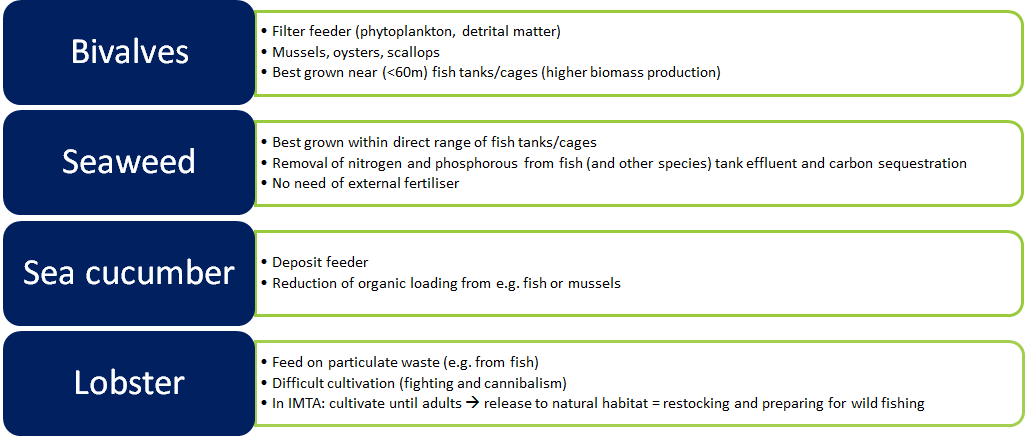
Bivalves. Filter feeder (phytoplankton, detrital matter) . Mussels, oysters, scallops . Best grown near (<60m) fish tanks/cages (higher biomass production) Seaweed . Best grown within direct range of fish tanks/cages . Removal of nitrogen and phosphorous from fish (and other species) tank effluent and carbon sequestration . No need of external fertiliser Sea cucumber . Deposit feeder . Reduction of organic loading from e.g. fish or mussels Lobster . Feed on particulate waste (e.g. from fish) . Difficult cultivation (fighting and cannibalism) . In IMTA: cultivate until adults > release to natural habitat = restocking and preparing for wild fishing
The role of extractive species in IMTA scenarios can be as follows:
- A circular system - the extractive species utilise the waste from the fed species as well as any excess nutrients that enter the marine ecosystem from the land.
- Environmental benefits – the utilisation of waste which would previously have entered the environment is now remediated by the extractive species.
- More resilient ecosystem that may prevent disease, pests and parasite load for the system as a whole.
- Additional biomass and economic products from a farm.
- More optimised use of licenced aquaculture space