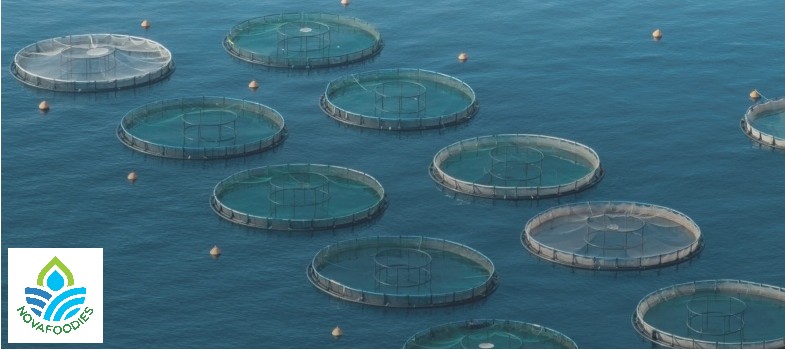
Cultivation of macroalgae in earthen ponds
Earthen ponds originally designed for marine salt extraction — whether currently in disuse or during periods when salt production is not active — offer significant potential for algae cultivation. These environments naturally benefit from solar evaporation and the tidal cycle, both of which create favorable conditions for growing algae.
Additionally, these ponds can support a dual-purpose system by combining salt extraction with extensive fish aquaculture, particularly during the summer and autumn months. This integrated approach maximizes the use of available resources and enhances the overall productivity of the site.
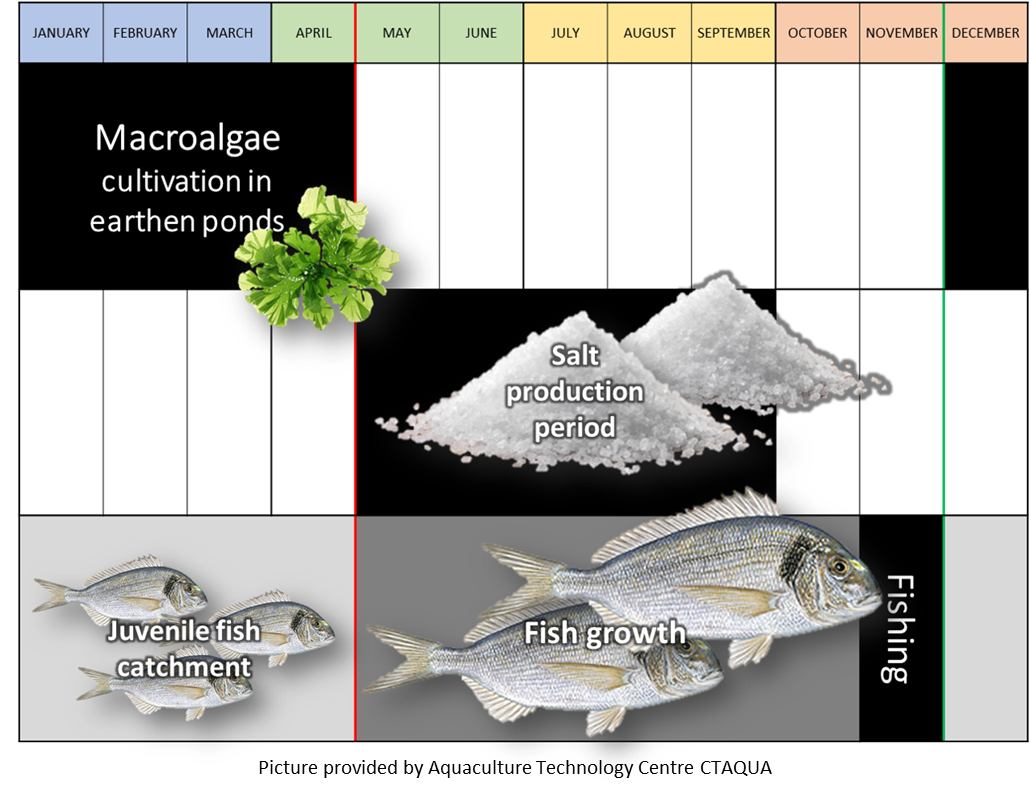 A calendar view of cultivation periods, showing for example Macroalgae cultivation in earthen ponds from January to April and Salt production from May to September. Fish cultivation from January to Octobe
Using earthen ponds for algae cultivation during the winter and spring months would offer numerous advantages. These seasons, when ponds are often underutilized, present an opportunity to diversify production and make the most of existing infrastructure. By introducing algae cultivation, these ponds can become productive year-round, contributing to both environmental and economic goals.
Extensive pond aquaculture not only supports biodiversity but also provides valuable environmental services and new business opportunities beyond traditional food production. Cultivating macroalgal species with marketable value can help conserve local biodiversity and cultural heritage while creating a profitable commercial activity. This approach fosters a sustainable cycle that benefits both the ecosystem and the local economy.
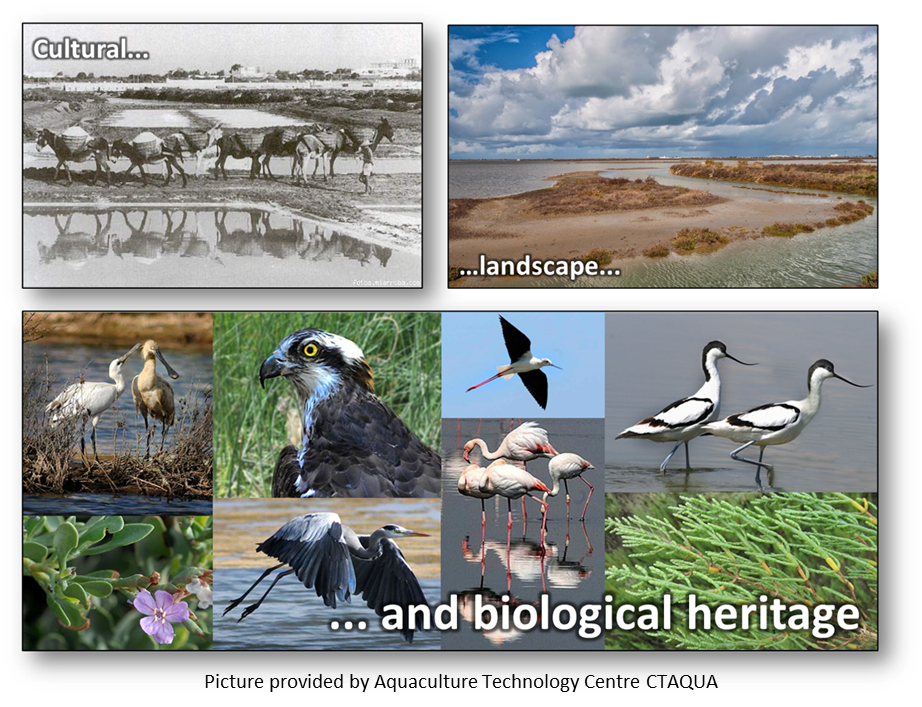 Three photos of earthen ponds, one titled cultural, showing donkeys in the earthen pond, the second titled landscape, showing a panoramic view over earthen ponds and the sea and the third titled and biological heritage depicting a variety of birds and plants. - Cultural landscape and biological heritage