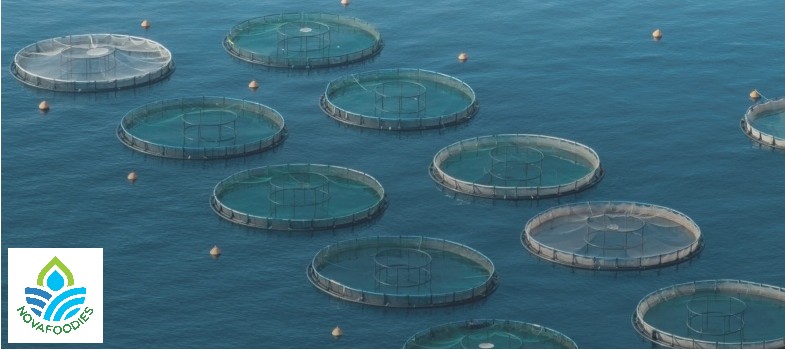
Examples of One Health implementation in production
A wide variety of One Health measures are possible in any given scenario. What concrete applications are useful depends on the specific conditions of production at the facility. Here is a list of examples:
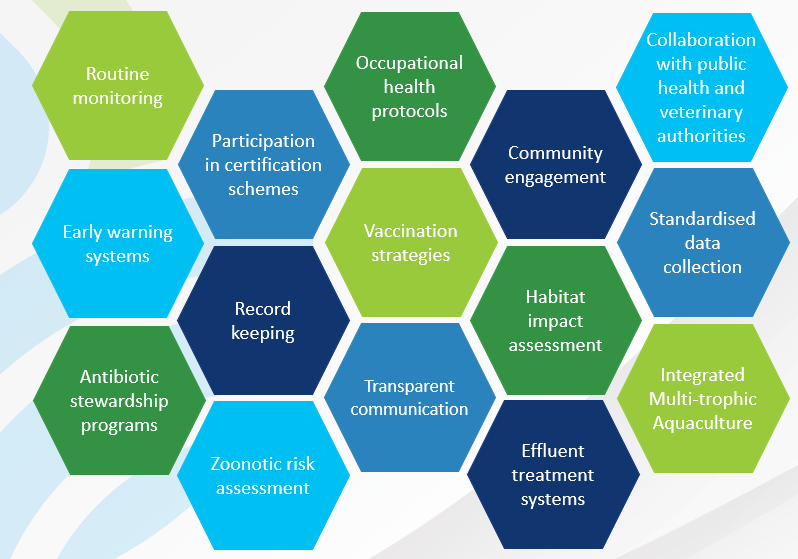 A figure showing the variety of applications; Routine monitoring, Early warning systems, Antibiotic stewardship programs, Participation in certification schemes, Record keeping, Zoonotic risk assessment, Occupational health protocols, Vaccination strategies, Transparent communication, Community engagement, Habitat impact assessment, Effluent treatment systems, Collaboration with public health and veterinary authorities, Standardised data collection and Integrated Multi-trophic Aquaculture
1. Integrated Health Surveillance
- Routine monitoring of fish health, water quality, and pathogen presence.
- Early warning systems for disease outbreaks using environmental DNA (eDNA) or biosensors.
- Zoonotic risk assessments to identify potential threats to human health from aquaculture pathogens.
2. Environmental Stewardship
- Effluent treatment systems (e.g., biofilters, constructed wetlands) to reduce nutrient pollution.
- Integrated Multi-Trophic Aquaculture (IMTA): Combine species like fish, shellfish, and seaweed to recycle nutrients and reduce waste.
- Habitat impact assessments before site expansion or new installations.
3. Responsible Use of Chemicals and Antibiotics
- Antibiotic stewardship programs to minimize resistance development.
- Vaccination strategies to reduce reliance on antimicrobials.
- Record-keeping of all treatments and chemical inputs for traceability.
4. Worker and Community Health
- Occupational health protocols for farm workers (e.g., protective gear, hygiene training).
- Community engagement to address concerns about water use, pollution, and food safety.
- Transparent communication of health risks and mitigation strategies.
5. Data Sharing and Policy Alignment
- Standardized data collection on fish health, environmental parameters, and antimicrobial use.
- Collaboration with public health and veterinary authorities to align with national One Health strategies.
- Participation in certification schemes (e.g., ASC, GlobalG.A.P.) that include One Health principles.