-
-
Federica Sacco under Creative Commons - NonCommercial-ShareAlike 3.0 International

Navigating and searching the web
An introduction to the operation of the WWW, and how to improve your web searches to find the exact information you require.
Course
2 hrs
-
Federica Sacco under Creative Commons - NonCommercial-ShareAlike 3.0 International

The Internet and the web
The WWW is just one service provided by the Internet! Investigate the other services that are available, identify the various types of different networks that are available for accessing them. Internet safety is discussed, with an emphasis on becoming a responsible digital citizen, aware of acceptable and unacceptable online behavior.
Course
2 hrs
-
Federica Sacco under Creative Commons - NonCommercial-ShareAlike 3.0 International

Using and understanding Internet services
Investigate the requirement for client/server processes to support Internet services and understand basic aspects of their operation. Further develop your awareness of Internet safety by identifying the appropriate agency to contact if you encounter upsetting or illegal online content.
Course
2 hrs
-
Federica Sacco under Creative Commons - NonCommercial-ShareAlike 3.0 International
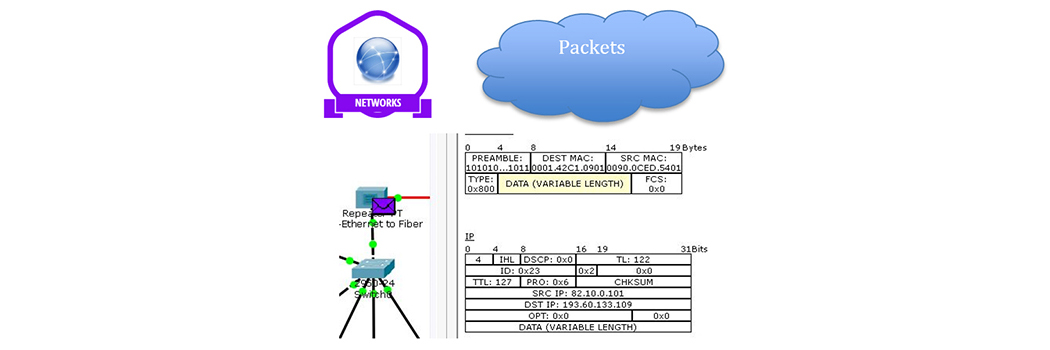
Introduction to Data networks and IP addresses
An introduction to the requirement for IP addresses in order to deliver Internet services. Investigate the structure of the IPv4 address, and learn how to assign addresses to devices that are found in a home network. Follow the progress of a www transfer between a web browser and a web server, discovering why DNS helps make the WWW an easier place to visit.
Course
2 hrs
-
Federica Sacco under Creative Commons - NonCommercial-ShareAlike 3.0 International
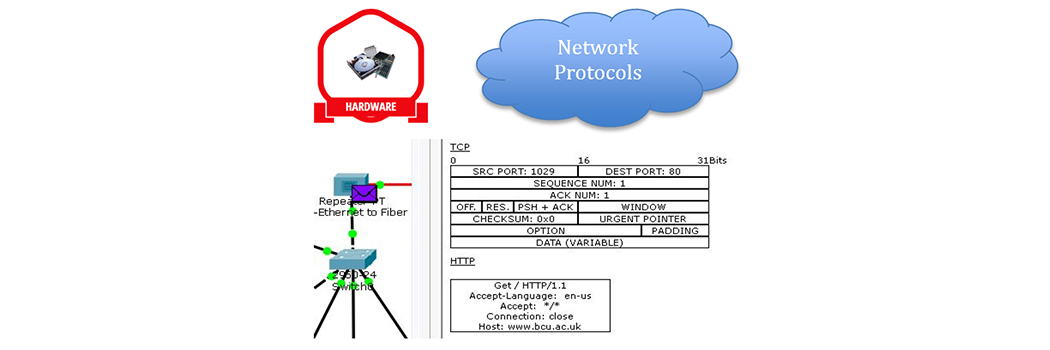
Identify network hardware and protocols
Introduction to the TCP/IP protocol suite, identifying the protocols used to support IP network communication, and briefly discussing their purpose. Network hardware devices are introduced, and their relationship with TCP/IP protocols is discussed. The www transfer between web browser/server is revisited, introducing the basic concepts of network address translation (NAT) in small home networks. Internet security is further developed, with an emphasis on protecting network devices from external threats.
Course
2 hrs
-
Federica Sacco under Creative Commons - NonCommercial-ShareAlike 3.0 International

The purpose of network hardware and protocols
A detailed investigation into the operation of the protocols within the TCP/IP protocol suites, discussing the services they provide for user applications. Network device operation is examined in more detail, with particular attention paid to how they interact with the TCP/IP protocols within the LAN. NAT is revisited in order to investigate its operation in larger networks, where multiple devices require its services.
Course
2 hrs
-
Federica Sacco under Creative Commons - NonCommercial-ShareAlike 3.0 International
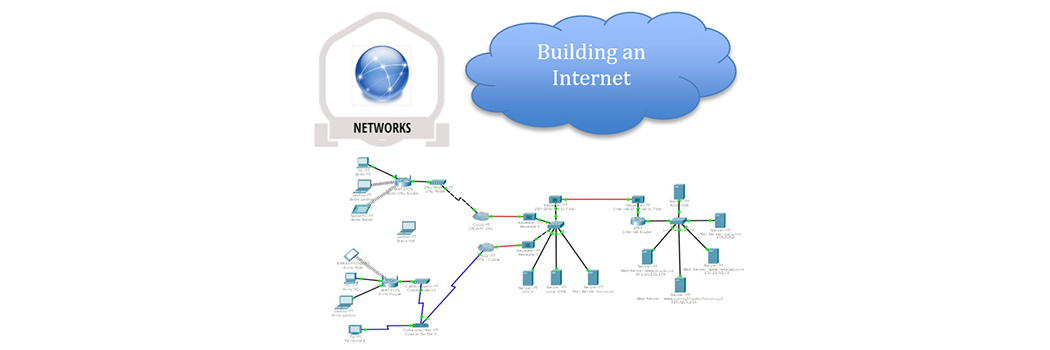
The operation of LAN and WAN hardware and protocols
Wide Area Networks (WANs) are introduced, and a variety of different WAN technology suitable for providing home Internet connectivity is discussed. The differences in operation of between LANs and WANs is discussed, and the use of TCP/IP in facilitating communication between LANs and WANs is investigated in detail.
Course
2 hrs
-
-
-
Copyright: Dyslexia Scotland
Introduction to Dyslexia and Inclusive Practice
An introduction to Dyslexia and inclusive practice for teachers, community educators and anyone with an interest in these issues.
Course
3 hrs
-
Copyright: Dyslexia Scotland
Supporting Dyslexia, Inclusive Practice and Literacy
‘Supporting Dyslexia, Inclusive Practice and Literacy’ is designed to support teachers and local authority education officers to engage in reflective practice and to develop a deeper understanding of dyslexia and inclusive practice in relation to learners who are dyslexic.
Course
10 hrs
-
Copyright: Dyslexia Scotland
Dyslexia: Identification and Support
‘Dyslexia: Identification and Support’ is designed for Support for Learning Teachers/pupil support teachers and local authority education officers to deepen their knowledge and understanding of the identification process and appropriate supports for dyslexia. This course provides opportunities for practitioners to engage in reflective practice and develop their confidence when identifying and supporting dyslexia.
Course
20 hrs
-
Copyright: Dyslexia Scotland
Introduction to Dyslexia and Inclusive Practice
An introduction to Dyslexia and inclusive practice for teachers, community educators and anyone with an interest in these issues.
Course
3 hrs
-
Copyright: Dyslexia Scotland
Supporting Dyslexia, Inclusive Practice and Literacy
‘Supporting Dyslexia, Inclusive Practice and Literacy’ is designed to support teachers and local authority education officers engage in reflective practice, develop a deeper understanding of dyslexia and inclusive practice in relation to learners who are dyslexic.
Course
10 hrs
-
Copyright: Dyslexia Scotland
Dyslexia: Identification and Support
‘Dyslexia: Identification and Support’ is designed for Support for Learning Teachers/pupil support teachers and local authority education officers to deepen their knowledge and understanding of the identification process and appropriate supports for dyslexia. This course provides opportunities for practitioners to engage in reflective practice and develop their confidence when identifying and supporting dyslexia.
Course
20 hrs
-
Dyslexia Scotland under Creative Commons - NonCommercial-ShareAlike 3.0 International
Introduction to Dyslexia and Inclusive Practice for Community Learning & Development
An Introduction to Dyslexia and Inclusive Practice for Community Learning & Development (CLD) developed to provide an introduction for community educators and anyone within a CLD setting in Scotland to raise awareness of dyslexia and improve their inclusive practice.
Course
3 hrs
-
-
-
Copyright: The Open University
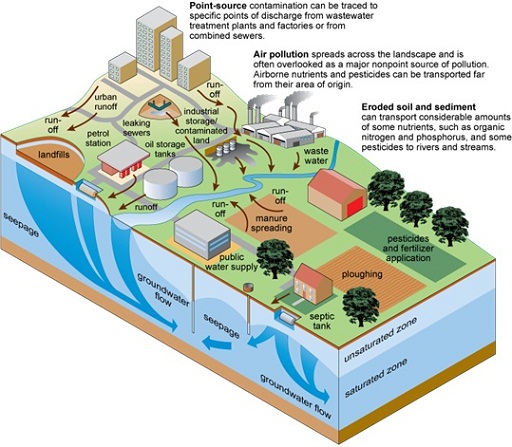
Analysing pesticides experiment
Analysing pesticides in the environment using GC-MS
Course
3 hrs
-
Copyright: The Open University
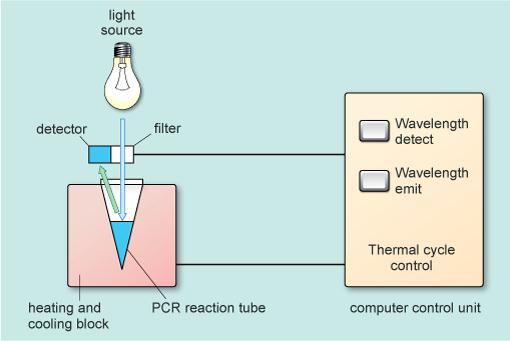
Genetic variations experiment
Testing for genetic variations using quantitative PCR analysis (polymerase chain reaction)
Course
3 hrs
-
-
-
Louise Todd, Open University in Scotland under Creative Commons - NonCommercial-ShareAlike 3.0 International

Everyday computer skills: a beginner’s guide to computers, tablets, mobile phones and accessibility
This updated course is intended to provide a basic introduction to digital skills for complete beginners, in an accessible way.
Course
16 hrs
-
Dan Cristian Padure under Creative Commons - 3.0 International

Professional Learning into Action
This badged course enables education practitioners to reflect and generate new practices from professional learning they have undertaken.
Course
2 hrs
-
Copyright: The Open University
Become an Open Learning Champion
This is a short course focussed on tips and strategies to enable and empower you to support your learners engage with OpenLearn and OpenLearn Create resources in a way that works best for their learning styles, prior learning experience and access to IT
Course
3 hrs
-
Ross Finnie for © The Open University under Creative Commons - NonCommercial-ShareAlike 3.0 International

Caring Counts: a self-reflection and planning course for carers
This course was developed with and for carers. It will help you gain a clearer understanding of who you are, identify your personal qualities and recognise the range of skills and abilities you’ve developed from your personal experiences and whilst caring. It will also help you to look forward, to think about what you’d like to do now or in the future and to make plans that will help you get where you hope to be.
Course
10 hrs
-
Ross Finnie for © The Open University under Creative Commons - NonCommercial-ShareAlike 3.0 International

Caring counts in the workplace
Caring Counts in the Workplace (a reflection and planning course for managers and policy makers) is a new version of the original course Caring Counts: a self-reflection and planning course for carers. It has been adapted by The Open University in Scotland for managers and policy makers and is aimed at supporting carers in the workforce. We have developed this in collaboration with the Equal Partners in Care project (Scottish Social Services Council and NHS Education for Scotland) and with Carers Scotland.
Course
5 hrs
-
Copyright: (c) flickr.com/Adeline Suvdal

Reflecting on Transitions
Reflecting on Transitions is a course developed in Scotland, by The Open University in collaboration with Bridges Programmes, to help with the process of reflection for learners from diverse backgrounds in a range of contexts. It is also for front-line staff and those supporting new migrants, refugees and asylum seekers. Bridges Programmes is a specialist agency promoting the social and economic integration of refugees, asylum seekers and migrants.
Course
5 hrs
-
Louise Todd, Open University in Scotland under Creative Commons - NonCommercial-NoDerivatives 3.0 International

Everyday computer skills: a beginner’s guide to computers, tablets, mobile phones and accessibility
This course is not accepting new enrolments as an updated version is now available. Learners already enrolled should continue with this course. The course is intended to provide a basic introduction to digital skills for complete beginners, in an accessible way.
Course
16 hrs
-
-
-
Copyright: Robert Wilson

OBC Startup Fund 2026
Welcome to the Open Business Creators Startup Fund. This funding opportunity will enable applicants to take their plans forward through using tools to validate their ideas and by providing support and grant funding to pursue their ideas and existing businesses.
Competition
8 hrs
-
Copyright: Robert Wilson

OBC Freelancer Fund 2026
Welcome to the Open Business Creators Freelancer Fund. This funding opportunity will enable applicants to take their plans forward through using tools to validate their ideas and by providing support and grant funding to pursue their ideas.
Competition
8 hrs
-
Copyright: Robert Wilson

Open Business Creators Fund Spring 2025
Welcome to the Open Business Creators Fund. This funding opportunity will enable applicants to take their plans forward through using tools to validate their ideas and by providing support and grant funding to pursue their ideas.
Competition
8 hrs
-
OU Asset Bank under Creative Commons - NonCommercial-ShareAlike 4.0 International

Open Business Creators Fund 2024
Welcome to the 2024 Student Entrepreneurship Competition. The competition will help students and recent graduates take their business ideas forward by securing cash prizes to invest in their ventures.
Competition
1 hr
-
Michael Hackett under Creative Commons - NonCommercial-ShareAlike 3.0 International

Entrepreneurship Accelerator
This is a collection of practical advice and support for students and other would-be entrepreneurs to develop their business ideas.
Course
12 hrs
-
-
-
geralt (pixabay) under Creative Commons - 3.0 International

The impact that climate change can have on plant growth and agricultural systems
This short introduction discusses how elevated CO₂ together with increases in drought and high temperature may impact upon the growth and development of plants, particularly with reference to some agricultural systems.
Course
5 hrs
-
geralt (pixabay) under Creative Commons - 3.0 International

Human activity and climate change
This unit seeks to identify a workplace’s impact on global climate change through its emissions of greenhouse gases (GHGs), notably carbon dioxide (CO₂), the most common such gas. It will then provide some guidance on how best to reduce that footprint, looking in turn at behavioural and management issues, relatively straightforward physical measures and transport.
Course
3 hrs
-
geralt (pixabay) under Creative Commons - 3.0 International

Reducing the carbon footprint of the place where I work
This unit seeks to identify a workplace’s impact on global climate change through its emissions of greenhouse gases (GHGs), notably carbon dioxide (CO₂), the most common such gas. It will then provide some guidance on how best to reduce that footprint, looking in turn at behavioural and management issues, relatively straightforward physical measures and transport.
Course
3 hrs
-
geralt (pixabay) under Creative Commons - 3.0 International

Geoengineering, Permaculture and Transition Towns
There is increasing concern among meteorologists working with the IPCC (Intergovernmental Panel on Climate Change) that governments will not curb greenhouse emissions enough to prevent dangerous levels of warming, usually considered to be 2C by 2100. Many members of the public must share this pessimism, and are also concerned about dwindling supplies of low cost petroleum. Among the possible responses to holding such a belief are: denial / avoidance, campaigning and focussing on adaptation. In this unit we will look at three alternative responses, all outside of mainstream thinking: geoengineering, permaculture and Transition Towns.
Course
3 hrs
-
geralt (pixabay) under Creative Commons - 3.0 International

Personal Action and Climate Change
This unit looks at how what we eat has a direct effect on climate change. It also considers the importance of how our food reaches our plates, who controls that process and why this makes a difference to climate change. The unit also explores the positive action that individuals and communities can take to act for change.
Course
5 hrs
-
geralt (pixabay) under Creative Commons - 3.0 International

How non human species adapt to climatic changes
This unit explores the effects of anthropogenic climate change on non human species. It explores examples of the way that different non human species adapt to climate change. It uses basic ideas in ecology to examine how species will, and, already are, adapting to changing climates. Finally, it looks at how these adaptations will affect biodiversity within the UK.
Course
3 hrs
-
geralt (pixabay) under Creative Commons - 3.0 International

Impact and our options for stabilising climate change
This unit considers the ways in which climate change affects us as individuals and where we live. It also considers what can be done to reduce or stabilise climate change. These key questions are explored - How does climate change affect me and where I live? What kind of changes might I be able to observe where I live? What kinds of change will be experienced in other parts of the world? What can be done to stabilise climate change? What can be done to reduce/stabilise climate change? What is the best way to reduce the risk of climate change?
Course
5 hrs
-
geralt (pixabay) under Creative Commons - 3.0 International

Economics of Climate Change
This short unit explains how decisions are taken about allocating scarce resources in a market economy, and why such decisions may have potentially disastrous effects on the environment including the climate.
Course
2 hrs
-
geralt (pixabay) under Creative Commons - 3.0 International

What can I do as an individual about climate change
There is now a strong global scientific consensus that climate change is real and due to CO₂ emissions from human use of fossil fuels. When considering action to reduce emissions, and prevent the worst impacts of climate change, large changes require government intervention and changes in corporate behaviour. However, there are many important actions that can be taken in parallel by individuals in order to move towards a lower-carbon lifestyle.
Course
7 hrs
-
geralt (pixabay) under Creative Commons - 3.0 International

Energy options for the future
This unit will explore how both renewable and non-renewable energy sources may contribute to our energy future within a context of a need to meet carbon reduction targets. It will review current energy sources and technologies and their limitations and then explore future possibilities, a hydrogen economy, the use of nuclear energy and carbon capture.
Course
2 hrs
-
geralt (pixabay) under Creative Commons - 3.0 International

Introduction to Ecopsychology
This introduction to ecopsychology explores how climate change affects how we feel about our world and our future. We will explore how strong feelings triggered by this crisis can send us into denial and despair, hindering our ability to act meaningfully. We will also come to understand more about our emotional responses and how they can empower us to learn to live with climate change.
Course
2 hrs
-
geralt (pixabay) under Creative Commons - 3.0 International

Business and climate change
Businesses can be affected both directly from climate change and indirectly through government policies. Risks can occur from the impacts of predicted climate change effects such as increased temperature, extreme weather events, disrupted ecosystems and flooding of land. This unit is wrried for small and medium enterprises and people interested in how businesses can respond to climate change. It introduces key concepts such as risk, corporate social responsibility and engaging employees and enables businesses to quickly grasp the issues and opportunities for managing risks. Unit authored by Dr. Barbara L Jones
Course
5 hrs
-
geralt (pixabay) under Creative Commons - 3.0 International

Large Scale Action on Climate Change
National and international mitigation is mediated by a range of governmental and intergovernmental bodies and policies. The most famous of these is probably the Kyoto Protocol, but this is only a starting point, with a more effective global agreement required to sufficiently reduce carbon emissions and avoid dangerous climate change.
Course
10 hrs
-
geralt (pixabay) under Creative Commons - 3.0 International

How do we adapt agriculture to climate change?
This unit looks at how industrial agriculture is one of the anthropogenic causes of climate change. It goes on to consider what adaptations must be adopted in order to mitigate its impact on climate change. The concept of food security is introduced and its link to climate change explored. Finally, the notion of adapting agriculture through the way we design and live in cities is presented.
Course
2 hrs
-
-
-
Beatriz de los Arcos under Creative Commons - NonCommercial-ShareAlike 3.0 International

Digital skills, digital learning
This course helps participants take stock of and improve their digital skills, and understand how to learn effectively in a Massive Open Online Course, or MOOC. It is aimed at society in general and requires 12 hours of study time.Click on 'Continue' below to enrol, track your progress and receive a Statement of Participation.
Course
12 hrs
-
Beatriz de los Arcos under Creative Commons - NonCommercial-ShareAlike 3.0 International

Learning with MOOCs for professional development
This course helps participants understand how they can use MOOCs for learning, and how they can grow professionally studying a MOOC, whether or not they are already in employment. The course requires 12 hours of study time.
Course
12 hrs
-
-
-
Copyright: Education Scotland
Introduction to Autism and Inclusive Practice
An Introduction to Autism and Inclusive Practice is supported by the 2019 refreshed Autism Toolbox and provides you with a basic introduction to autism and inclusive practice.
Course
3 hrs
-
Copyright: Education Scotland
An Introduction to Inclusive Education
An Introduction to Inclusive Education set within the context of Scottish education
Course
2 hrs
-
Jeanette Hewitt under Creative Commons - NonCommercial-ShareAlike 3.0 International
Inclusion in Practice: The CIRCLE Framework – Primary
This ‘Inclusion in Practice: The CIRCLE Framework’ module has been designed for education practitioners in primary schools and local authorities with the aim of supporting equitable professional learning in Scotland.
Course
10 hrs
-
Copyright: City of Edinburgh, Queen Margaret University, NHS Lothian
Inclusion in Practice – The CIRCLE Framework: Secondary
Secondary School ResourceThe Secondary CIRCLE Framework materials were written by Edinburgh City and Queen Margaret University. Full details of those involved in developing the CIRCLE Framework materials can be found in the Secondary CIRCLE Framework, which is available for download in the ‘Useful resources’ section 9. The Secondary CIRCLE Framework materials have been adapted by Education Scotland in consultation with Edinburgh City and Queen Margaret University to develop this module - ‘Inclusion in Practice: The CIRCLE Framework’.This version of the content may include video, images and interactive content that may not be optimised for your device. Copyright © 2019Intellectual propertyUnless otherwise stated, this resource is released under the terms of the Creative Commons Licence v4.0 http://creativecommons.org/licenses/by-nc-sa/4.0/deed.en_GB.
Course
10 hrs
-
-
-
Copyright: LawCare

Managing and understanding yourself
This course gives you the opportunity to think about how you exercise your judgement, know your limitations, take on responsibility, deal with stress and reflect on your work.
Course
4 hrs
-
Copyright: LawCare

Working with others
This course will give you the opportunity to think about how you work with clients, including managing expectations, establishing boundaries and dealing, in particular, with difficult or vulnerable clients.
Course
4 hrs
-
My OpenLearn Create Profile
- Personalise your OpenLearn profile
- Save Your favourite content
- Get recognition for your learning
Already Registered?