Identity, Intersectionality & Privilege
Identity, Intersectionality, and Privilege
Privilege
Privilege refers to an unearned advantage that individuals may experience based on aspects of their identity. For example, some young people may be able to access all areas of a school environment without barriers, while others may face challenges related to disability, language, discrimination, or socioeconomic circumstances. Understanding privilege helps us recognise how identity and social positioning influence people's experiences, opportunities, and treatment within society and education.
Wheel of Power/Privilege
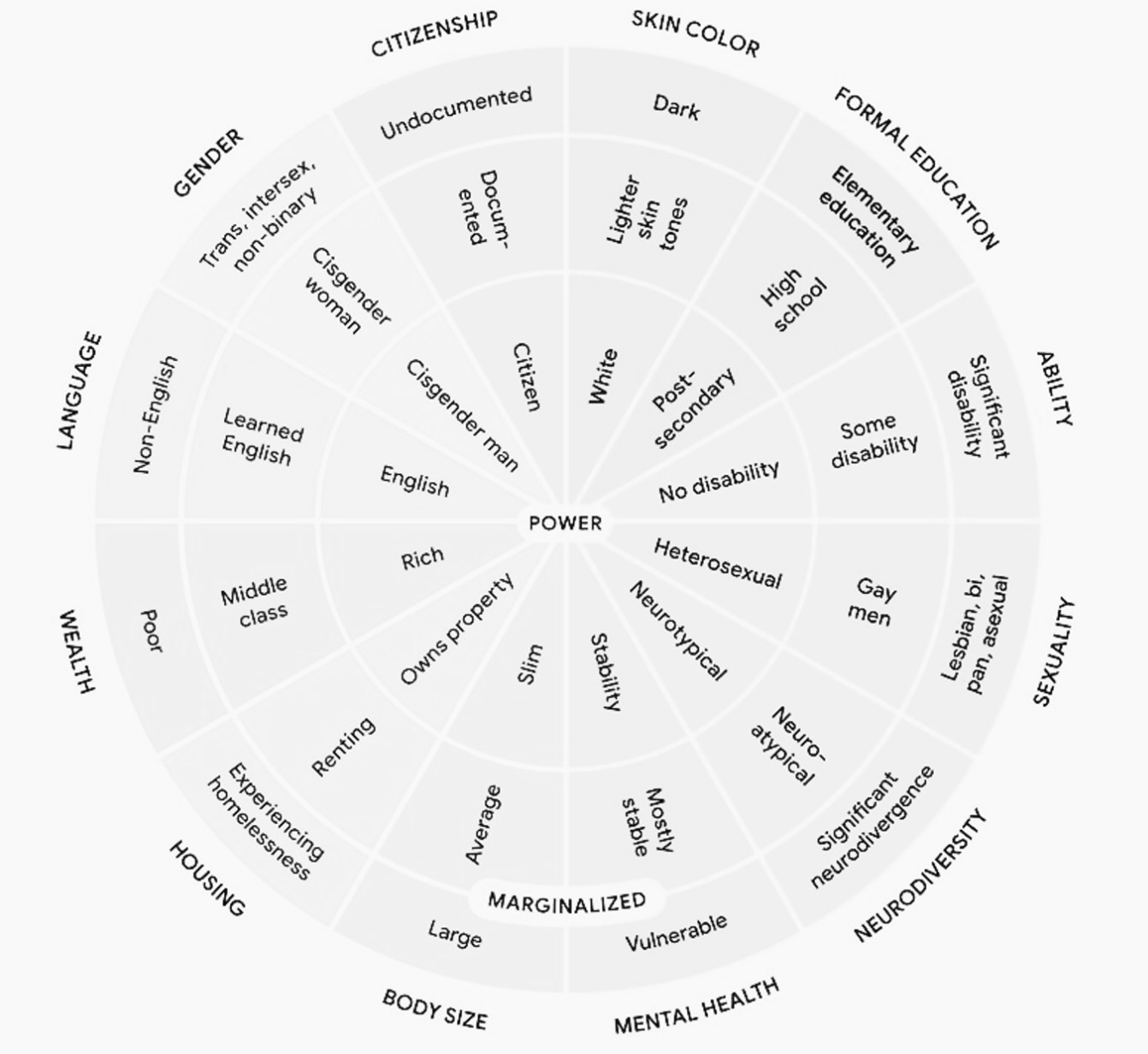
The Wheel of Privilege is a reflective tool used to explore how different aspects of identity can influence people's experiences within society. It highlights how systems of power/inequality may advantage some individuals while creating barriers for others. The wheel encourages critical self-reflection on privilege, marginalisation, and positionality, and can support discussions around inclusion, equity, and anti-ableist practice within educational settings.
Having privilege does not mean a person has not experienced difficulties or discrimination. Instead, it refers to advantages that may exist because certain aspects of identity are more socially valued or accommodated within society.
Intersectionality
Intersectionality describes how different aspects of a person's identity – such as race, gender, sexuality, disability, religion, or social class – intersect and interact to shape their experiences. Individuals may experience multiple forms of privilege and discrimination at the same time. For example, while a woman may experience sexism, a Black lesbian woman may experience sexism, racism, and homophobia simultaneously. Considering intersectionality can help us better understand the complexity of people's lived experiences and the importance of inclusive practice.
Understanding privilege and intersectionality is important within education because learners do not experience barriers in the same way. Factors such as disability, race, gender, language, and socioeconomic background can influence access to education, feelings of belonging, and experiences within the classroom. Reflecting on these concepts can support more inclusive and anti-ableist educational practice.
Reflective Log
In your reflective logbook, under the Critical Reflection Activities section for Module 1, please complete the following tasks:
- Take a moment to look at the Wheel of Privilege and consider where you may position yourself within it. Reflect on how different aspects of your identity may shape your experiences, opportunities, and interactions within social and educational settings.
- Consider how identities such as race, gender, sexuality, socioeconomic status, and disability may intersect to shape educational experiences and outcomes. How might these intersections influence access, participation, belonging, and support within educational environments?