Supporting migrants to join political parties, unions and advocacy groups
Migrant support providers can offer guidance to clients on how to join membership organisations and get involved in politics or take collective action on issues such as rights at work or justice for migrants. There are a number of ways you can help.
1. Raise awareness and inform
Many migrants are unaware that they have the right to join trade unions, political parties, or advocacy groups — or may not know what these groups do.
- Host information sessions or drop-ins about rights to join unions and political or advocacy groups.
- Distribute multilingual guides or factsheets that explain what these organisations do and how to join them.
- Include this information in your existing support services, such as ESOL classes for new arrivals.
- Use peer ambassadors (migrants already engaged) to share lived experiences and inspire others.
2. Make access easier
Even when migrants are interested, they may face practical or psychological barriers such as language, digital access, fear of authority, or lack of confidence.
- Support clients in completing membership forms, or accompany them to their first meeting.
- Arrange in-person visits or introductions to local union branches, political parties, or advocacy groups.
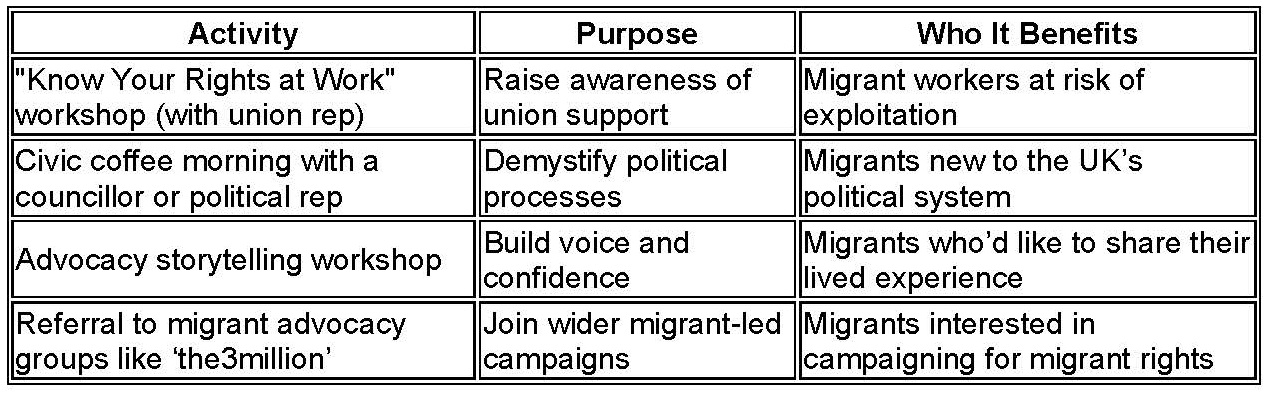
- Collaborate with trusted local partners to run "meet and greet" events with guest speakers from unions, parties, or campaigns.
3. Empower through skills-building
Engaging with civic groups requires confidence and communication skills that migrants may still be developing.
- Offer workshops on storytelling and public speaking.
- Invite clients to help with campaigns, media interviews, or speaking at events to build leadership.
- Provide training in rights at work and political literacy.
4. Facilitate collective action
Migrants may feel more confident acting together than as individuals. Group action also helps build solidarity and power.
- Support migrant workers to form or join union branches in sectors like care, hospitality, or cleaning.
- Work with local political parties to invite migrants to community consultations, surgeries, or hustings.
- Help clients connect with existing migrant-led advocacy networks (e.g. The 3 Million, Migrants Organise).
5. Address fears and misconceptions
Some migrants may fear that engaging with political or activist groups could affect their immigration case or draw unwanted attention.
- Clarify that joining a trade union or advocacy group is legal and safe, regardless of status.
- Emphasise that political engagement does not affect immigration status (but offer caution/support for undocumented people).
- Partner with legal advisors to offer confidential Q&A sessions about rights and risks.
- Build trust gradually — allow migrants to attend as observers first, or engage behind the scenes.
6. Build partnerships and referral pathways
You don’t have to do it all in-house. Leverage existing civil society networks to enhance support.
- Form partnerships with local trade unions, party branches, and community organisers.
- Create a referral list of trusted contacts who are friendly to migrants and happy to support newcomers.
- Invite external representatives to come in regularly and host co-delivered workshops or clinics.
Examples of support activity