Algae processing
Processing algae involves several key techniques to maximize their utility and shelf life. Drying is a fundamental method used to remove moisture, effectively preserving algae for extended periods while also reducing weight for easier storage and transportation. Another essential process is extraction, which isolates valuable compounds like agar and carrageenan from algae. These extracts are widely used across industries — from food production to pharmaceuticals — making extraction a crucial step in unlocking the full potential of algae and ensuring efficient resource use.
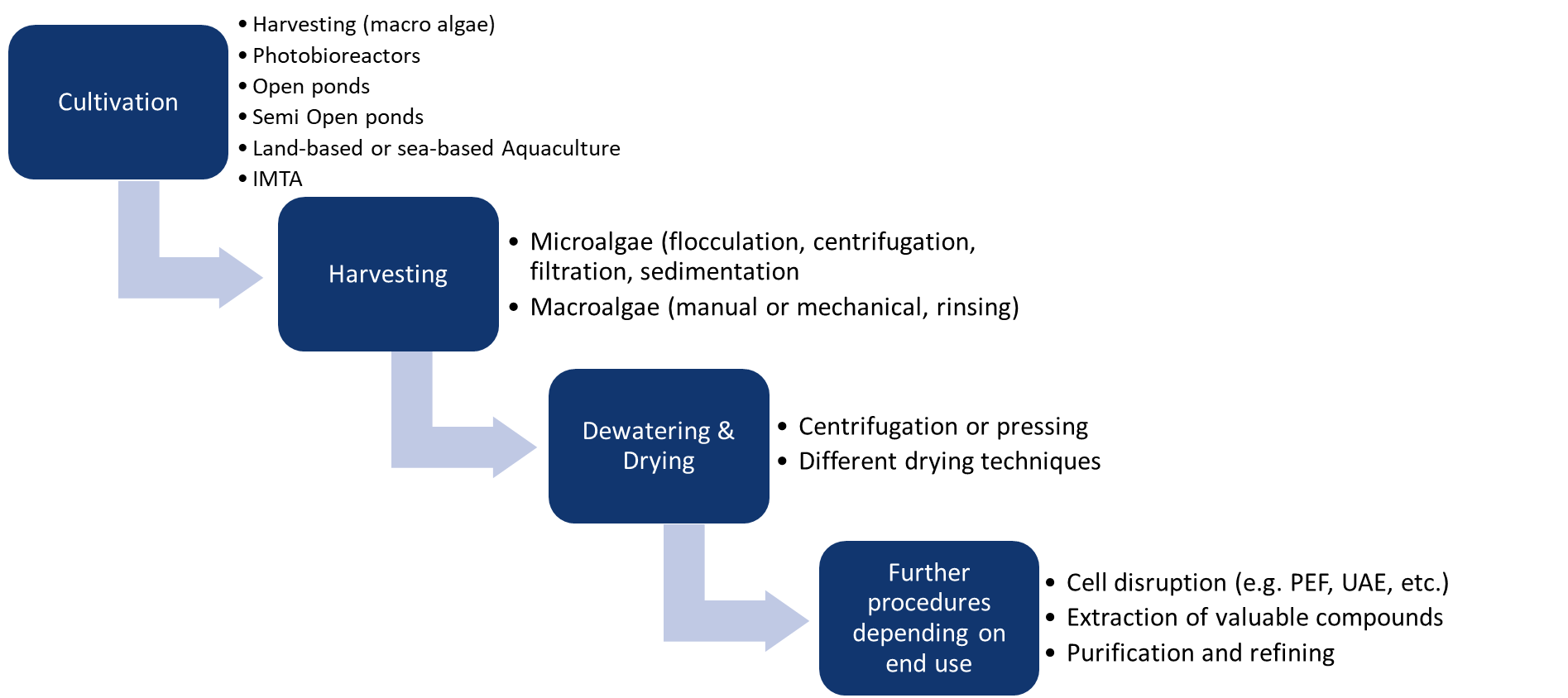 Cultivation: Harvesting (macro algae), Photobioreactors, Open ponds, Semi Open ponds, Land-based or sea-based Aquaculture, IMTA. Harvesting: Microalgae (flocculation, centrifugation, filtration, sedimentation), Macroalgae (manual or mechanical, rinsing). Dewatering and drying: Centrifugation or pressing, Different drying techniques. Further procedures depending on end use: Cell disruption (e.g. PEF, UAE, etc.), Extraction of valuable compounds, Purification and refining
Algae undergo various processing methods to enhance their practical applications and longevity. Dehydration is commonly employed to eliminate water content, which helps prevent microbial growth and extends storage life, while also making the product lighter and more cost-effective to transport. Important bioactive substances such as alginates, proteins, and pigments are separated from the algae biomass. These extracted components serve as essential ingredients in numerous sectors, including food, cosmetics, and biotechnology, thereby broadening the industrial value and versatility of algae.

A photobioreactor for microalgae (Wikimedia)