(Algae) Biorefineries
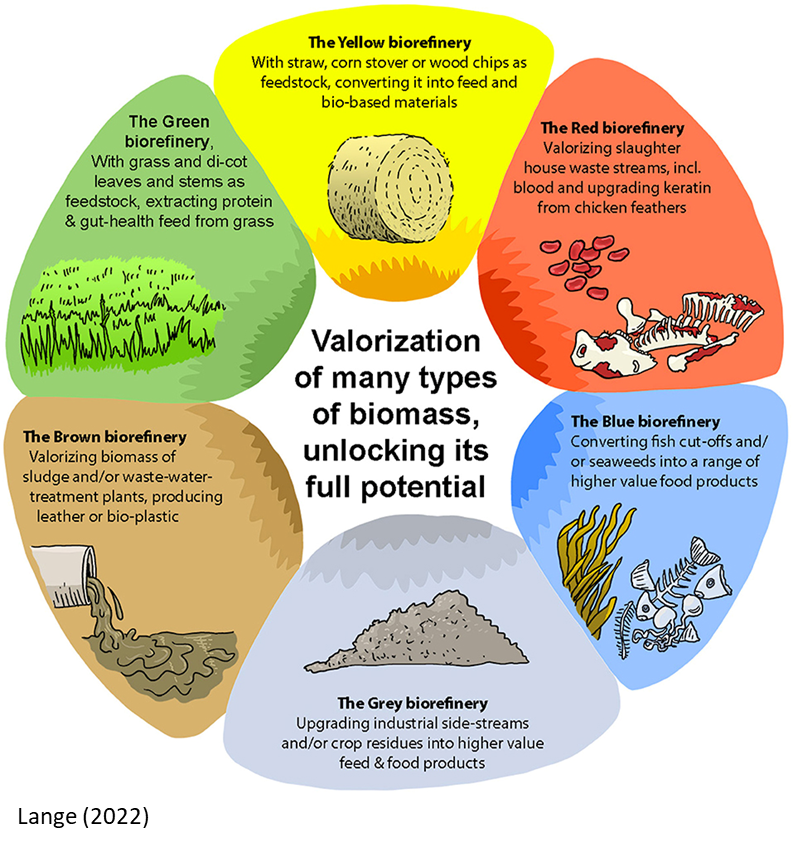 A diagram reading Valorization of many types of biomass, unlocking its full potential. The six different types read: The Yellow biorefinery With straw, corn stover or wood chips as feedstock, converting it into feed and bio-based materials. The Green biorefinery With grass and di-cot leaves and stems as feedstock, extracting protein & gut-health feed from grass. The Red biorefinery Valorizing slaughter house waste streams, incL blood and upgrading keratin from chicken feathers. The Brown biorefinery Valorizing biomass of sludge and/or waste-water- treatment plants, producing leather or bio-plastic. The Blue biorefinery Converting fish cut-offs and/ or seaweeds into a range of higher value food products. The Grey biorefinery Upgrading industrial side-streams and/or crop residues into higher value feed & food products.
Currently, biofuel production from microalgae lacks economic viability due to high capital costs per unit of fuel, making it essential to extract high-value co-products — such as nutraceuticals, pharmaceuticals, or specialty chemicals — to improve financial sustainability. Regardless of the processing method used, factors like process efficiency, energy input, and resource optimization must be carefully balanced to ensure both economic and environmental benefits. By integrating co-product extraction, microalgae biorefineries can enhance their profitability while supporting a more sustainable and circular bioeconomy.