Example: Biorefinery Extraction - Pulse Electric Field (PEF)
Pulsed Electric Field (PEF) is a cutting-edge, non-thermal technology used in biorefineries to efficiently extract valuable compounds from wet microalgae biomass. By exposing the biomass to brief, high-voltage electric pulses, PEF induces electroporation — creating temporary or permanent pores in cell membranes. This process facilitates the release of intracellular components like proteins, pigments, and carbohydrates without generating excessive cell debris or causing thermal degradation. PEF can also be combined with mild heating to further boost extraction yields, making it ideal for large-scale, continuous processing.
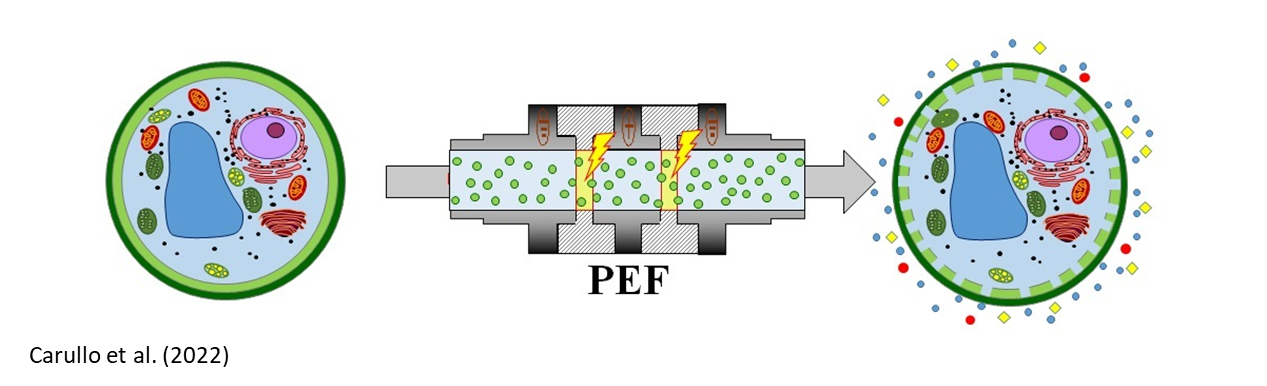 A schematic of the process of pulse electic field (PEF). On the left is an intact cell including its organelles, in the center is a diagram of a PEF machine and on the right is the organelle with its cell walls broken open by PEF.
PEF stands out for its sustainability benefits, offering a cleaner and more energy-efficient alternative to traditional extraction methods. It operates at low temperatures, eliminating the need for energy-intensive drying or chemical solvents, which significantly reduces environmental impact. The technology optimizes resource use by preserving the integrity of the remaining biomass, aligning with zero-waste and circular economy principles. Additionally, PEF can utilize water as a solvent, avoiding harmful chemicals and simplifying downstream purification processes.
The future of PEF in biorefineries looks promising, with growing research and industrial interest driving advancements in device design and process optimization. As PEF systems become more efficient and cost-effective, they are poised to revolutionize sustainable extraction and valorization of microalgae. This technology is expected to play a pivotal role in producing biofuels, nutraceuticals, and other high-value bioproducts, supporting the transition to a circular bioeconomy.