Opportunities in different fields
The following lesson is structured along the nutritional, health, social, economic and ecological benefits of the use of micro- and macroalgae.
As an overview, algae can be applied in these fields:
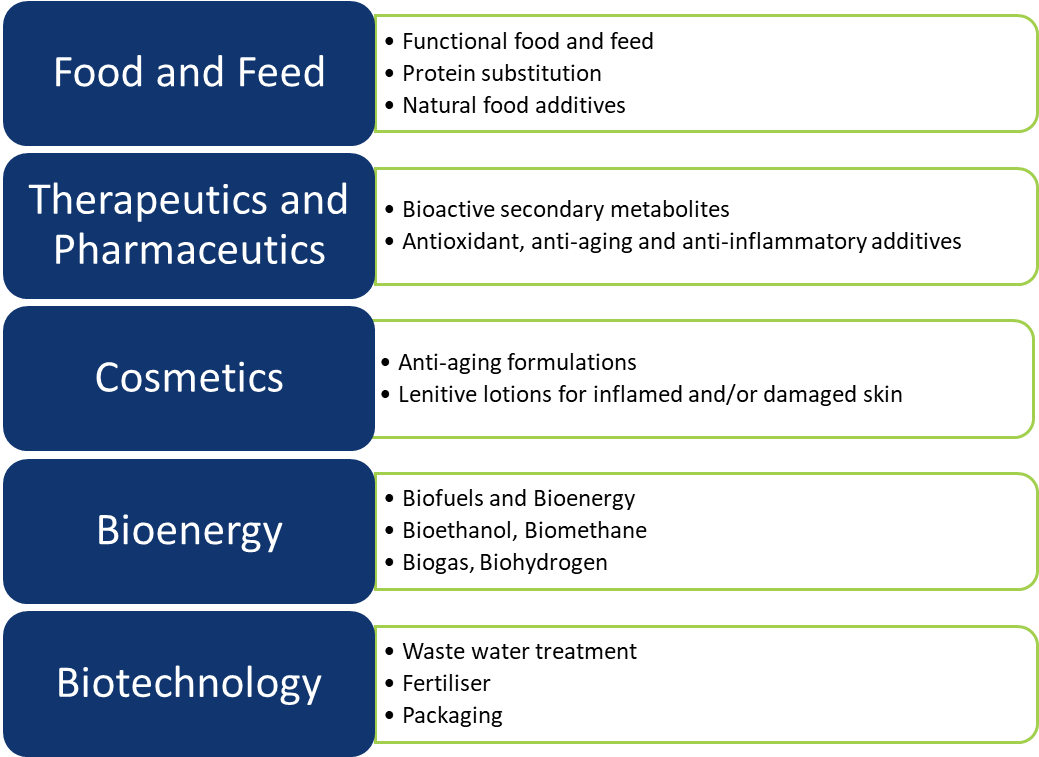 The infographic shows five main application areas of algae: Food and Feed: Algae are used in functional foods (foods with added health benefits), as protein substitutes, and as natural food additives. Therapeutics and Pharmaceutics: Algae contain bioactive compounds (substances that affect living organisms) with antioxidant (protect cells from damage), anti-aging, and anti-inflammatory (reduce inflammation) properties. Cosmetics: Algae are used in anti-aging skincare products and soothing (lenitive) lotions for damaged or irritated skin. Bioenergy: Algae can be converted into renewable fuels, including bioethanol (alcohol-based fuel), biomethane (methane produced from biological sources), biogas, and biohydrogen. Biotechnology: Algae support wastewater treatment (cleaning polluted water), fertilizer production (plant nutrients), and sustainable packaging materials.
Today, micro- and macroalgae serve a diverse array of practical and innovative uses across industries. Agar-agar, derived from algae, is widely utilized as a gelling, stabilizing, or binding agent in food and laboratory applications. Algae also provide valuable supplementation and nutraceuticals, such as omega-3 and ulvans, enhancing health and wellness products. In biotechnology, alginate matrices protect microorganisms, like alginate-immobilized yeast cells, while algae serve as nutritious feed for aquatic animals. Additionally, algae contribute to sustainable packaging solutions through the development of algae-based plastics for food wrapping. Their rich pigments—including astaxanthin, fucoxanthin, phycocyanin, and lutein—are highly sought after for their applications in food, cosmetics, and health products.
Hear how expert Camelia Nicula makes use of algae: Camelia from TUCN, the Technical University of Cluj-Napoca, talks about the sensory appeal of algae products. She explains how they approach the topic and what they discovered when incorporating algae into meat products.