
Applications of micro- and macroalgae
Macroalgae are incredibly versatile and find applications in numerous industries. They enhance food products by adding umami taste and serve as natural colorants, emulsifiers, stabilizers, and antioxidants in food additives. Additionally, macroalgae are used in dietary supplements, animal feed, and biostimulants like fertilizers. Their bioactive compounds are valuable in pharmaceuticals and nutraceuticals, while their biomass is utilized in bio packaging, cosmetics, and carbon sequestration. Moreover, macroalgae are a promising source for biofuels, biogas, and bioethanol.
Microalgae are highly adaptable organisms that have recently gained significant global attention due to their potential applications across a wide range of industries. They provide a practical and eco-friendly alternative to fossil fuels by efficiently harnessing solar energy to produce biomass and reduce carbon dioxide levels in the atmosphere. The remarkable ability of microalgae to produce a wide range of bioactive chemicals with diverse pharmacological and therapeutic applications is truly impressive. These include anti-inflammatory agents, antioxidants, antitumor agents, anticancer agents, antiviral agents, antimicrobial agents, and anti-allergen agents.
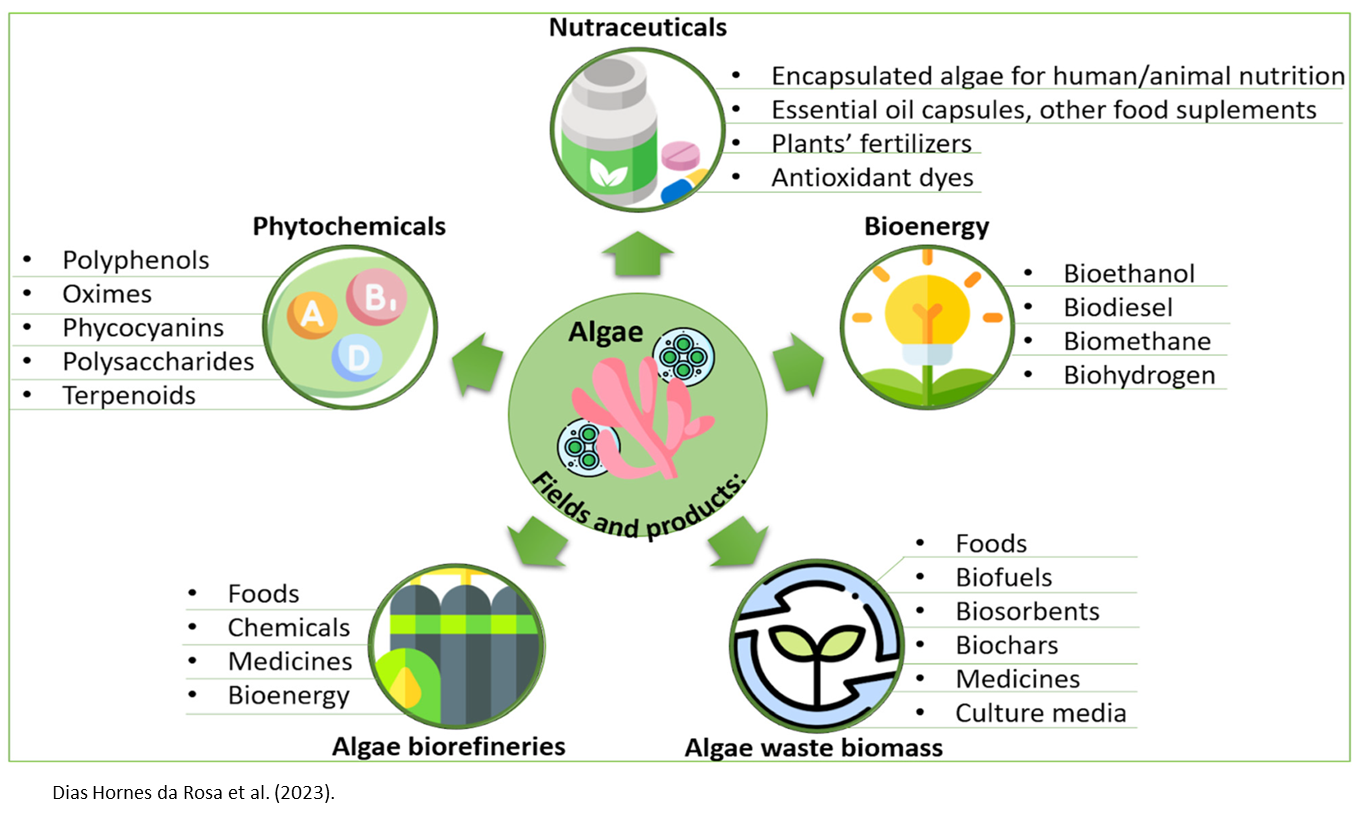 A diagram that summarises the different fields and products for algea, such as Phytochemicals (Polyphenols, Oximes, Phycocyanins, Polysaccharides, Terpenoids), Nutraceuticals (Encapsulated algae for human/animal nutrition, Essential oil capsules and other food suplements, Plants' fertilizers and antioxidant dyes), Bioenergy (Bioethanol, Biodiesel, Biomethane, Biohydrogen), Algae waste Biomass (Food, Biofuels, Biosorbents, Biochars, Medicines and culture media) or Algae biorefineries (Foods, Chemicals, Medicines, Bioenergy).
In terms of nutrition, microalgae are an excellent source of protein, lipids, and carbohydrates. They are adept at using carbon dioxide, nutrients, and water to synthesize these crucial macronutrients through photosynthesis. Additionally, they offer a wealth of vitamins, minerals, and nutrients that are beneficial for human health, potentially helping to prevent conditions such as cancer, heart disease, neurological problems, and eye diseases. Due to their advantageous characteristics, the bioactive substances contained in microalgae, such as pigments, also find use in the cosmetic industry. Furthermore, microalgae offer potential in wastewater treatment and as fertilizers.