European algae market
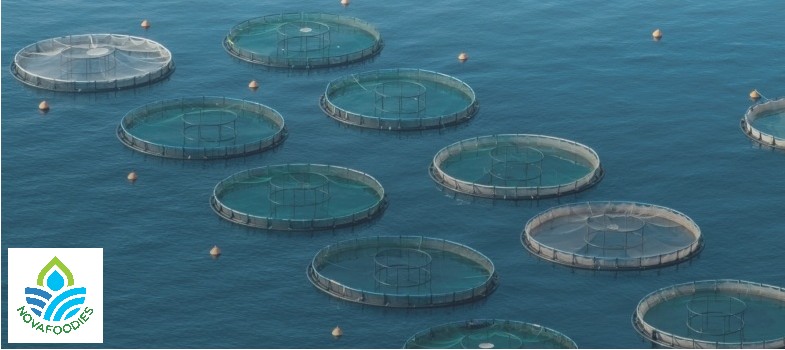
The European algae sector produced 287,390 tonnes of biomass in 2019, accounting for just 0.8% of global algae production. Macroalgae dominate this output, with over 99% of the total volume, while microalgae contribute less than 1%. Among macroalgae producers, 68% rely on harvesting wild stocks, and 32% use aquaculture methods - 76% of which are sea-based, and 24% land-based. Microalgae production is entirely land-based, with 71% of companies using photobioreactors, 19% using ponds, and 10% using fermenters. Spirulina is primarily produced in ponds, with some use of photobioreactors. These production methods reflect the sector’s technological divide: macroalgae is more traditional and marine-based, while microalgae is more innovative and land-based, often geared toward high-value products like nutraceuticals and cosmetics.
From a market perspective, France, Ireland, and Spain lead in macroalgae production, while Spain, Germany, France, and Italy dominate microalgae production. Spirulina producers are concentrated in France, Italy, Germany, and Spain. The sector is economically significant in these countries, with France, Ireland, and Spain also ranking highest in terms of turnover and employment.
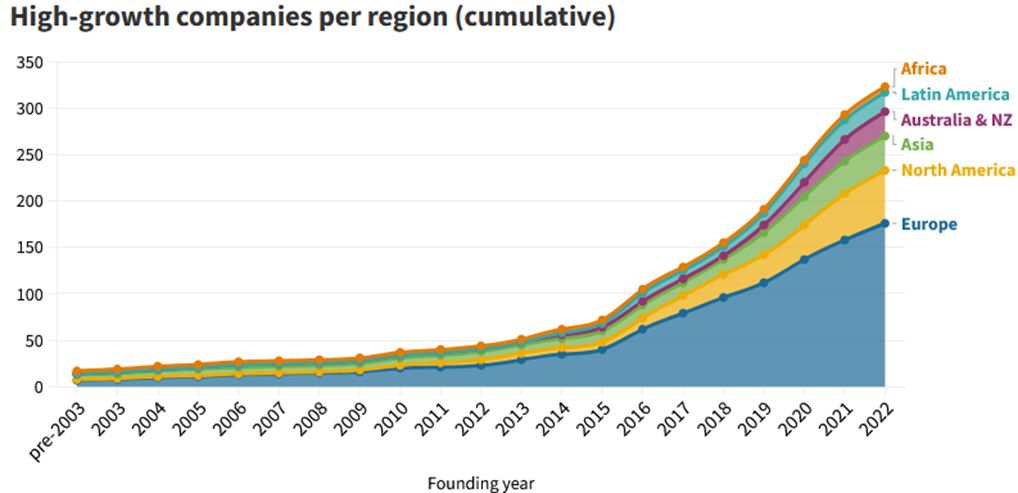 A diagram of a timeline plotting the founding years of algae companies from 2003 until 2022. It shows a rising trend for all regions, i.e. Latin America, Australia and NZ, Asia, North America and Europe. The European share is the largest, meaning Europe has the largest number of companies founded in a given year.
The European seaweed industry is experiencing a surge in startup activity, particularly in downstream processing and vertically integrated operations. In 2022, Europe remained the global hotspot for seaweed startups, with the highest number of new companies formed. However, while the number of deals increased, the total investment volume dropped to $34 million, half of the $67 million recorded in 2021. This suggests a shift toward smaller funding rounds, possibly reflecting early-stage ventures or cautious investor sentiment. Most investments targeted companies working on livestock methane reduction (e.g., Asparagopsis), bioplastics, biorefineries, and food products, which together accounted for 83% of all tracked investments. Pure cultivation startups were less favored, indicating that investors are prioritizing value-added applications over raw biomass production.
Regionally, France, Ireland, and Spain are leading in startup formation and innovation, with notable activity also in Nordic countries like Sweden and Denmark. These regions benefit from supportive research institutions and emerging public-private partnerships. For example, breakthroughs in cultivating high-demand species like Ulva and Palmaria are being driven by startups such as Nordic Seafarm (Sweden) and Oceanwide (Denmark). Regulatory bottlenecks and high production costs remain challenges, but innovations in breeding, bioreactors, and automated seeding devices are helping to accelerate scalability. Overall, Europe’s startup ecosystem is vibrant and expanding, positioning the region as a global leader in sustainable seaweed innovation.