Applications across Europe
Macroalgae applications
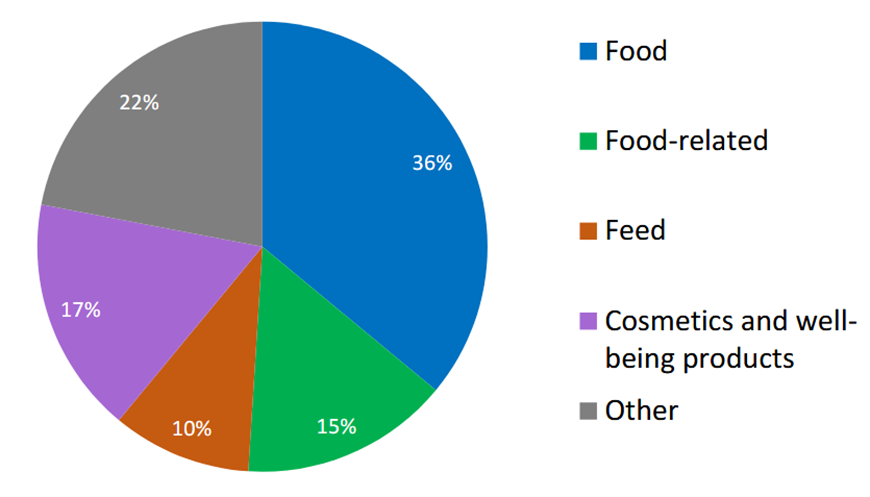 The largest use of seaweed biomass is for food, accounting for 36% of all European seaweed companies. An additional 15% of companies use it for food-related purposes, such as food supplements, thickening agents and preservatives. Applications for feed products amount to around 10% of seaweed companies. Another 17% of companies use produce in cosmetics and well-being products, while the remaining usage is in other applications, such as biofuel and fertilisers. Araújo et al. (2021)
- Food (Umami Ingredient): Seaweeds like nori, wakame, and dulse enhance flavor in soups, snacks, and seasonings.
- Food Additives: Provide natural colorants (e.g., phycocyanin), emulsifiers (alginates), stabilizers, and antioxidants for processed foods.
- Dietary Supplements: Rich in iodine, vitamins, and minerals, they are used in health supplements and functional foods.
- Animal Feed: A nutrient-dense feed additive for livestock, poultry, and aquaculture.
- Biostimulants (Fertilizers): Seaweed extracts improve soil health and plant growth in agriculture.
- Pharmaceuticals: Used in antiviral, anticoagulant, and anti-inflammatory medicines due to their bioactive compounds.
- Nutraceuticals: Support immune health, digestion, and detoxification in wellness products.
- Bio-Packaging: Algae-based materials are developed as biodegradable alternatives to plastic for sustainable packaging.
- Cosmetics: Ingredients like alginates and fucoidans are used in skincare for hydration and anti-aging benefits.
- Carbon Sequestration: Macroalgae farms help capture CO₂, mitigating climate change.
- Biofuel/Biogas/Bioethanol: While promising, large-scale production is still in pilot phases due to cost and efficiency challenges.
Microalgea applications
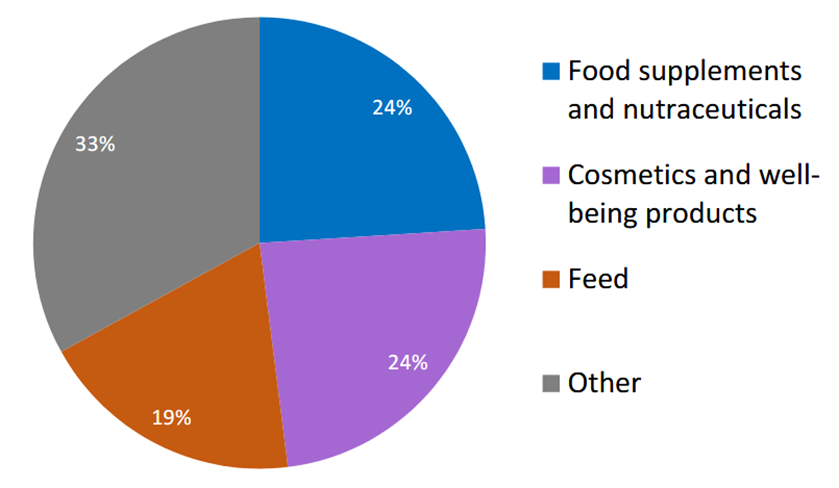 In Europe, companies use microalgae biomass primarily for the food supplement and nutraceuticals sector (24%), the cosmetics and well-being industry (24%) and for feed (19%). Other applications, such as biofuels and pharmaceuticals, have been a focal point for research and industry, although the number of companies using the biomass for these areas is currently low. To fully exploit the potential of microalgae biomass for biofuels, technological advancements and corresponding cost reductions have been identified as essential (Zhang et al., 2014). For Spirulina, food, food supplements and nutraceuticals represent the most common applications by companies (75%). Araújo et al. (2021)
- Biofuels: Microalgae are explored as a sustainable source for biodiesel, bioethanol, and biogas, though large-scale production remains limited due to high costs and technical challenges.
- Therapeutic and Pharmaceutical Products: Rich in bioactive compounds, microalgae are used to develop drugs, antioxidants, and anti-inflammatory treatments.
- Nutraceuticals / Functional Foods: High in proteins, omega-3s, and vitamins, they are incorporated into superfoods, supplements, and health-enhancing products.
- Natural Food Additives & Colourants: Used as natural dyes (e.g., astaxanthin, spirulina blue) and flavor enhancers in food production.
- Cosmetics: Pigments like astaxanthin and chlorophyll are used in skincare and makeup for their antioxidant and anti-aging properties.
- Biotechnology (Wastewater Treatment & Fertilizers): Microalgae help purify wastewater by absorbing nutrients and can be converted into organic fertilizers.
- Animal Feed: A protein-rich alternative to traditional feed, improving livestock and aquaculture nutrition.
- Food (Protein Substitute): Used in plant-based meats, protein powders, and fortified foods as a sustainable protein source.