Algae classification
Microalgae encompass a diverse group of microscopic photosynthetic organisms, primarily classified into four key divisions: Chlorophyta (green algae), Bacillariophyta (diatoms), Chrysophyta (golden algae), and Cyanophyta (cyanobacteria, or former blue-green algae). These microorganisms thrive in both freshwater and marine environments, playing a critical role in aquatic ecosystems by contributing to oxygen production and serving as a primary food source for aquatic life. Microalgae are highly valued in biotechnology for their rapid growth rates, high lipid and protein content, and ability to produce bioactive compounds like pigments (e.g., astaxanthin, chlorophyll) and polyunsaturated fatty acids (PUFAs). Their versatility makes them ideal for applications in biofuels, nutraceuticals, cosmetics, and wastewater treatment, positioning them as a sustainable resource for innovative industries.
Cyanobacteria were historically first considered “blue-green algae” and hence classified together either with plants or with unicellular algae. However, they have a prokaryotic cell structure and are phylogenetically classified as bacteria.
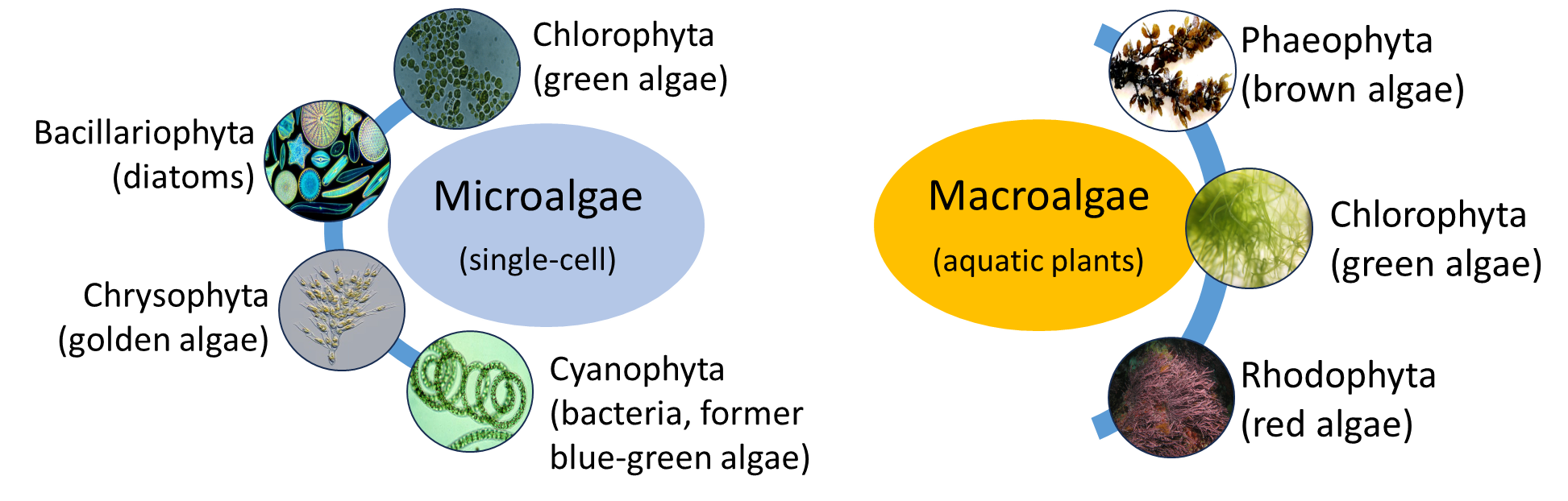 A depiction of the classification of single celled micro- and (mostly aquatic) macroalgae.
Macroalgae, commonly known as seaweeds, are larger, multicellular algae visible to the naked eye and are classified into three main divisions: Phaeophyta (brown algae), Chlorophyta (green algae), and Rhodophyta (red algae). These aquatic plants typically grow in marine or brackish environments, attached to substrates like rocks or coral reefs, and are essential for coastal ecosystems, providing habitat and food for marine life. Macroalgae are prized for their rich composition of polysaccharides (e.g., alginates, agar, carrageenan), minerals, and proteins, which make them valuable in industries such as food (e.g., sushi wraps, thickeners), pharmaceuticals, and bioplastics. Their ability to sequester carbon and grow without freshwater or arable land further enhances their sustainability, making them a key resource for eco-friendly materials and renewable energy solutions.