Protein profile of algae
The quality and quantity of algae protein is comparable with traditional protein sources such as milk (26% protein), soy (37% protein), yeast (39% protein), chickpea (18% protein), and meat (43% protein). They provide a reliable source of essential amino acids. Isoleucine, valine, (lysine), tryptophan, methionine, threonine and histidine are similar or higher than those found in foods such as eggs and soy.
However, when compared to other protein-rich food sources, seaweed is limited by its low levels of lysine, threonine, tryptophan, cysteine and methionine.
Macroalgae and microalgae differ in their molecular weights and protein compositions, which vary depending on species and environmental conditions. To analyze these protein characteristics, two common techniques are used: SDS-PAGE (sodium dodecyl sulfate-polyacrylamide gel electrophoresis), which separates proteins based on their molecular size and charge, and 2D-PAGE (two-dimensional polyacrylamide gel electrophoresis), which separates proteins according to both their isoelectric point and molecular weight.
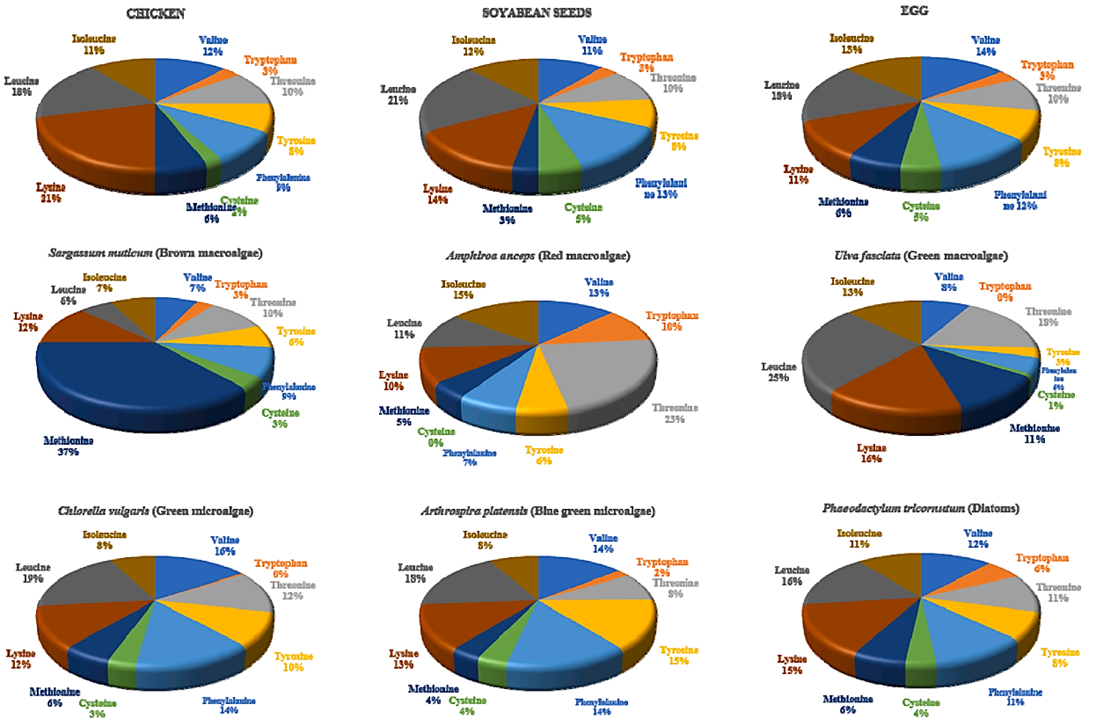
Amino acid profile of chicken, soyabean seeds, egg, macroalgae and microalgae. For example, chicken is composed of approximately 21% lysine, 18% leucine, 12% valine, 10% threonine, 9% phenylalanine, 6% methionine, 5% tyrosine, 4% cysteine, 3% tryptophan, and 11% isoleucine, while Chlorella vulgaris is composed of approximately 19% leucine, 16% valine, 14% phenylalanine, 12% lysine and threonine, 10% tyrosine, 6% methionine, 3% cysteine, and 8% isoleucine, with virtually no tryptophan shown in the chart. (Thakur et al. 2024)
Red algae contain a higher proportion of essential amino acids — key indicators of a protein's nutritional quality — compared to brown and green algae. Seaweeds are also rich in amino acids such as glutamic acid, aspartic acid, glycine, and alanine, which contribute to their characteristic umami flavor.
The protein levels in algae are influenced by a variety of factors, including environmental conditions such as water temperature, wave force, and light intensity, as well as seasonal changes and the habitat and depth of seaweed growth areas. These variables can significantly impact protein content and quality. From an industrial perspective, algae proteins exhibit unique properties that affect their usability: they are amphoteric, meaning they can react as either acids or bases, and typically have a low pH value due to their high content of acidic amino acids, which results in acidic isoelectric points. This characteristic is advantageous for isoelectric precipitation, a widely used industrial process for protein isolation. Additionally, the solubility and denaturation of algae proteins are influenced by salt concentration and specific environmental conditions, which can lead to the irreversible loss of their three-dimensional structure if not carefully controlled.