Amino acid profile of micro- and macroalgae
The physicochemical properties of proteins — including amino acid sequence, molecular weight, optical activity, shape, size, amphoteric nature, denaturation behavior, isoelectric point, and solubility characteristics as well as salting-in and salting-out — play a crucial role in determining their structure and biological function. These properties ultimately influence the techno-functional behaviour of proteins in various applications.
Algae proteins contain a variety of essential amino acids, with a well-balanced amino acid profile that meets the human nutritional standards set by the WHO. The proteins are rich in acidic residues such as aspartic and glutamic acid. This makes them promising candidates for the use as alternative protein sources.
Amino acids are amphoteric. When the pH is below their isoelectric point, they carry a positive charge; above it, they become negatively charged. This property is essential for understanding protein solubility, interaction, and functionality in different formulations. Which poses challenges as well as opportunities in the design of products.
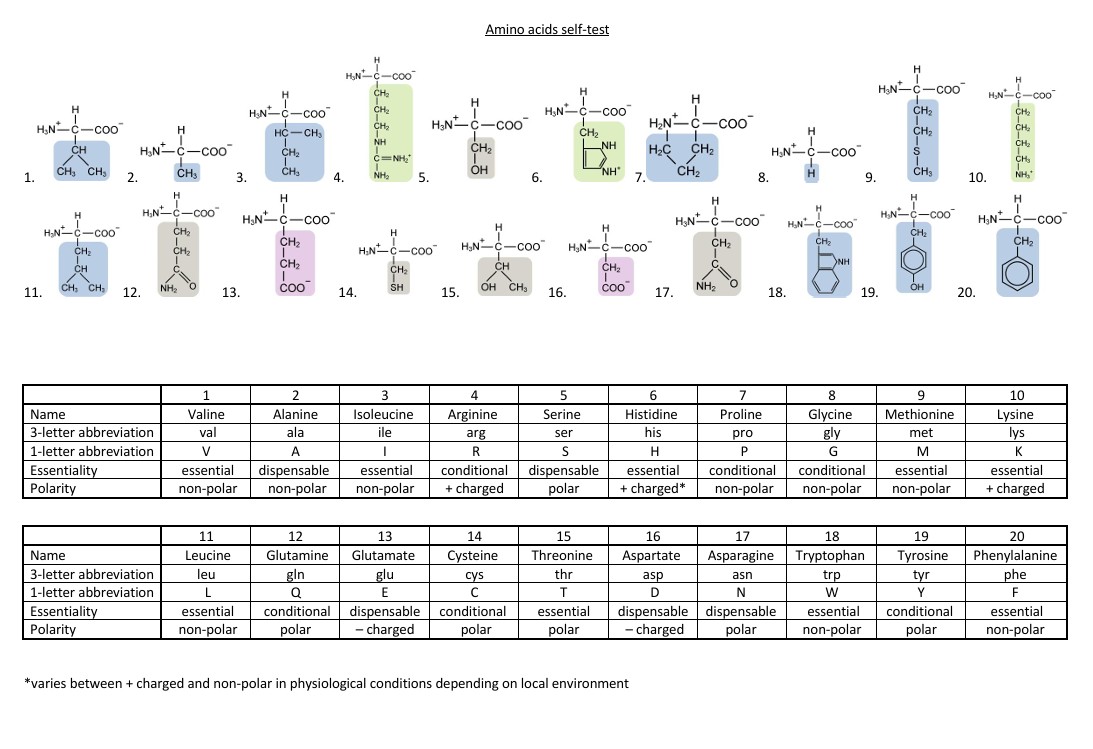
A depiction of the 20 amino acids alanine, arginine, asparagine, aspartic acid, cysteine, glutamic acid, glutamine, glycine, histidine, isoleucine, leucine, lysine, methionine, phenylalanine, proline, serine, threonine, tryptophan, tyrosine, and valine (Wikimedia).
Protein, bioavailability and meat alternatives
To assess the quality of dietary protein from macro and microalgae, both its essential amino acid (EAA) content and digestibility must be considered, though research on these aspects — particularly digestibility — remains limited. Algae proteins are versatile and find diverse applications in the food industry, serving as a standalone protein source or being incorporated into products like dried powders, supplements, meat substitutes, and extruded foods. They also contribute to food colorants, thanks to pigments such as phycocyanin and phycoerythrin, which offer vibrant natural hues. Beyond color, algae proteins function as emulsifying and foaming agents, enhancing texture and stability in food formulations. Additionally, specific algae-derived proteins, such as lectins — a type of glycoprotein — exhibit bioactive properties, including antibacterial, antiviral, and anti-influenza effects, further expanding their potential in both nutrition and health applications.
Since protein is one of the most valuable components in algae, several quality parameters are used to assess its nutritional value. These include the Protein Efficiency Ratio (PER), Protein Digestibility Corrected Amino Acid Score (PDCAAS), Biological Value (BV), Digestibility Coefficient (DC), and Net Protein Utilization (NPU).
The digestibility and bioavailability of proteins are influenced by several factors, including the amino acid composition of the food, the processing and preparation methods applied, and the granularity of the final product. Various drying techniques, such as drum drying, sun drying, and air drying, are employed to preserve the nutritional content of algae. It has been reported that the nutritional value of drum-dried algae reaches approximately 85% of that of casein.
However, the digestibility of algal proteins remains a challenge compared to animal-derived proteins such as casein and whey, due to limited in vivo and in vitro research on their physiological effects. Further investigation is required to enhance the sensory properties of algae-based products, improve the scalability of algae cultivation, and reduce production costs. Developing cost-effective production methods is essential to fully realize the potential of algae as a viable protein source in the global food market.