Bioactive potential in terms of antioxidant and anti-aging properties
While the digestibility of algae-derived compounds remains a challenge due to limited research, recent studies have uncovered their remarkable potential as sources of novel antioxidants, antimicrobials, and anti-tumoral drugs. Algae have demonstrated promising anti-aging, anti-inflammatory, and radical-scavenging properties, including the ability to rescue macrophages from oxidative stress-induced cell death and reduce intracellular reactive oxygen species (ROS) production. Compounds derived from both macro- and microalgae exhibit antibacterial, anticancer, antioxidant, antifungal, and antiviral activities, making them valuable candidates for pharmaceutical and nutraceutical applications. For instance, macroalgae contain natural inhibitors of α-glucosidase and α-amylase, which can act as hypoglycemic agents, while microalgae show potential in treating conditions like Alzheimer’s disease and Type 2 diabetes through enzymatic inhibition. Their high content of carotenoids, proteins, and lipids further enhances their nutritional and bioactive potential, though more in-vivo and cytotoxicity studies are needed to validate their safety and efficacy for medical and food applications.
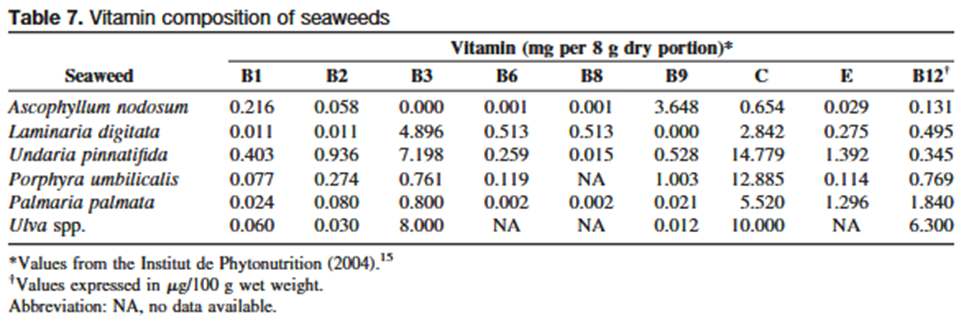 A Table of vitamin composition of seaweeds. For example, Undaria pinnatifida (wakame) has the most balanced overall vitamin profile, with particularly high levels of vitamins C, B2, and B3, while Ulva spp. stands out for its exceptionally high B3 and B12 contents. Across the seaweeds, vitamin B6, B8 (biotin), and vitamin E are generally present at relatively low concentrations compared with vitamin C and several B vitamins.(from McArtain et al. (2007).)
Algae are already being utilized in pharmaceuticals, cosmetics, and functional foods, where their bioactive peptides, lipids, and carbohydrates serve as antimicrobial agents, stabilizers, and natural colorants. However, challenges such as sensory attributes (e.g., fishy or greenish taste), scalability, and cost-effective production must be addressed to expand their use. Natural colorants like β-carotene, astaxanthin, and phycocyanin offer antioxidant benefits and a sustainable alternative to synthetic dyes, but further research is required to optimize their stability, extraction processes, and safety. Additionally, algae’s amphiphilic properties — such as those found in carrageenan — make them effective as emulsifiers and stabilizers in food products. While algae like Spirulina and Chlorella are commonly used to enhance the nutritional quality of baked goods and dairy products, legislative hurdles and high processing costs remain barriers to widespread adoption. Consumer demand for healthier, more sustainable products is driving trends in the food and energy industries, positioning algae as a promising solution for future innovation.
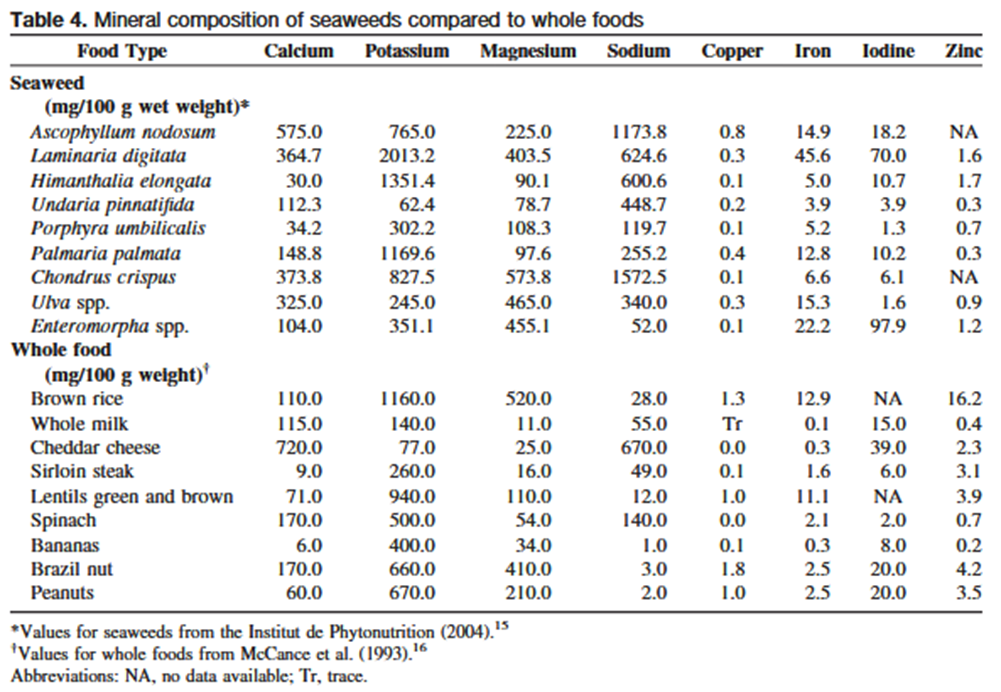 A table listing mineral composition of seaweeds compared to whole foods. Interestingly, Laminaria digitata stands out for its exceptionally high potassium, iron, and iodine contents, while Ulva spp. and Chondrus crispus are particularly rich in magnesium. Overall, seaweeds contain much higher iodine and sodium levels than most conventional foods, whereas copper and zinc are generally present at relatively low concentrations.(from McArtain et al. (2007).)
The mineral and vitamin profile of algae is exceptionally diverse and often surpasses that of terrestrial vegetables, particularly in their vitamin B complex content, which is typically absent in land-grown produce. Algae are rich in vitamins A, C, E, and B complexes, as well as essential minerals such as sodium, magnesium, phosphorus, potassium, iodine, iron, and zinc, often in concentrations much higher than those found in conventional vegetables. This unique nutritional composition makes algae a valuable addition to diets, offering a sustainable and nutrient-dense alternative to traditional food sources. As research continues to explore their potential, algae are poised to play an increasingly significant role in global nutrition, health, and sustainability.