Algae drying
Preserving the quality of algae through suitable drying methods significantly enhances both stability and shelf life by reducing water content, making transport and storage more efficient. This process not only extends the longevity of the algae but also helps maintain the integrity of its bioactive compounds. Once dried, microalgae can be further processed into powders, extracts, or other specialized formulations, enabling their use in a wide range of applications—from food and cosmetics to biotechnological innovations.
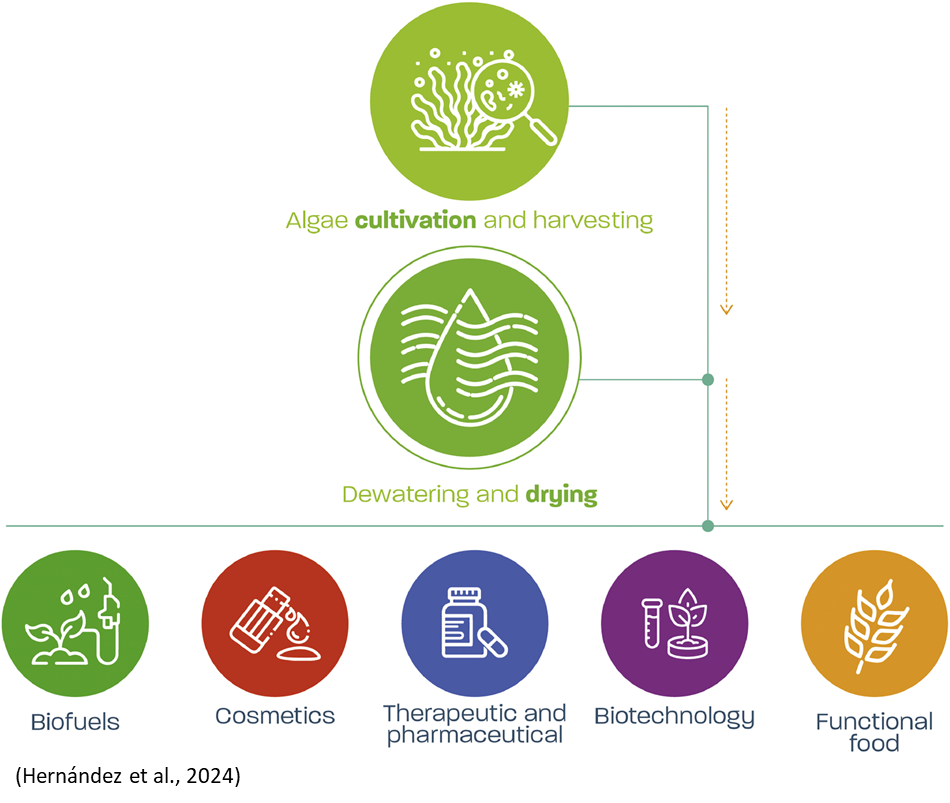 A schematic chart with some images corresponding to the following dependent concepts: Algae cultivation and harvesting, Dewatering and drying. Then, multiple options spread out, i.e. biofuels, cosmetics, therapeutic and pharmaceutical, biotechnology and functional food.
Proper drying of microalgae is essential for maintaining their valuable components, improving storage stability, and boosting efficiency across diverse industries. This process is particularly important in sectors such as biofuels, pharmaceuticals, functional foods, cosmetics, and biotechnology. By carefully removing moisture, drying helps conserve critical elements like lipids, proteins, pigments, and bioactive substances, ensuring the biomass retains its quality and potency.
The drying of microalgae unlocks a wide array of industrial applications. In the biofuels sector, microalgae’s high lipid content makes them a promising alternative to fossil fuels. Drying increases lipid concentration, facilitating extraction and conversion into biodiesel, while also enhancing biomass stability and shelf life for easier storage and transport. Similarly, the pharmaceutical industry benefits from dried microalgae, as reduced moisture levels protect sensitive bioactive compounds from degradation, enabling the development of stable medicinal formulations and nutraceuticals.
Dried microalgae are also vital in the production of functional foods, cosmetics, and biotechnology products. The drying process allows the biomass to be transformed into powders, extracts, and other formulations, preserving nutritional and functional properties for use as natural additives, colorants, or bioactive ingredients. However, drying can pose environmental challenges, as it often requires significant energy—traditionally sourced from fossil fuels—contributing to the overall environmental burden of algae processing.
Macroalgae, with their high moisture content of 90–95%, are highly perishable and require drying to extend shelf life, simplify storage, and enable regional distribution. This process is a critical pre-treatment step for many seaweed-based applications, such as pigment extraction, and is considered a vital operation in the seaweed industry. Yet, drying can impact product quality, particularly for edible seaweeds, where natural colors may degrade or be lost during the process. Balancing efficiency with quality preservation remains a key challenge for the industry.