Recap: Main differences of micro- and macroalgae
Macroalgae, commonly known as seaweed, are large aquatic plants that can grow up to 60 meters in length that rely on sunlight and nutrients from water. Archaeological findings suggest that humans have included them in their diets for over 14,000 years.
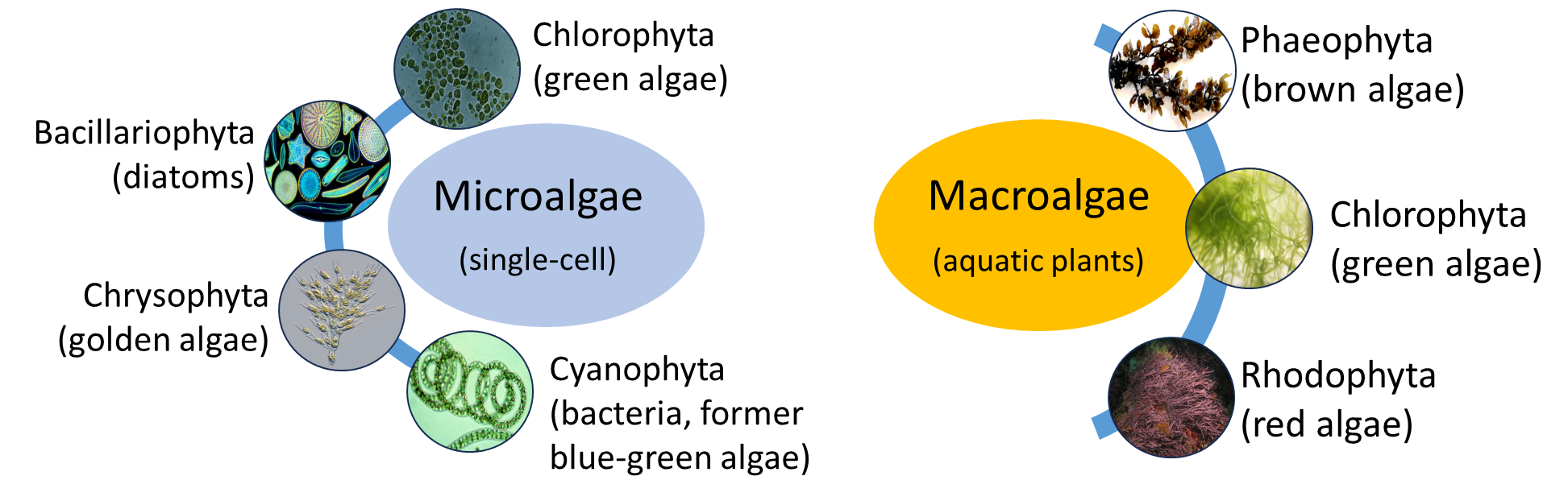 A depiction of the classification of micro- and macroalgae. There are Chlorophyta (green algae), Bacillariophyta (diatoms), Chrysophyta (golden algae) and Cyanophyta (bacteria, but former blue-green algae) as examples for single-cell microalgae. And Phaeophyta (brown algae), Chlorophyta (green algae) und Rhodophyta (red algae) as Macroalgae.
In contrast, microalgae are microscopic eukaryotic organisms that require sunlight, water, and carbon sources to thrive. Both types of algae are excellent sources of protein. However, microalgae stand out with a protein content ranging from 60% to 70% of their dry weight, whereas macroalgae typically contain between 20% and 30%.