Application procedure
The application procedure for Novel Foods in the European Union can be initiated either by the European Commission or by a third-party applicant. Applications must be submitted electronically (e-submission) in accordance with the current Novel Foods regulation, following the defined stages of the process. Applicants also have the option to request that the authorization be exclusively valid for their use for the first five years, provided that the scientific evidence or data submitted is proprietary and essential for the food’s assessment.
To support applicants, the European Food Safety Authority (EFSA) has developed comprehensive resources, including a guidance document and a checklist to ensure compliance with the requirements. Additionally, instructional videos are available on the EFSA YouTube channel to assist applicants in navigating the process effectively.
 The diagram illustrates the European Union Novel Food authorization procedure. An Applicant submits an application to the European Commission. The Commission immediately shares information about the application with EU Member States and publishes a summary for the public. The Commission may decide to request a scientific risk assessment from the European Food Safety Authority (EFSA). This step is marked as optional. If EFSA is consulted, the Commission forwards the application to EFSA within 1 month. EFSA performs a scientific evaluation and returns its opinion to the Commission within 9 months, although additional time (“+ X”) may be required if supplementary information is requested. Based on the application and, where applicable, EFSA’s scientific opinion, the Commission prepares a decision. Within 7 months, the Commission adopts an implementing regulation. If approved, the Novel Food is added to the Union List of authorized Novel Foods. Original image by (BVL)
The applicant submits their application directly to the European Commission, which – alongside the European Food Safety Authority (EFSA) – oversees the evaluation and authorization process. Member States are promptly notified of the application. Within one month, the Commission reviews the application’s validity and, if suitable, forwards it to EFSA for assessment. EFSA then conducts a risk assessment, typically within nine months, though this timeline may be extended if further information is required.
Following EFSA’s evaluation, the European Commission makes the final decision on whether to authorize the food for the EU market. If approved, the Union list of Novel Foods is updated, a process that must be completed within seven months of EFSA’s assessment. This ensures that only thoroughly evaluated and safe products enter the European market.
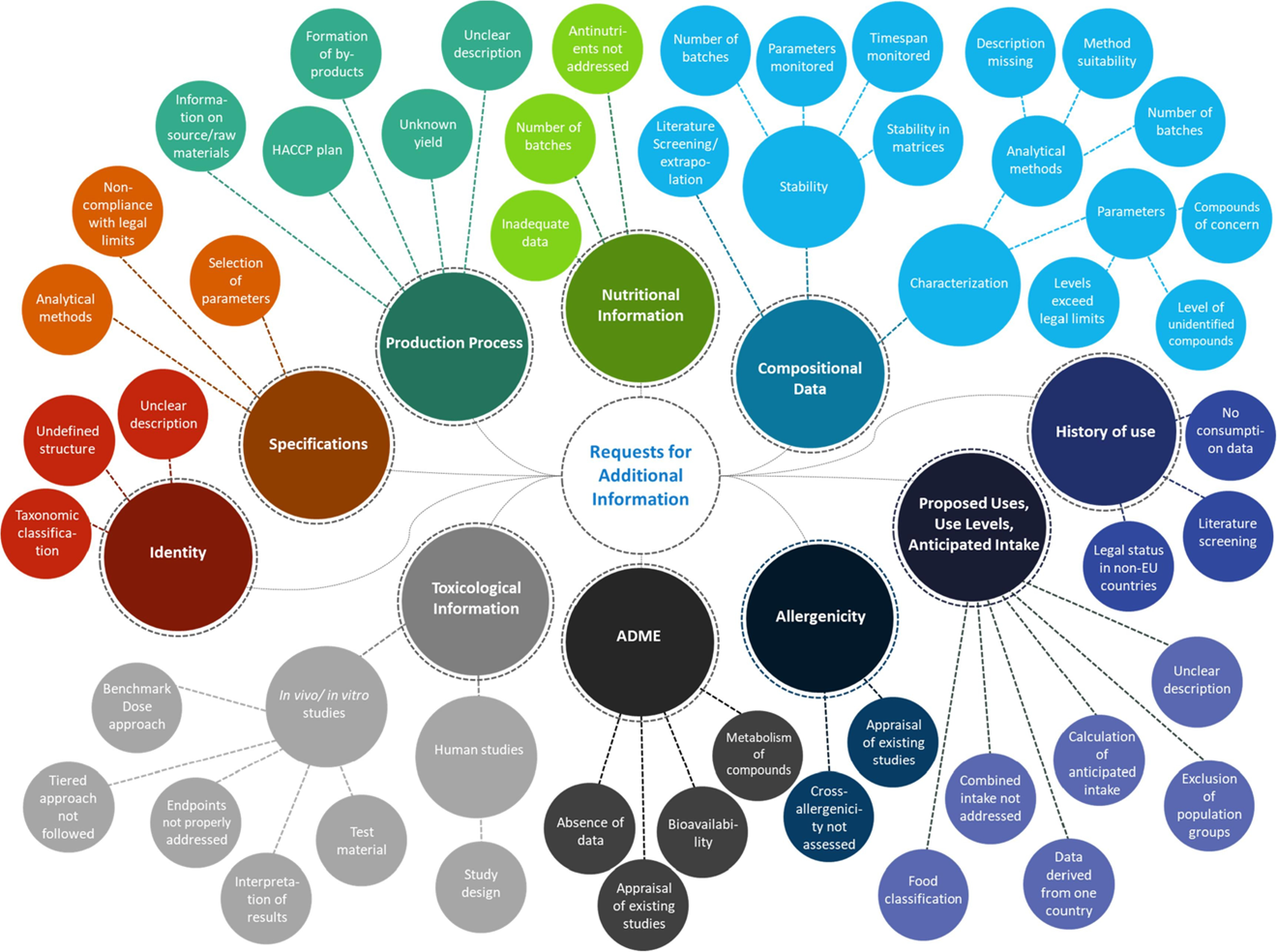
The above graph highlights the diverse and extensive range of information requests that EFSA often directs to applicants during the evaluation process. The complexity becomes evident, as limited existing data on a novel food frequently necessitates additional details, studies, or clarifications. This underscores just how intricate and rigorous the assessment and authorization process for Novel Foods truly is, ensuring that every product meets the EU’s stringent safety and regulatory standards before market entry.