Introduction
The production and processing of seafood involves both wild-capture fisheries and aquaculture systems, where fish, shellfish, and algae are farmed in various environments. In aquaculture, high animal density often leads to disease outbreaks, making antibiotic use common to maintain health and productivity. Processing includes harvesting, cleaning, and packaging, with safety measures like hygiene and temperature control ensuring quality. Key products include finfish (e.g., salmon, tilapia), shellfish (e.g., shrimp, mussels), and seaweed.
Antibiotics are widely used in aquaculture to prevent infections, but their overuse contributes to antimicrobial resistance (AMR), threatening human and animal health. Waste management in the sector often involves disposing of feed, feces, and chemicals, which can pollute water and harm ecosystems. Poor waste practices degrade food quality and the environment, highlighting the need for sustainable solutions.
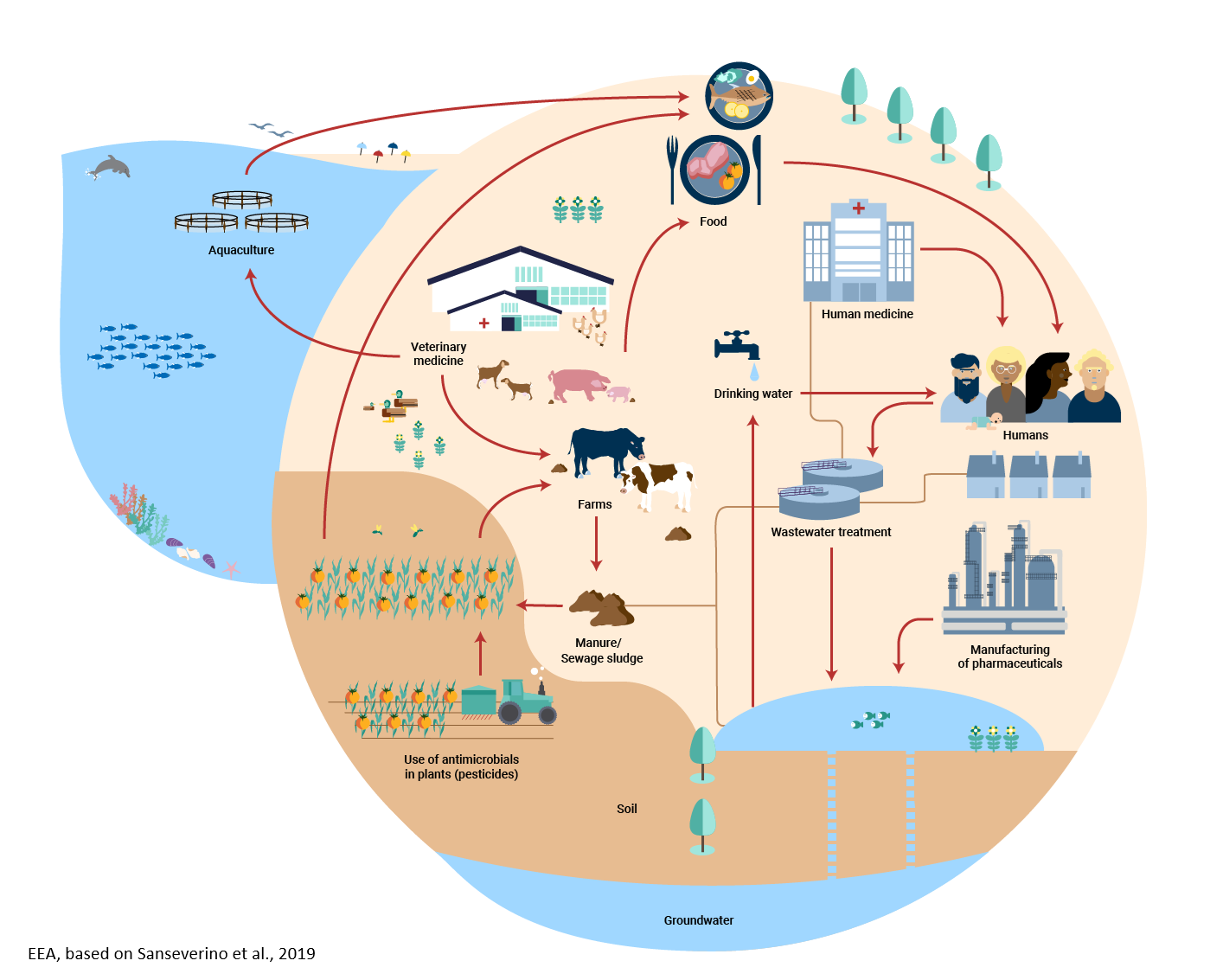 A schematic of how food, feed and waste make their way through the ecosystem and onto our plates.The diagram shows the movement of antimicrobial agents and related contaminants between aquaculture, livestock farming, crop production, human activities, water systems, and the environment.Arrows connect multiple sources and pathways, including veterinary medicine, human medicine, aquaculture, farms, food production, wastewater treatment plants, pharmaceutical manufacturing, and crop fields where antimicrobials are used as pesticides.Materials from farms and wastewater treatment are shown entering the environment as manure/sewage sludge, which is applied to agricultural land. Arrows indicate transfers between soil, surface waters, and groundwater. Aquaculture systems, livestock farms, and crop fields are also connected to these environmental compartments.The diagram further shows links between these sectors and food, drinking water, and human populations, illustrating how substances released from medical, agricultural, and industrial activities can circulate through environmental pathways and re-enter the food and water supply.
In what follows, you are asked to ponder the question: "Can food be considered safe at the moment of consumption if the world we live in is degraded during its production?"