Strategic holistic approaches II
The connection between animal welfare and immune function is undeniable, as stress directly weakens immune responses, making animals more susceptible to disease.
By adhering to the Five Freedoms of Animal Welfare — freedom from hunger, discomfort, pain, fear, and the ability to express natural behaviors — farmers can enhance natural immunity, reducing the need for antimicrobials and improving overall health.
Good welfare practices not only strengthen disease resistance but also lead to higher productivity and better product quality. Nutrition plays an equally critical role: macronutrients and micronutrients support immune function, while strategic feed management — such as using immunomodulatory additives — can further bolster defenses. Genetic selection for disease resistance, combined with alternative treatments like probiotics and phytotherapy, offers a holistic, One Health-aligned approach to minimizing antimicrobial dependence. Integrated health plans that prioritize prevention, nutrition, and genetics create resilient farming systems where animals thrive naturally.
Waste management is a fundamental yet often overlooked component of sustainable food and aquaculture systems, encompassing the environmentally responsible handling of all waste types — from industrial and biological to organic and biomedical.
Effective waste management requires strategic planning, adherence to legal frameworks, and tailored solutions for different waste sources and types, whether solid, liquid, or gaseous. The treatment, storage, and transportation of waste must align with safety and regulatory standards to prevent pollution and health risks.
A stark reminder of the stakes comes from the European Environment Agency (2024), which notes that antimicrobial residues can persist in the environment for months, exerting selective pressure on bacterial populations and exacerbating antimicrobial resistance (AMR). Without proper treatment, these residues — along with other contaminants — can leach into soils and waterways, disrupting ecosystems and compromising public health. Thus, waste management is not just a final step but a continuous, systemic consideration that directly impacts the sustainability of production processes.
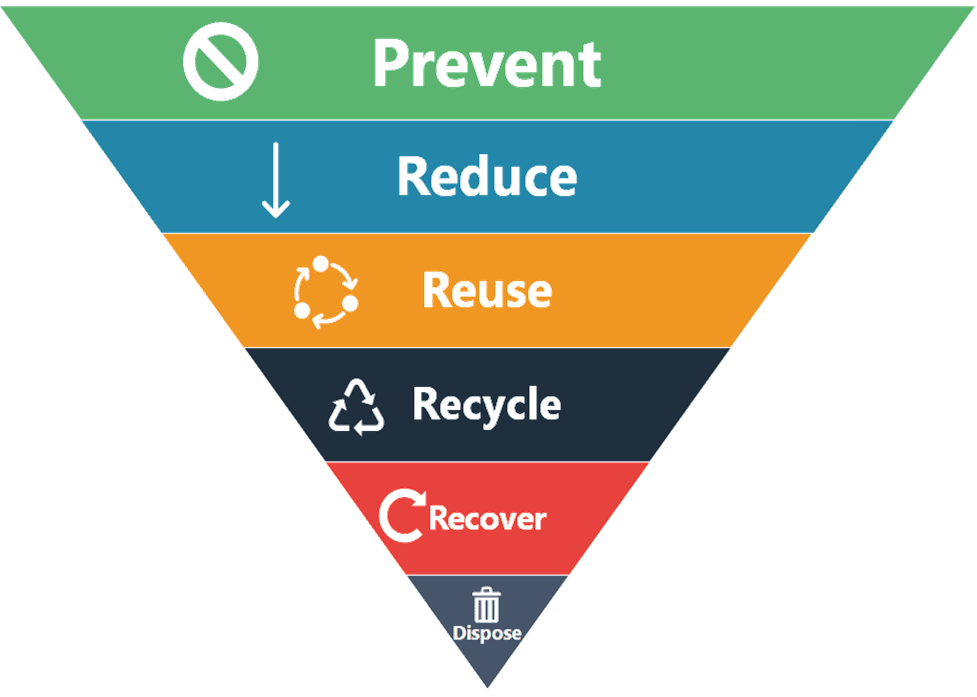
The waste management hierarchy provides a structured approach to minimizing environmental impact, prioritizing prevention as the most effective strategy.
At the top of the hierarchy, the goal is to avoid waste generation entirely — for example, by preventing overproduction, improving animal welfare to reduce illness, or using automated feeders and real-time monitoring to cut waste.
If waste cannot be avoided, the next steps are to reduce, reuse, recycle, and recover materials, ensuring they remain in the production cycle for as long as possible.
Reusing materials — such as nets, containers, or organic sludge for biogas — supports circular farming models, while recycling and recovery (e.g., anaerobic digestion or incineration with energy recovery) transform waste into valuable resources.
Disposal should always be the last resort, reserved for materials that cannot be repurposed, and even then, methods like energy recovery should be prioritized over dumping or landfilling.
Unsustainable practices — such as ocean dumping or uncontrolled incineration — must be eliminated, as they perpetuate environmental harm. By following this hierarchy, industries can design processes that minimize waste from the outset, aligning production with ecological and One Health principles for a sustainable future.