
Antibiotics and microbial resistances
Antibiotics are natural or synthetic compounds designed to kill bacteria or inhibit their growth, playing a critical role in treating bacterial infections. In humans, they are primarily used to combat acute infections, while in animals, their application extends to preventive care and growth promotion, a practice that significantly contributes to antimicrobial resistance (AMR). Occasionally, antibiotics are also used in plants to manage bacterial diseases. These compounds vary in specificity: broad-spectrum antibiotics target a wide range of bacteria, whereas narrow-spectrum antibiotics focus on specific types.
Antibiotics function through five primary mechanisms: disrupting cell wall synthesis, damaging cell membranes, inhibiting protein synthesis, interfering with DNA synthesis, and targeting other metabolic pathways. Their effectiveness makes them indispensable in medicine and agriculture, but their misuse poses serious risks to global health.
Aquaculture, particularly in intensive farming systems, faces a major threat from disease outbreaks due to crowded and stressful conditions that make aquatic species more susceptible to infections. Farmers often rely on prophylactic and therapeutic antibiotics to control these outbreaks and promote growth. However, the overuse and misuse of antibiotics, especially broad-spectrum types, are primary drivers of antimicrobial resistance (AMR). Studies, such as those by Suyamud et al. (2024), highlight that AMR in aquaculture is a growing concern, particularly in regions like Southeast Asia, where regulatory oversight may be limited. The prophylactic use of antibiotics not only accelerates resistance but also introduces residues into the environment, further exacerbating the problem.
Antibiotic resistance refers to the ability of bacteria to survive and multiply despite exposure to antibiotics that would normally kill them. The broader term, antimicrobial resistance (AMR), includes resistance in other microorganisms, such as fungi and yeasts, to drugs designed to eliminate them. AMR is a global health crisis, driven by factors like the overuse of antibiotics in agriculture and medicine, poor biosecurity practices, and environmental contamination. When antibiotics are used prophylactically or inappropriately, they exert selective pressure on bacterial populations, allowing resistant strains to thrive. This resistance can spread through water, soil, and food chains, posing risks to humans, animals, and ecosystems alike.
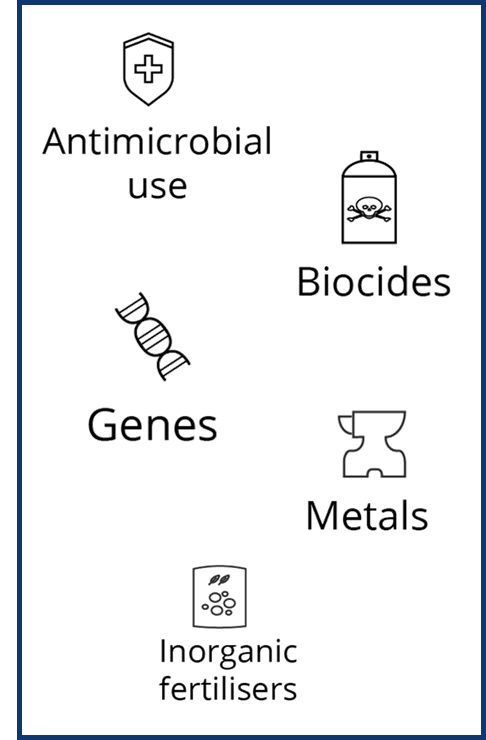
Other substances that harm the environment and public health; biocides, metals, inorganic fertilisers, genes
Several factors contribute to the development and spread of AMR. Overuse and misuse of antibiotics, particularly broad-spectrum types, are the most significant drivers, as they kill susceptible bacteria while allowing resistant strains to proliferate. Poor biosecurity practices, such as inadequate hygiene, improper waste management, and lack of protocols for introducing new animals, further facilitate resistance spread. Intensive farming practices, characterized by overcrowding, stress, and rapid animal turnover, create ideal conditions for disease transmission and resistance development. Environmental contamination from antibiotic runoff and regulatory gaps, including weak enforcement and inconsistent standards, also play critical roles. Additionally, self-diagnosis and self-medication in humans can worsen resistance by promoting improper antibiotic use.
Once antibiotics enter the environment — through animal waste, runoff, or improper disposal, they can persist for weeks or even months, continuing to exert selective pressure on bacterial populations. This persistence allows resistant bacteria and genes to spread in soil, water, and even treated wastewater, complicating efforts to control AMR. While treatment processes can reduce the levels of resistant bacteria in wastewater and manure, incomplete removal means that residual antibiotics and resistant microbes can still enter ecosystems. The global movement of goods, people, and animals further accelerates the spread of AMR, making it a transboundary challenge that requires coordinated international action.
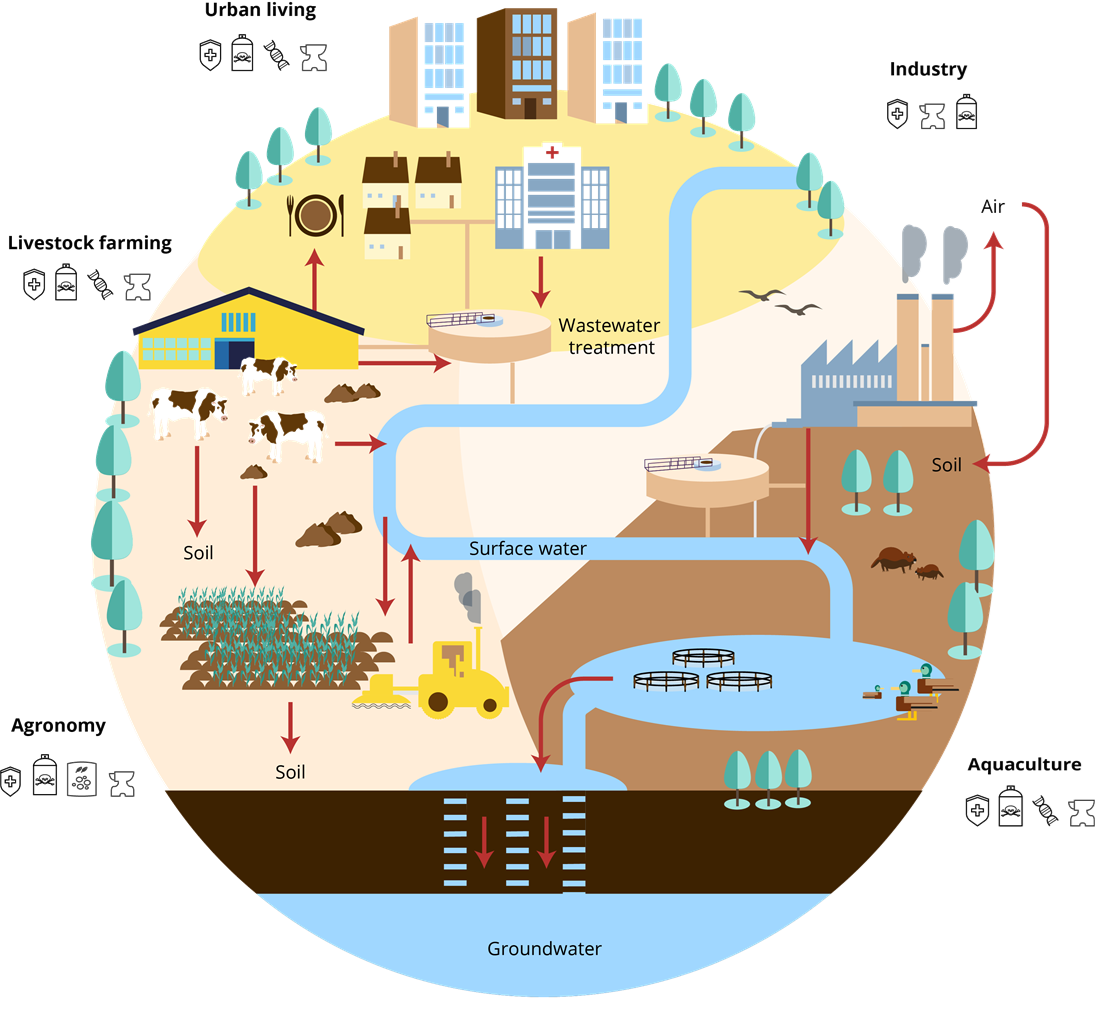 A diagram of a farm and its in- and outputs. Affecting soil, air and water (surface- and ground water).
The consequences of AMR are far-reaching and multidimensional. In animal health, resistance leads to reduced immunity, higher morbidity, and increased mortality, particularly in stressed or intensively farmed animals. Economically, AMR results in lower yields, higher treatment costs, and lost productivity, affecting farmers' livelihoods. For public health, the rise of resistant pathogens increases the risk of untreatable infections and complicates medical treatments. Environmentally, AMR contributes to higher costs for treating contaminated runoff and disrupts ecological balance. Ethically, the restriction of new antibiotic classes for human use only raises questions about equitable access to effective treatments and the responsibility of industries to adopt sustainable practices. Addressing AMR requires a holistic, One Health approach that integrates human, animal, and environmental health strategies.