
Digital traceability
Digital traceability in seafood and aquaculture leverages electronic systems and advanced technologies to meticulously document and monitor the movement of aquatic products across the entire supply chain, from their point of origin, such as fishing or farming, all the way to the end consumer. By digitizing data and enabling seamless information sharing, this approach enhances transparency, boosts operational efficiency, and ensures the verifiability of product origins and handling processes. These capabilities are particularly crucial in supporting broader sustainability initiatives, such as the Farm to Fork EU strategy, which aims to create a fair, healthy, and environmentally friendly food system.
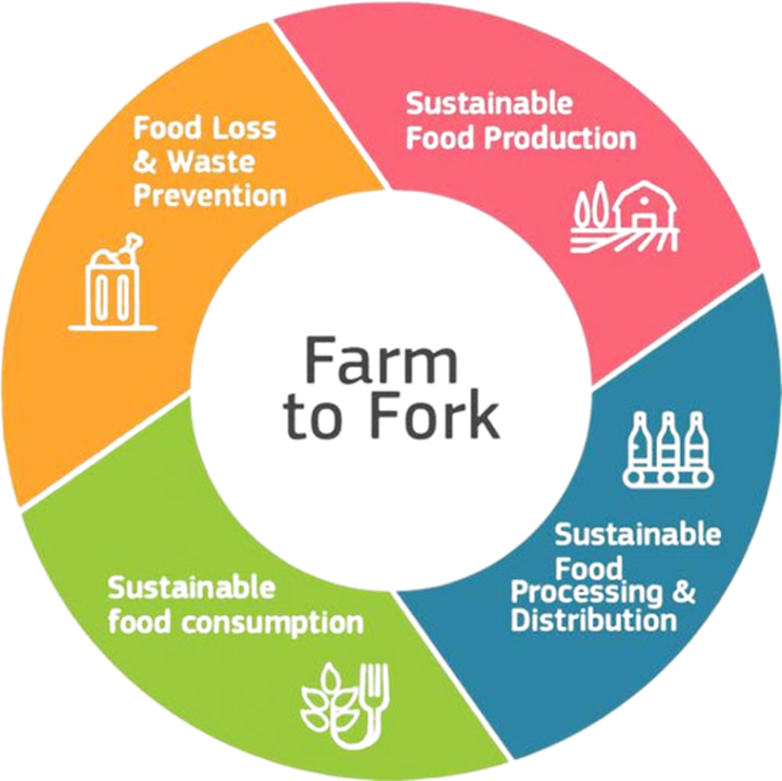
A donut diagram with four equal parts, reading Farm to Fork in the center: Sustainable Food Production, Sustainable Food Processing and Distribution, Sustainable food consumption, Food loss and waste prevention. (Source: EU Commission)
The implementation of digital traceability is significantly shaped by international standards and recommendations, which provide a framework for consistent and reliable practices. These guidelines help harmonize traceability efforts globally, ensuring that data collection, sharing, and verification processes meet rigorous benchmarks for accuracy and accountability. By aligning with these standards, the seafood and aquaculture sectors can strengthen consumer trust, improve regulatory compliance, and contribute more effectively to the overarching goals of sustainable food production and consumption.
Digital traceability in seafood and aquaculture plays a pivotal role in enhancing food safety by enabling the rapid identification and withdrawal of products in case of contamination or other issues. It is also essential for combating illegal, unreported, and unregulated (IUU) fishing, as well as fraud and species substitution, by verifying the origin and history of products throughout the supply chain. Furthermore, it improves supply chain management through better data collection, storage, and analysis, which increases efficiency and reduces operational costs. By meeting the growing consumer and regulatory demands for transparency and sustainability, digital traceability facilitates market access and builds consumer trust by providing detailed, verifiable product information. It also supports sustainability efforts by tracking environmental and social parameters associated with production, while enabling interoperability between different traceability systems through standardized data formats and sharing mechanisms.