Food safety and One Health
In an era where sustainability is finally gaining traction across industries, our food safety strategies must also evolve, particularly through the One Health perspective. As previously mentioned in module 1, this approach moves beyond a human-centric view, emphasizing the interconnected health of humans, animals, and ecosystems. One Health is rooted in prevention and system thinking, addressing the true origins of diseases and ecological imbalances rather than merely reacting to symptoms. For example, the widespread use of antibiotics, pesticides, and growth promoters in food production has created cascading problems, from antimicrobial resistance to environmental degradation. By shifting focus "upstream" to ecological and environmental influences, One Health helps identify the most effective points for intervention, ensuring food safety is both proactive and holistic.
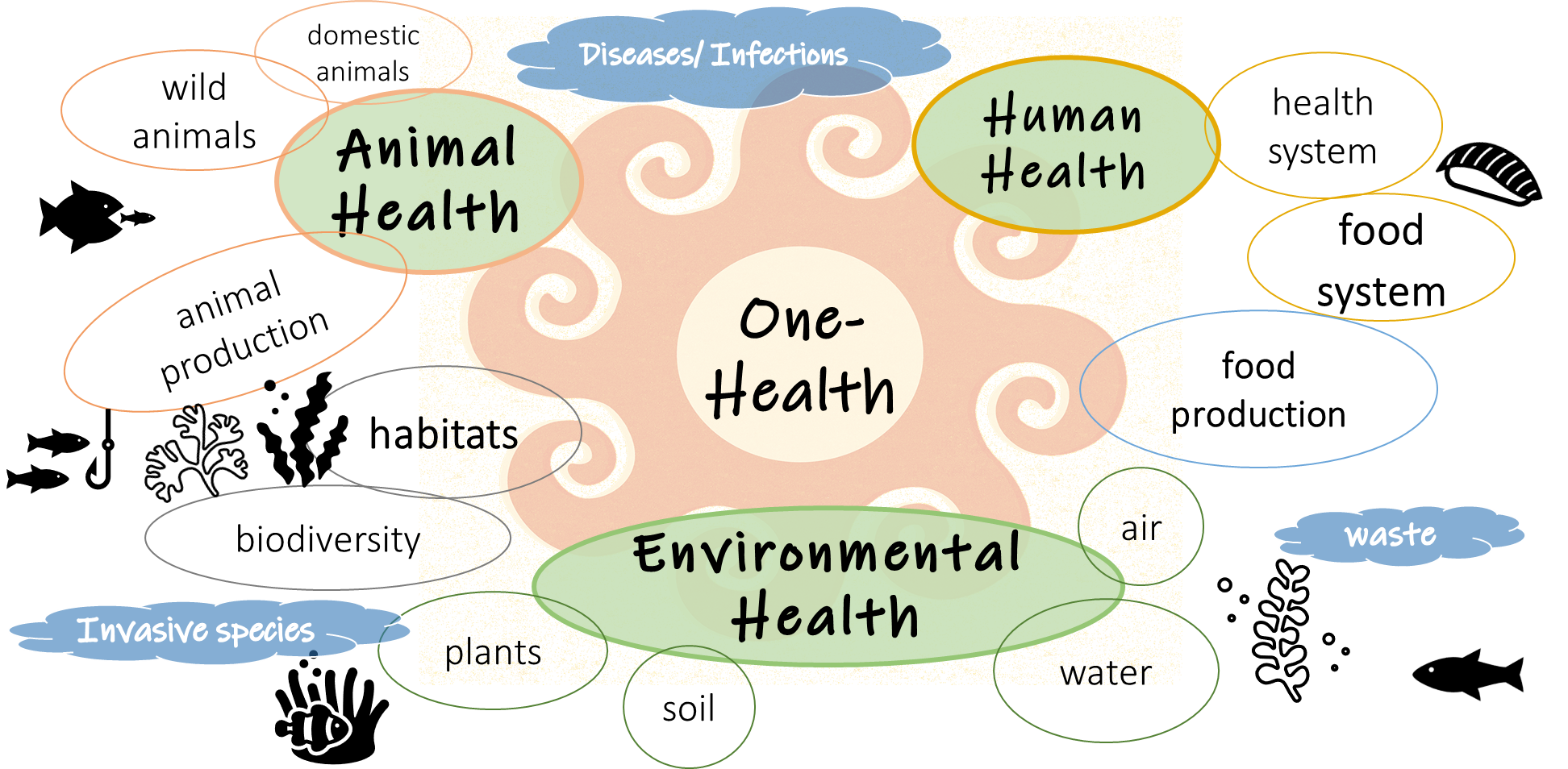 A figure showing some key concepts regarding One Health. Animal Health: domestic animals, wild animals, animal production, habitats Environmental Health: biodiversity, plants, soil, water, air, Human Health: health system, food system, food production There are many overlapping categories, such as waste, invasive species, diseases or infections, etc.
The global food system is a prime example of how One Health principles can drive meaningful change. Traditional practices — like excessive antibiotic use or chemical inputs — have disrupted natural balances, leading to broader systemic issues. However, as sustainable agriculture gains momentum, improvements in human, animal, and environmental well-being are becoming evident. Food safety, in this context, is not just about preventing contamination at the point of consumption; it’s about fostering a resilient, balanced system where production methods support long-term health. Conversely, robust food safety measures are essential to completing the One Health framework, ensuring that interventions in one area (e.g., reducing antibiotic overuse) benefit the entire ecosystem.
Today’s food safety landscape is shaped by globalization, natural disasters, antimicrobial resistance, and invasive species, all of which test the resilience of our systems. The rise of misinformation and fake news about food safety further complicates public trust and decision-making.
A critical question arises: Can food truly be considered safe if its production degrades the planet? This challenge underscores the need for a systems-level approach, where food safety is evaluated not just at the moment of consumption but across the entire production chain. Students and professionals alike are encouraged to explore additional trends — such as climate change impacts, supply chain vulnerabilities, or technological innovations — and consider how these factors interact within the One Health framework. What other concerns might shape the future of food safety?