Course structure
We start by explaining the Tree Value Visions use case. This suggests who might want to use the tool, and why. The tool is designed to be low-resource, both in running a participatory panel and in suggesting practical actions to follow up.
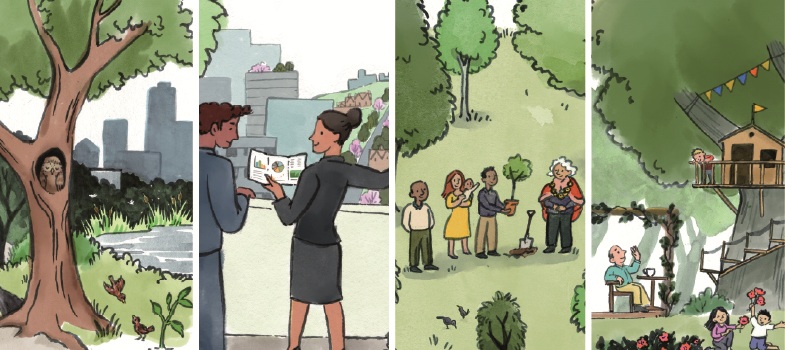
The course then presents the 'Visions'. These are archetypal ways of understanding treescapes; both what treescapes can comprise and the relationships that humans can have with them. They are named living in, living from, living as and living with treescapes. The visions anchor the tool, and although they are designed to be self-explanatory (for distribution to citizen panels) the course includes a number of interactive elements that allows prospective users to check their understanding of the visions. The quizzes are particularly useful training for prospective panel facilitators, as they cover common questions from panel members 'on the night'.
Thirdly, the course conceptually explains the elements that hinge off the Visions. It initially unpacks the concept of 'Broad Values' that lie underneath the pre-course questionnaire. Then it explains how the Visions translate into Outcomes, and Outcomes into Actions. For example, how the 'Living from' Vision can be translated into the Outcome of 'Local Food Production' and then the Action of 'Promoting trees in private gardens'.
Finally, we cover the practicalities of running a participatory panel, whether with local residents/citizens or professionals/end users. This final section is structured around the timetable for running a panel, adding practical detail and reflection to the skeleton provided in the Facilitation Guide.
After the formal study, the Resource section contains various materials for download, signposts to further reading, and acknowledgements. This section will also contain a downloadable Statement of Participation, if you have completed all the optional quizzes.
You can navigate between each page of the course by using the 'Course content' sidebar on the left hand side. We expect the course to take around three hours for someone new to the topics, so if you're experienced in facilitating workshops, or in treescape planning and management, it should be shorter.
The next page is a short pre-course survey. If you're ready to learn, let's get started!