Living AS trees and treescapes
Oneness and harmony with trees
Listen to Alison Dyke (University of York) read the 'Living As' visionAudio player: Living%20As%20recording.mp3
In our city, we started to think more and more about our connection with trees, realising how much we gain from recognising them as a key part of our community. Although they had always been there, we never really ‘saw’ them. Sometimes we treated them as objects, sometimes as an environment to protect, but what we had not really noticed was their aliveness, their beingness, the effect they would have on us when we took a moment to connect with them. Realising the power of this connection, we decided to make trees ‘green citizens‘. They already pay their council tax in kind by cleaning the air, providing shade and protecting us from floods. They are active participants in the life of our city, volunteering just like so many of us do when we care for friends and relatives.
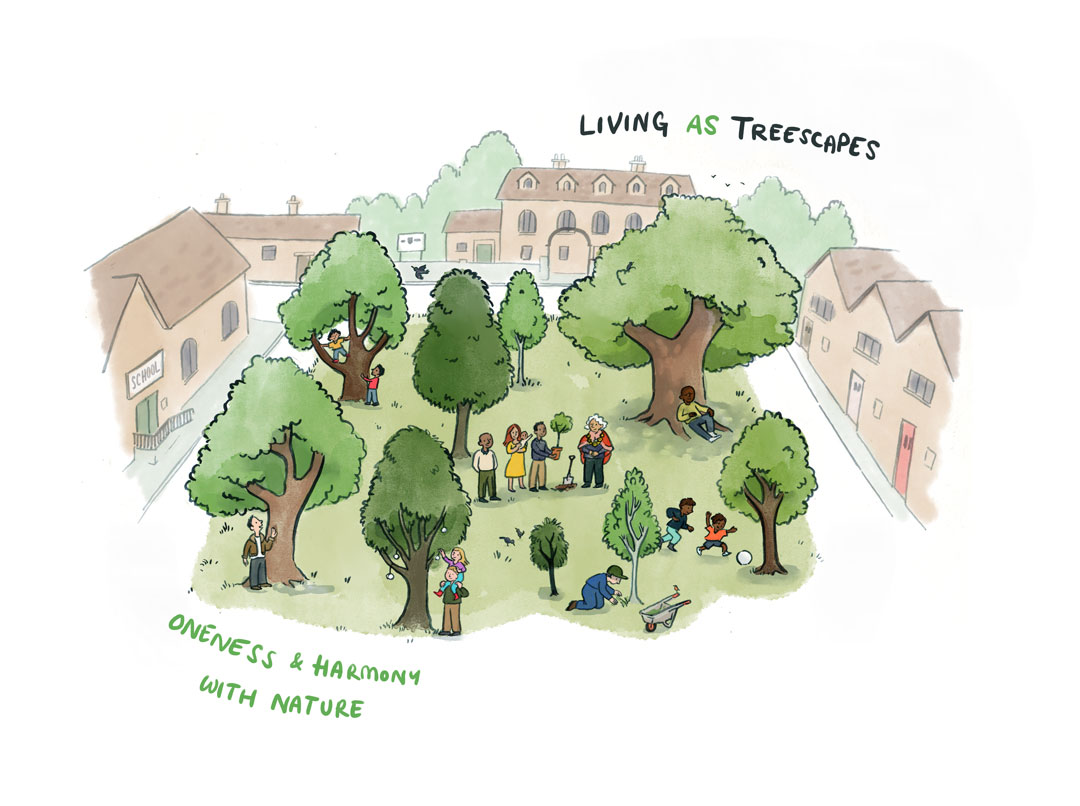
Figure 6: An illustration of the 'living as' vision
We brought together policy makers, tree officers, local businesses, artists, researchers and community groups to develop a long-term vision that supports these values of oneness and living in harmony with nature. First, we wanted to address the objectification of trees – how could we prevent people from just treating them as a thing? Local government policy now stipulates that a tree is planted for every child born or adopted. We also name trees after the children, and we created a register of all the named trees. People who move into the city are also invited to plant a tree or adopt an existing one. We organise weekly planting ceremonies in each ward so that new people and parents can connect with their trees and with other people locally. A few people met the love of their lives that way! Our digital maps allow people to trace family lines across trees and people and see connections with trees in twin cities. There’s a hope that many trees will become historic or heritage trees because they all have a story to tell that can be shared between generations.
Because we recognised that trees pay their tax in kind, we thought there could be no taxation without representation. Citizens are on a register of guardians and receive a short training (a bit like being on jury duty) and they represent their tree whenever it could be affected by a new development. We also made some big changes to expand the treescape. We improved and created small mixed-age community woodlands dotted around the city that felt like they were a natural part of the community and connected them to each other as much as possible. We issued a planning requirement that all new developments and existing streets must be treelined unless there are strong overriding impediments. We set up social enterprises specifically to support planting trees in private spaces. GPs offered more green prescriptions and we shifted charity funding from indoor to outdoor activities, with many people involved in managing the treescape through volunteer-run ecotherapy activities. Wildlife is doing well, though some ecologists have argued that the treescape is not optimal ecologically, because it is quite distributed and accessible but with not so much focus on large reserves.
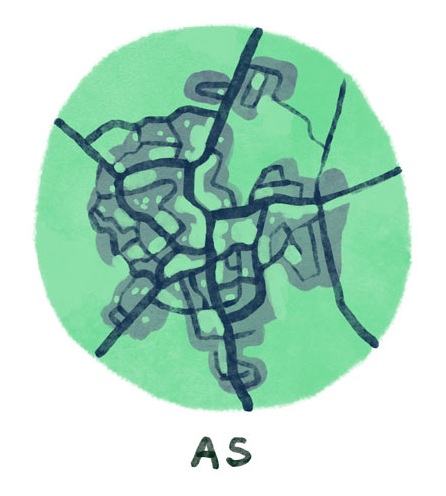
Figure 7: A map of an illustrative city showing strong 'living as' characteristics
Most important of all, we developed a policy to maximise child engagement with trees through planting and pruning trees for tree climbing, den making, foraging and other sensory activities, embedding forest schools in every primary school and bushcraft in every secondary school curriculum, supporting parents, and ensuring inclusivity for those with additional learning needs.
Overall, this led to quite an organic way in which we met government targets for tree-planting. Though these were originally created to combat climate change, our relationships changed – with the trees, with nature, with each other and with ourselves – and we became healthier physically and mentally through nature connection and being outside, more community focused, and with much happier kids.