Using the tool
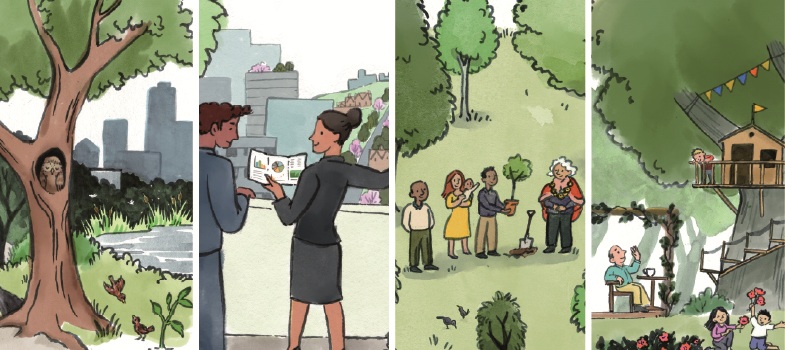
Tree Value Visions is designed with urban local authority scales, stakeholders and responsibilities in mind. It can be used at scales running from authority-wide to ward level areas, or even single greenspaces. The core of the tool is four 'visions of the future': narratives illustrating different future treescapes, which then link to sets of values, outcomes and actions.
The course practically forms a how-to guide, explaining how to use the process template and generate a social valuation in a single community stakeholder workshop or citizen panel meeting. Participants are asked to respond to the archetypal ‘visions of the future’, prompting discussion on how their component parts could be translated into local contexts (at user-defined scales), whilst assigning priorities to the end goals and practical steps proposed.
The panel requires 15-30 participants to attend a roughly 3.5 hour long panel, after completing a short pre-panel questionnaire. They should be familiar with the local area, and rather than having a pre-existing interest in trees, environmentalism, or governance, they should be demographically representative of the local population. Taking part means an enjoyable evening's conversation, learning new ways to think about trees, and discussing how the city could be improved.
The outputs help develop integrated community visions of how to develop and manage urban treescapes in a way that acknowledges and grows the diverse value of trees. The tool takes in biophysical matters of tree management, such as location and care, but also wider considerations such as forms of community involvement, culture, strategic economic development, governance, and health and wellbeing. The process can also incorporate those acting on behalf of nature, such as participants acting as a voice to represent trees and wildlife.