2.3.4. Structural Change
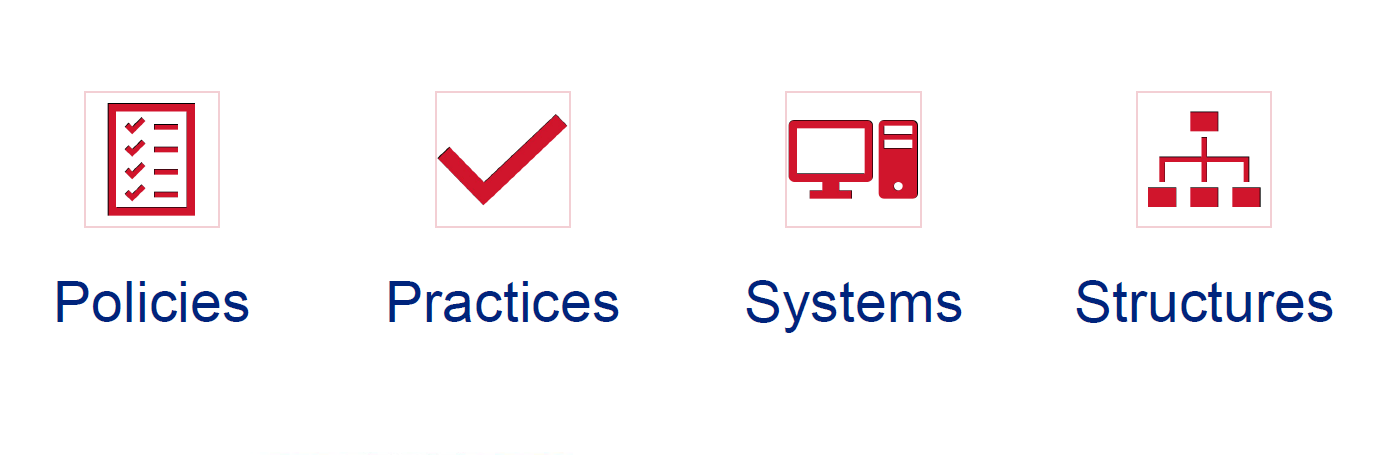
Structural changes focus on the formal systems that guide and control the work of the organisation. They specifically focus on policies, practices, systems and Structures.
Structural change ensures that policies and systems that guide the operations of the organisation are in place. This ensures that inclusion is not dependent on the individual will. Some example of structural change includes:
-
Creating and enforcing policies e.g. disability, reasonable accommodation, diversity, equity, inclusion, and paid parental/family leave policies, among others;
-
Changing recruitment practices, e.g. targeted recruitment, outreach to different communities, and non-discriminatory recruitment practices, among others;
-
Creating systems for pay/remuneration e.g. market aligned salary bands, and providing equitable benefits, among others;
-
Reviewing benefits such as the establishment of gender-neutral and equitable benefits e.g. parental leave as opposed to maternity leave, and;
-
Collecting diversity data across rank, departments, specialisations, etc.

| Previous | Next |