Resource 2: Two lessons
Lesson 1: Mathematics, shape, movement and language
The language of shape is rich in mathematical terms and concepts. ‘Edge’, ‘plane’, ‘line’, ‘parallel’, ‘depth’, ‘angle’, ‘volume’, ‘point’ and ‘segment’ are just a sample of the many terms associated with shapes. The complexity of the shapes you use in this activity will depend on the age and prior knowledge of your class. For this activity, you will need some mathematics textbooks.
- Divide your class into groups. Give each group a name of a shape, such as ‘Square’, ‘Rectangle’, ‘Triangle’, ‘Circle’, ‘Trapezium’, ‘Rhombus’, ‘Pentagram’, ‘Octagon’, ‘Oval’ or ‘Parallelogram’. You can give the same name to more than one group. Give each group a mathematics textbook.
- Model to your class what you expect them to do. Locate information about an example shape in the textbook. Then describe the shape to the class, beginning with the words ‘I am a [shape]’ and using the correct mathematical terms.
- Ask each group to find information about their shape in their textbook. They can remember the information or make notes about it on chart paper.
- Invite each group to present their shape to the rest of the class. Encourage them to use the appropriate language in describing it, for instance: ‘We are the rectangle. We have four straight sides but two sides are longer than the other two. The sides are parallel.’
- Get each group to physically form their shape by standing together and linking hands. They can do this in the classroom or possibly outside, where there is more space.
- Ask each student to draw both their shape and a different shape from another group, writing words in and around each one based on what that they have read or heard you or other students say. An example is provided in Figure R2.1.
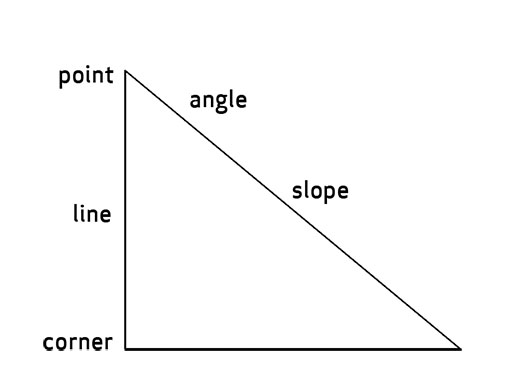
Figure R2.1 An example of a shape with labels.
Lesson 2: The planets, colours and poetic language
The natural colours and patterns of the planets are all different and quite beautiful. The language you use in this activity will depend on the ages and backgrounds of your students. For this activity, you will need photos or drawings of planets, or coloured chalk.
- Use good-quality pictures or drawings of the planets, if you have them, or alternatively, use coloured chalk to draw them on the blackboard (Figure R2.2). Show these images to your class, describing the colours and patterns of the planets to in detail. Invite your students to talk about any planets they have either observed themselves or know about from their reading.
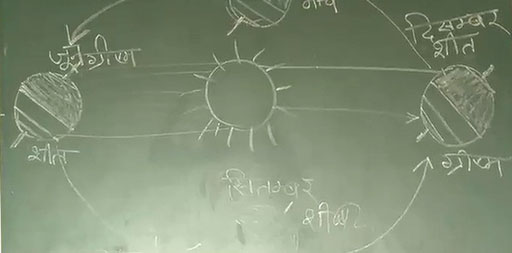
Figure R2.2 Drawing planets on the blackboard.
- Introduce the idea of the planets as having different ‘personalities’ or ‘qualities’. For example, with its pale blue and brown colouring, Jupiter appears ‘calm’; light-brown Saturn seems ‘sleepy’; orangey-red Mars could either be ‘fiery’ and ‘angry’, or ‘warm’; the Sun could be ‘cheerful’, but it could also be ‘explosive’ and ‘too dangerous to approach’. Encourage your students to make suggestions for each planet, noting down their ideas on the blackboard.
- Ask each student to choose two planets and draw and colour them carefully in their exercise books (Figure R2.3). Get them to write a paragraph or a poem about their planet as if it had personal qualities. Invite them to read out their paragraph to their partner and then to the rest of the class.
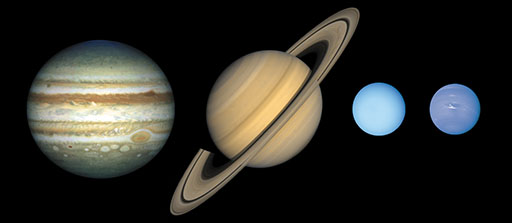
Figure R2.3 Drawings of planets.
Back to previous pagePrevious
Resources